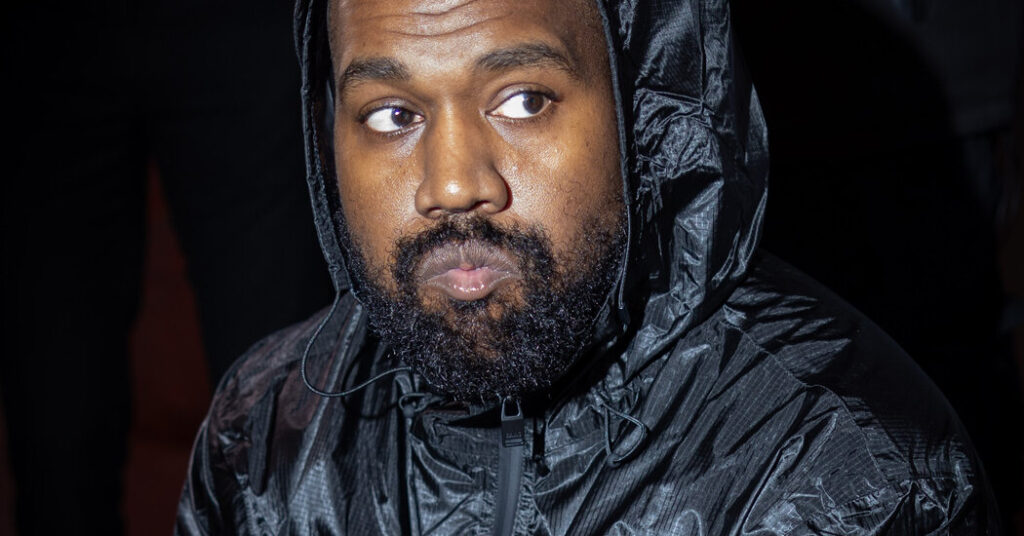
Pepsi on Sunday said it was withdrawing its sponsorship of the three-day Wireless Festival in London this summer, which is being headlined by Ye, the rapper formerly known as Kanye West.
Ye’s participation in the festival was part of an effort by the artist to distance himself from a half-decade of antisemitic and racist controversies.
The decision by Pepsi came just hours after Prime Minister Keir Starmer said he was “deeply concerned” that Ye had been booked to perform at what organizers call London’s “ultimate summer music festival.”
“Antisemitism in any form is abhorrent and must be confronted firmly wherever it appears,” Mr. Starmer told The Sun newspaper in an article published Sunday morning. “Everyone has a responsibility to ensure Britain is a place where Jewish people feel safe.”
The festival had been advertised as “PEPSI PRESENTS WIRELESS.” But a statement issued by the company on Sunday said, “Pepsi has decided to withdraw its sponsorship of Wireless Festival.”
It is not clear what Pepsi’s decision will mean for the festival, which also lists Budweiser, PayPal, Beatbox and several other major companies as corporate “partners” on its website.
Ye apologized earlier this year for recent antisemitic behavior, including posting “death con 3 ON JEWISH PEOPLE” and conducting an interview while wearing what appeared to be a Black Ku Klux Klan robe. He said in an ad in The Wall Street Journal that he hoped to be forgiven by “those I’ve hurt.”
Since then, the rapper has been seeking to return to public view in ways that do not create controversy. On Wednesday and Friday, Ye performed at SoFi Stadium, near Los Angeles, to promote the release of his new album, “Bully.” In addition to the appearance at the London festival, he is scheduled to perform in Italy and Spain this summer.
But the rapper’s effort at public rehabilitation has prompted outrage from many public figures in Britain. Ed Davey, the leader of the Liberal Democrats, said last week that Britain’s “home secretary should ban him from coming to this country.”
It is not clear whether Ye has applied for entry into Britain.
For Mr. Starmer, the issue of antisemitism is a personal one.
Before becoming prime minister, he made a name for himself in politics by vowing to purge the Labour Party of antisemitism in its ranks. Mr. Starmer, a former human rights lawyer, helped push out Jeremy Corbyn, the former Labour leader who had been accused of “unlawful acts of harassment and discrimination” against Jewish members of the party. Additionally, Mr. Starmer’s wife, Victoria, is Jewish.
Since becoming prime minister, Mr. Starmer has been under pressure to do more to combat antisemitic attacks and harassment in the country, which have increased sharply since the war in Gaza began in 2023. A terrorist attack on a synagogue in Manchester last year increased that pressure.
But the prime minister has also been criticized by Palestinian activists, including members of his own party, who want him to demonstrate more robust support for their safety in Britain.
Sunday’s comments by Mr. Starmer suggested that the prime minister did not believe Ye’s latest apology was sincere.
In 2023, the rapper apologized for the “deathcon” comment and other behavior in a social media post written in Hebrew, saying that “it was not my intention to offend or demean.”
But in February of last year, he withdrew the apology in a profanity-laced rant on social media in which he declared that he is a Nazi and professed his love for Adolf Hitler.
“I’m never apologizing for my Jewish comments,” he said on X, formerly known as Twitter.
In his most recent apology, Ye blamed what he said was untreated bipolar I disorder, caused by a brain injury he suffered in a car crash in 2002, for his behavior. He said that his comments came during a period when he had stopped taking medication for the condition.
A month later, he said he had autism, rather than bipolar disorder.
Michael D. Shear is the chief U.K. correspondent for The New York Times, covering British politics and culture and diplomacy around the world.
The post Pepsi Drops Sponsorship of London Music Festival Headlined by Ye appeared first on New York Times.