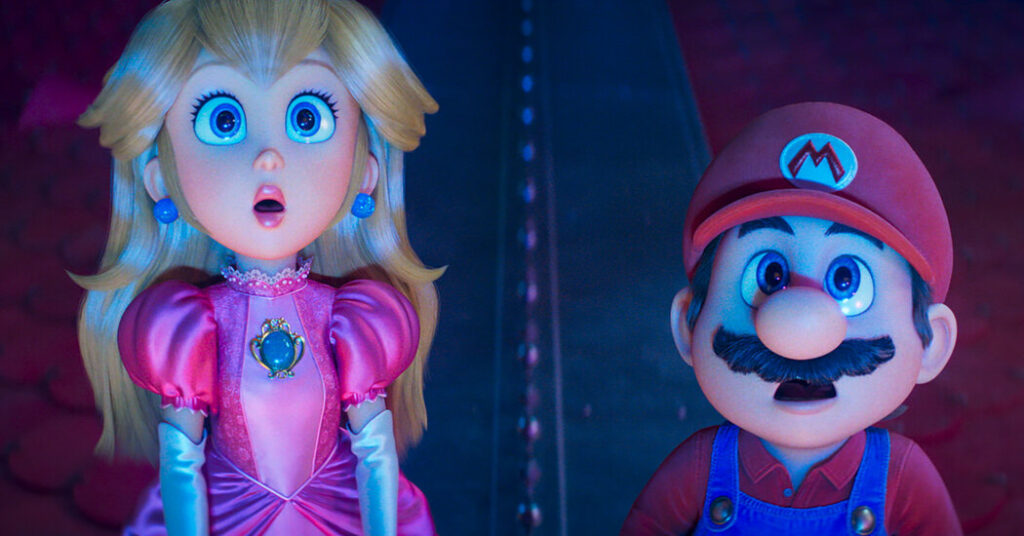
Movie critics were no match for Mario over the weekend.
Despite a torrent of negative reviews (“huge bummer,” “rock-stupid,” “torturous to sit through,”), Illumination Entertainment’s “Super Mario Galaxy Movie” was poised to collect about $130 million in North America from Friday through Sunday, for a total of roughly $189 million since arriving on Wednesday, according to Comscore, which tracks moviegoing data.
“The Super Mario Galaxy Movie,” an animated sequel that cost an estimated $110 million to make, was on track to earn an additional $182 million overseas, for a global total of about $371 million. Its franchise predecessor, “The Super Mario Bros. Movie,” took in roughly $378 million worldwide over the same period in 2023 and ultimately sold $1.4 billion in tickets.
The box office as a whole has been on the upswing lately. Ticket sales totaled $1.8 billion in North America from January through March, a 23 percent increase over the same period last year, according to David Gross, a box office analyst. Recent hits have included “Project Hail Mary” (Amazon MGM), which is expected to have collected about $219 million in North America since its release on March 20. “Scream 7” (Paramount) sold $120 million in tickets earlier this year, a franchise high.
Even so, ticket sales for the first quarter of this year were roughly 33 percent below totals for the same period in prepandemic years, Mr. Gross said.
“The Super Mario Galaxy Movie,” distributed by Universal Pictures and based on a Nintendo video game, may have received weak reviews from critics, but fans were much more forgiving. Audiences gave it an A-minus grade in CinemaScore exit polls, Mr. Gross noted in an email on Saturday.
“Kids love the movie,” he said.
Movies based on video games are nothing new. “Lara Croft: Tomb Raider” turned Angelina Jolie into an A-list action star in 2001. Hollywood, however, began relying more heavily on games as source material about five years ago. Comic-book adaptations were starting to lose steam, and studios needed to find new intellectual properties to mine.
Resulting successes have included Paramount’s “Sonic the Hedgehog” series and “A Minecraft Movie,” which collected $960 million worldwide last year for Warner Bros. and Legendary Entertainment.
“The Super Mario Galaxy Movie” bore the hallmarks of Hollywood’s “too big to fail” machinery. Hoping for another $1 billion hit, Universal began marketing the sequel in November, lining up a dizzying array of tie-ins (Lucky Charms cereal, McDonald’s Happy Meals, Old Spice deodorant) and building colossal castle-window advertisements in the United States, France, Spain and Chile. Universal’s corporate sibling, NBC, incorporated the movie into its coverage of the Winter Olympics, and Universal theme parks also pounded the drums.
Brooks Barnes is the chief Hollywood correspondent for The Times. He has reported on the entertainment industry for 25 years.
The post Despite Poor Reviews, ‘The Super Mario Galaxy Movie’ Is a Megahit appeared first on New York Times.