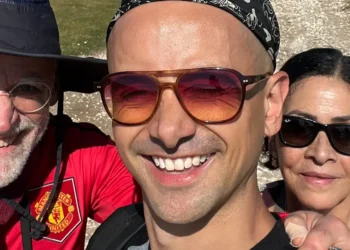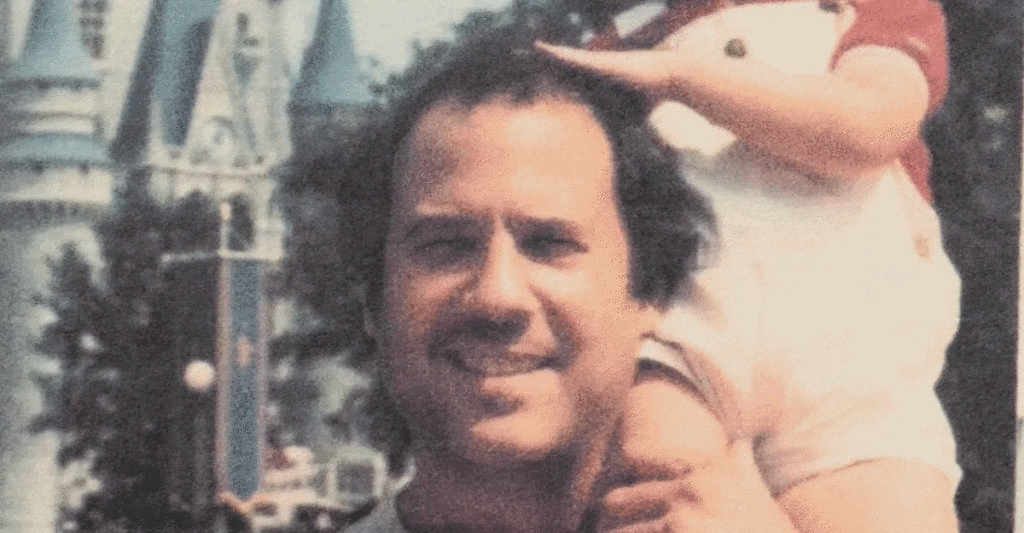
At first, in the early days and weeks and even years of my dad’s struggle with dementia, he just seemed more deeply himself. Bruce Jay Parker had always been quirky, in ways that generally delighted his friends and acquaintances, and frequently embarrassed his wife and two daughters. Now he was, simply, more so. He made misplacing things (his keys, his wallet, my passport) a way of life, and he regularly drove off with crucial items (steaming cups of coffee, his glasses, my mom’s garment bag) still on the roof of our car. He was also perpetually getting lost, turning family road trips into epic tests of patience and wills. We once crossed New York’s Tappan Zee Bridge three times in rapid succession, each time convinced that we were finally headed in the right direction.
“It is what it is,” my dad would say, which meant, in my mind, that we were all about to endure something awful as the price of membership in our family. Yet his mayhem, while often mortifying, could also be entertaining, like when he collapsed his lung attempting to skateboard down my grandmother’s driveway, or when he walked straight through not one but two screen doors in a single summer.
When my dad first insisted that he had dementia, we rolled our eyes and countered with hypochondria. He was 70 and had just retired from a job he truly loved, running the National Solid Wastes Management Association. But tests confirmed that he was right; the official diagnosis was frontotemporal dementia, a disease that affects both the behavior and language centers of the brain. My dad then died as he lived—slowly losing his mind and driving everyone around him crazy.
An extrovert by nature, he continued to haunt our local Starbucks and Paneras, settling in for hours with his newspapers and magazines, plus a yellow legal pad to jot down his thoughts and observations. But now he had begun to pay for his large black coffee from a ziplock bag filled with loose change. “They’re so nice,” he would sometimes marvel of the staff. “They usually just give me my coffee for free!” (I imagined that the baristas either assumed he was homeless or simply didn’t have time for so many quarters, nickels, and dimes.)
There was a grimmer side too. My dad had always been rigid and impatient—prone to bouts of anger—and now exasperation became not just a frequent flaw but a full-time operating principle. It was as if he could already sense the murky pull of an ebbing tide he was powerless to stop.
We, too, often found ourselves powerless, beholden to his whipsawing moods and insistent whims. There was the time at my cousin’s wedding, for which we had all flown to New Hampshire, when he declared suddenly, before dinner had even arrived, that it was time to leave, and grew more and more agitated until we piled into the car and departed early. Another time, when I took him to the movies, he insisted on getting there so early that our theater was still playing the previous film. When we were finally ushered into the dark, empty room, I grumbled that the previews hadn’t even started. “You didn’t bring a book?” he asked, looking surprised. “Your mom always brings a book.”
In almost every way, it was my mom, Betty—with her quiet, perpetual patience—who bore the brunt of my dad’s outbursts. In one moment, he was a sweet, wayward schoolboy, surprising her with a dead bird he’d found at a nearby park, before growing confused, then upset, at her lack of enthusiasm for his gift. In other moments, he led with his frustration, blaming her for her inability to intuit whatever it was he was unable to express. (She once mildly observed that it was like playing charades with the world’s worst clue-giver.)
During my dad’s jagged descent—before he died this year at 82, on Valentine’s Day, ever the mischievous cherub—dementia acted like a centrifuge, pushing his essential Bruceness to its extremes. And I watched helplessly as the man whom I resembled more than anyone in the world, and who—again, more than anyone in the world—could infuriate and comfort me in equal measure, lost the ability to do either.
I spent more than a decade missing him, before he was even gone.
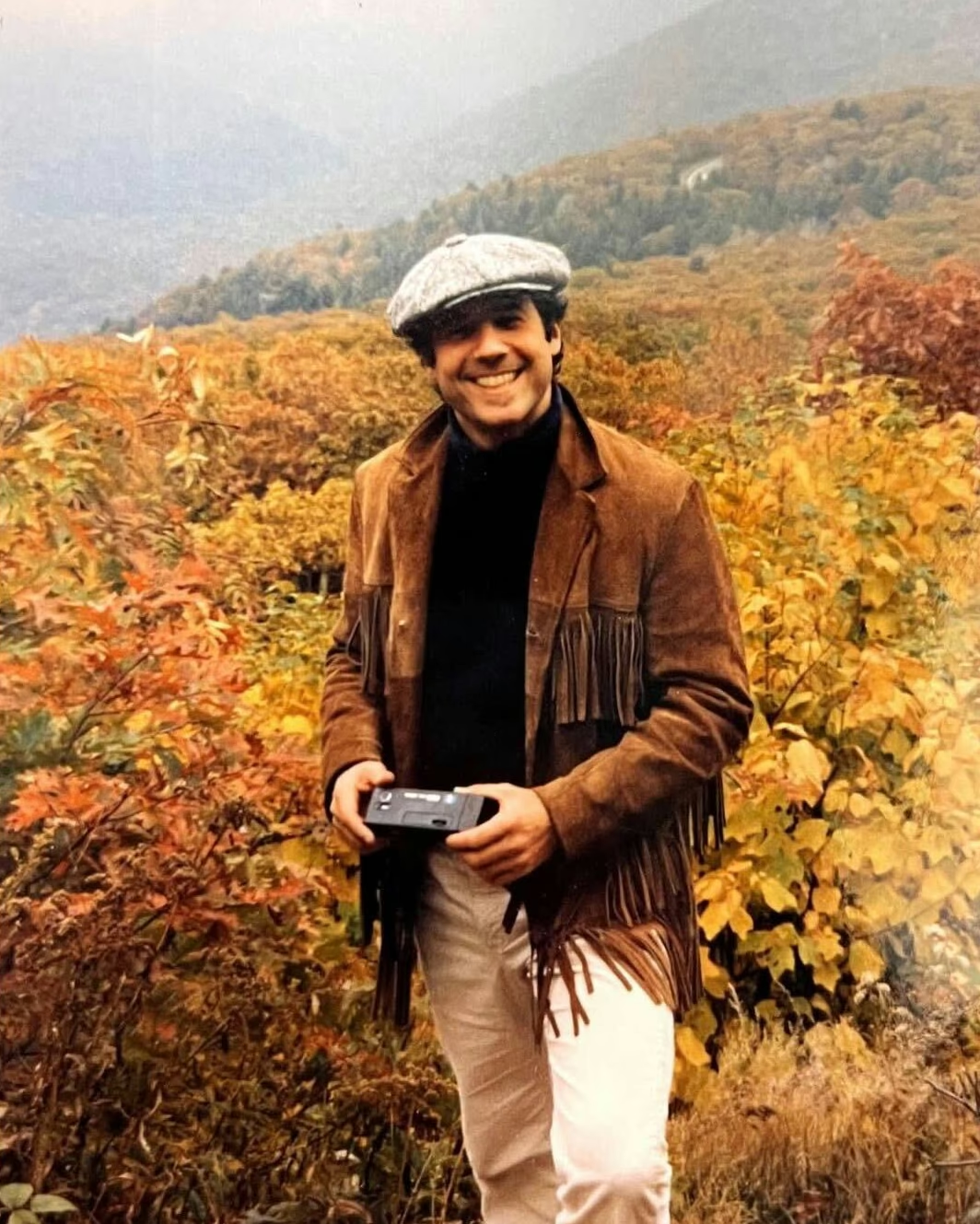
My dad used to smoke Lucky Strikes, but he quit cold turkey the day my mom found out she was pregnant; he wanted to be there to see his kids grow up. And that is what my sister and I remember most: how he always—always—showed up, for us and for our mom, even when that often meant we had to accept his affection on his terms, with his quirks. At his great-nephew’s bar mitzvah, my dad got I love Betty graffitied across the back of a T-shirt. (My mom missed the party because of another Bruce-related travel incident involving flights to the wrong city and luggage checked to the wrong place.) Whenever he wore that shirt—which he did, not infrequently—someone would ask, “I love Betty?” and he would beam and say, “You know Betty too?”
He was the same with me and my sister. He would appear in our rooms in the wee hours when we had growing pains, rubbing our legs until we fell back to sleep. He would run out, late at night, for tampons or school-project supplies we really should have remembered earlier. And he was always there, in his suit in the stands at my afternoon basketball games, having raced straight from work, and on the sideline of our soccer matches, perched in his lawn chair—our dog, Perry’s, leash in one hand, cigar in the other, newspapers and magazines piled at his feet. He adopted a similar posture in our driveway—same accoutrements, with the addition of a glass of icy Stoli vodka, straight up, with a few olives he saved for our tiny fingers.
[Read: There are no ‘five stages’ of grief]
In many ways, he was the original #GirlDad. But he was difficult too. Our shared traits—a certain rashness, an almost constitutional impatience, a simultaneous disdain for authority and people-pleasing eagerness—brought us into constant conflict, especially in my adolescence. My dad was a beautiful writer, a natural storyteller, and he edited everything I ever wrote, taking me seriously as a writer in a way that made me feel like this was something I actually could do, and also left me vaguely traumatized. Every editing session ended in lots of red ink and tears.
Our fights were epic. He could be so critical—almost radiating disgust that my five-paragraph essay had failed to truly capture the countercultural brilliance of Lawrence Ferlinghetti, say, or that I’d yet again passed the ball rather than driven to the hoop. I responded in kind, taunting and goading him. What are you going to do? Ground me? I’d dare him, after our yelling had escalated to me dropping a verboten F-bomb. (He grounded me.)
We shouted, we slammed doors, we apologized. We did it again.
But if dementia initially made my dad more like himself, over time it had the opposite effect, slowly robbing him of his most distinctive qualities: his wonderful vocabulary and dexterity with words; his passion and intensity; his gregariousness and love of people, including perfect strangers.
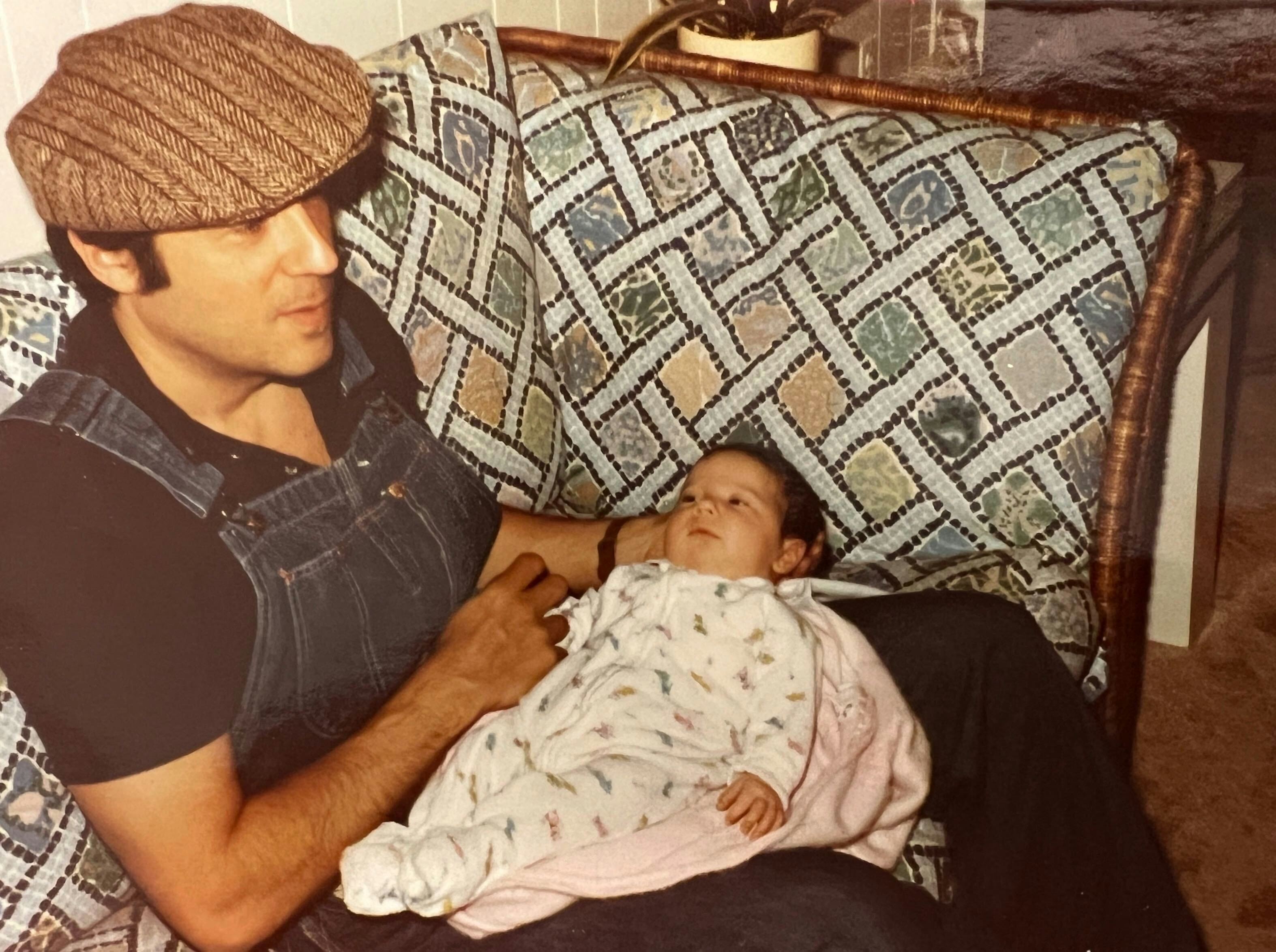
In eighth grade, my English teacher had us memorize Shakespeare’s “All the world’s a stage” speech from As You Like It, about one man playing many parts in his life, from the “mewling” infant to the aged pensioner. As I watched dementia gradually, then raggedly, transform my dad, lines from this soliloquy often floated to me unbidden. Sometimes I worried that only I understood my dad’s return to his “second childishness and mere oblivion; Sans teeth, sans eyes, sans taste, sans everything.” I still don’t know whether I was simply more clear-eyed, or more cold, than my mom, but I found myself regularly fighting with her over his care. I sometimes felt as though I had been thrust into the role of both parent and child, and was playing neither one well.
The first big fight was over whether to take away his car keys; it seemed obvious to me that he could no longer safely drive, but my mom was reluctant to further limit his world. His illness was already life-changing for us, but I urged her to imagine how he could upend the lives of other families as well. “We’d be lucky if only he dies,” I shouted, in my cruelest moment. “Imagine if he hurts someone else.” (In the end, this debate was settled when my dad, leaving a doctor’s appointment, hit the accelerator rather than the brake, crashing into a large parking-garage pole; thankfully, the only injury was to the car, which was totaled.)
We also fought over whether—and when—to move my dad into an assisted-living facility. Again, my mom was reluctant. He wouldn’t be happy there, she argued, and besides, the cost was prohibitive. So the bulk of his care fell on her, along with a patchwork of friends, neighbors, and community members who quietly showed up, over and over.
[Read: In search of a nonexistent cure]
My husband, Mike, handled the situation differently, his slight remove giving him an empathy that I envied but seemed incapable of matching. When Mike first met my parents, he brought a nice bottle of vodka, and my dad declared, as if paying him the ultimate compliment, that my then-boyfriend looked exactly like … Steve Bannon. (He does not.) The first summer Mike joined us for our annual pilgrimage to Watch Hill, Rhode Island—the last summer my dad was able to travel—the two of them spent hours bopping around the pastel-colored shops. Mike would play wingman as my dad attempted to order ice cream, snapping his fingers as he grasped for words such as chocolate and cone. And he joined as my dad, still yearning for connection, went into every store and struck up conversations that often went awry. In what was clearly, say, a women’s-bathing-suit shop, my dad would demand to know why they didn’t sell coffee and The New York Times, leaving both him and the store owner flustered. Then, as my dad sensed the mood darkening, he would turn to Mike, eyes wide and eager, and declare, “Let’s get out of here!”
Mike was willing to spend his afternoons this way, keeping my dad company. He could simply inhabit my dad’s world. I, however, was appalled. I struggled to let go of who he had been and who I still wished him to be; in doing so, I often failed to appreciate who he still was.
My dad’s illness continued to worsen, and he started wandering out late at night. My mom was helpless to stop him, and found herself having to call our neighbors for assistance. One night, a neighbor found my dad at the small shopping mall near our house; the neighbor walked around with him for hours, until the last store finally closed, and he could persuade my dad to return home. Eventually, it became clear that my mom could no longer care for him by herself. In June 2020—in those still-early, uncertain months of COVID—we moved my dad into a memory home, a suburban house with a large porch on a quiet residential street.
We had been expecting a difficult move-in day—my dad resistant, irate, unwilling—but what actually happened was, in some ways, more gutting. My mom brought him, and the house that afternoon was lively, with music playing and much of the staff downstairs in the front room. My dad—who always loved to dance—heard the beat and began to boogie his way through the front door. Then he paused, guilelessly turning to look back at my mom, and asked: “Aren’t you coming with me?”
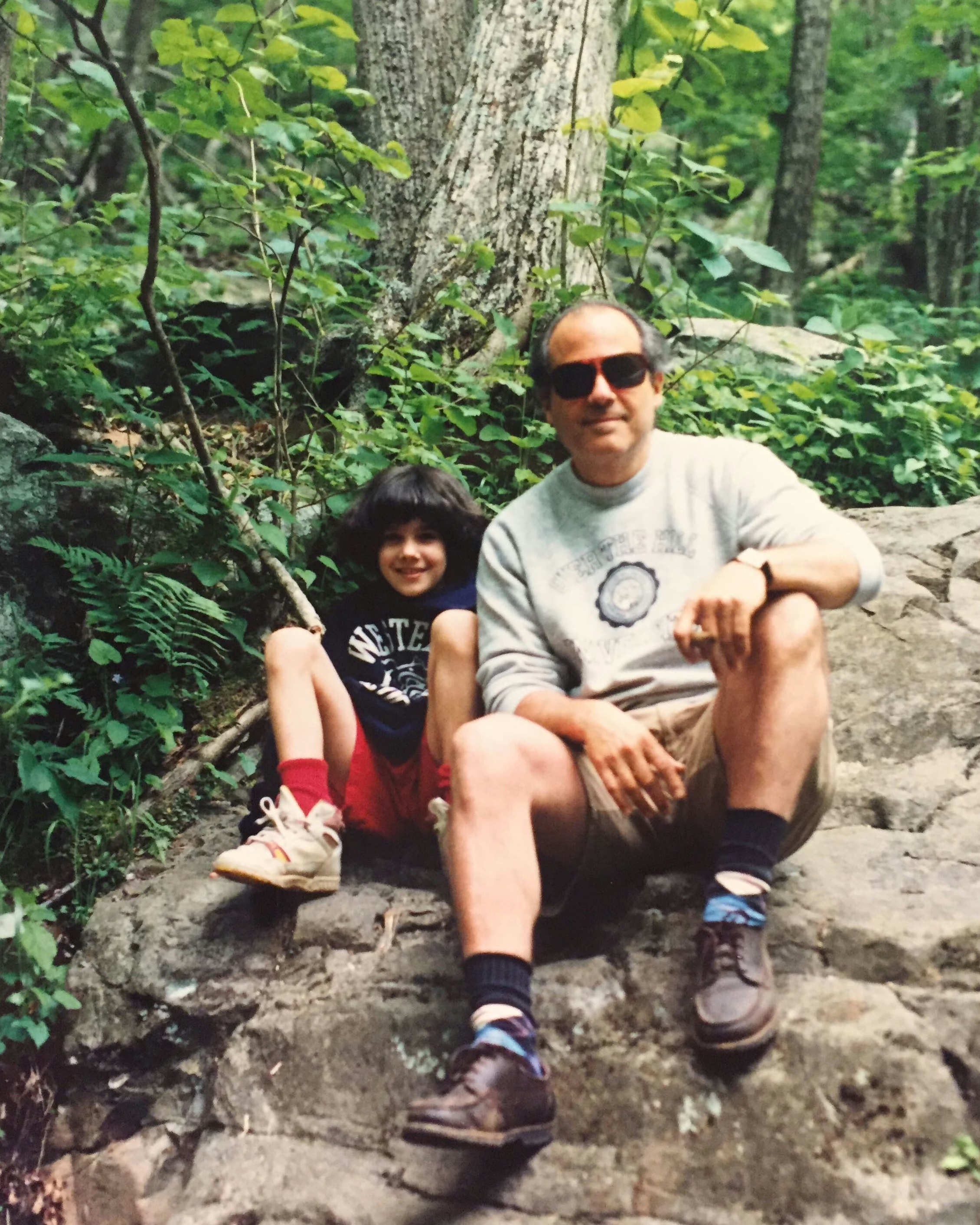
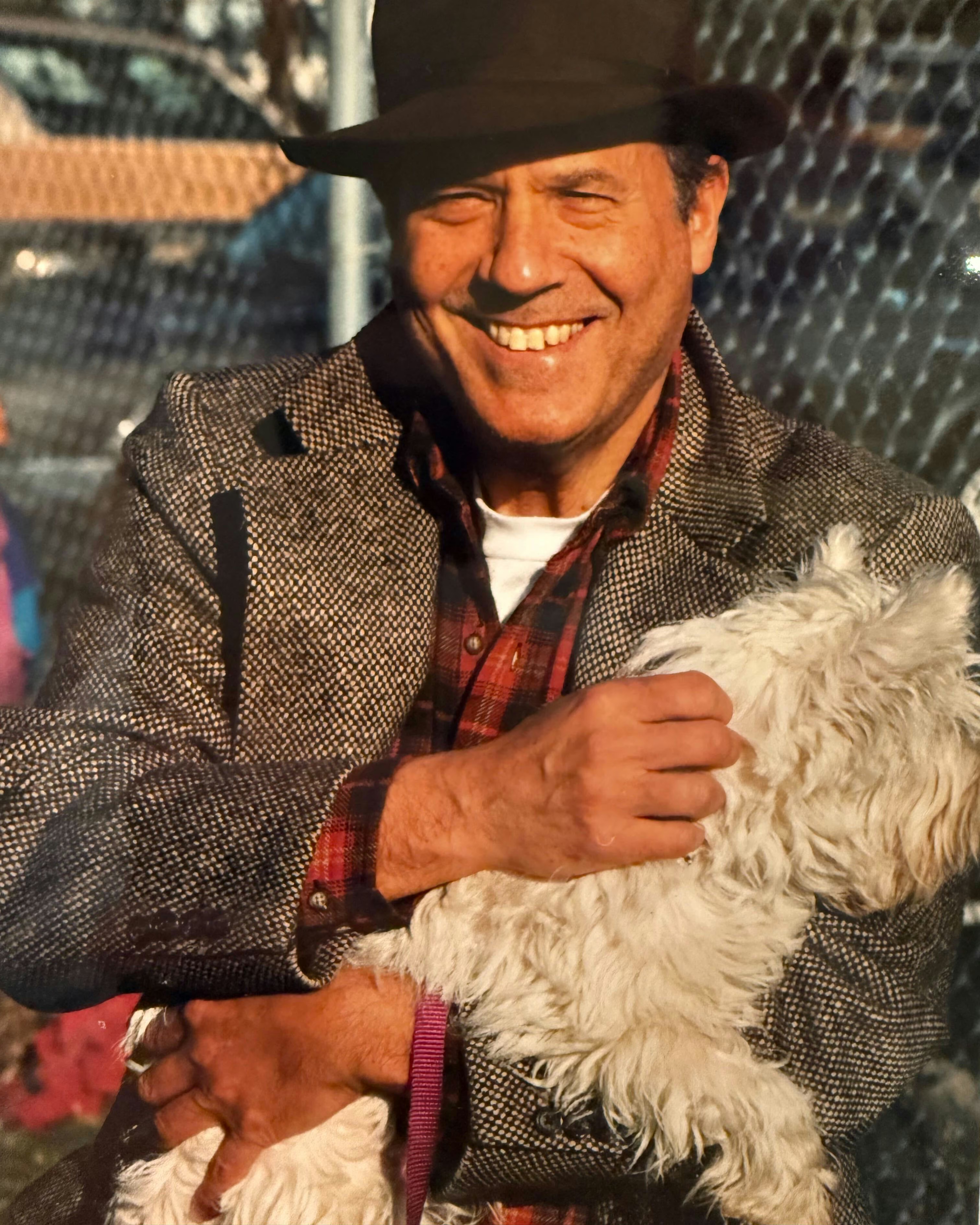
If my dad’s final breath—neatly packaged with a time of death, a certificate of death, and a surprisingly heavy box of post-death ashes—was like a period, the end of a story, then his preceding descent into dementia was more of an ellipsis: a perpetual trailing-off, leading to unexpected twists and challenges, each more devastating than the last.
His six years in the memory home were a stretch of continuous loss. The home was fantastic: intimate, clean, well run, with wonderful staff who planned near-daily activities. Yet even that I found sad. My dad was the king of belting along to Hall & Oates and the Rolling Stones, but karaoke there usually took the form of the residents watching, heads lolling, as the caretakers performed the songs.
[Read: How people with dementia make sense of the world]
My mom visited at least once a week, often more, but I went far less frequently—every six weeks, maybe, or sometimes every few months. The truth is: I hated visiting him, hated everything about it. I didn’t like devoting a full weekend afternoon to the trip. I didn’t like glimpsing the other residents, wheezing and cawing through their meals, or curving into their wheelchairs. But mainly, I didn’t like seeing my dad in his diminished state. No matter how our visit went, I always found myself in tears. I hated how painful each minute felt. I hated that whoever was with me—my mom, my girls, my husband—was seeing me at my most vulnerable. I also felt guilty—about feeling this way, about not going more. And I hated feeling guilty. Then I felt guilty about that too.
The flashes of his old self—a certain impish twinkle, a familiar rounding of his mouth when he laughed—left me shattered. Yet so did this new version, in which he often struggled to stay awake and slowly grew mute. Even our fights, which had left me so enraged, I would have preferred over this. If childhood is the kingdom where nobody dies, as Edna St. Vincent Millay wrote in her poem of the same name, then dementia is the kingdom where you are always fading but never fully gone.
At my dad’s memorial—a nonreligious affair that was essentially a series of toasts and roasts that he would have loved—one of the people who spoke was my dad’s longtime colleague, who had visited him frequently once he got sick. He ended by imploring those before him: If you know someone who is sick, visit, visit, visit! They know! They can sense you! It matters!
His eyes scanned the more than 100 mourners, but my breath caught; I felt as though he was speaking only to me.
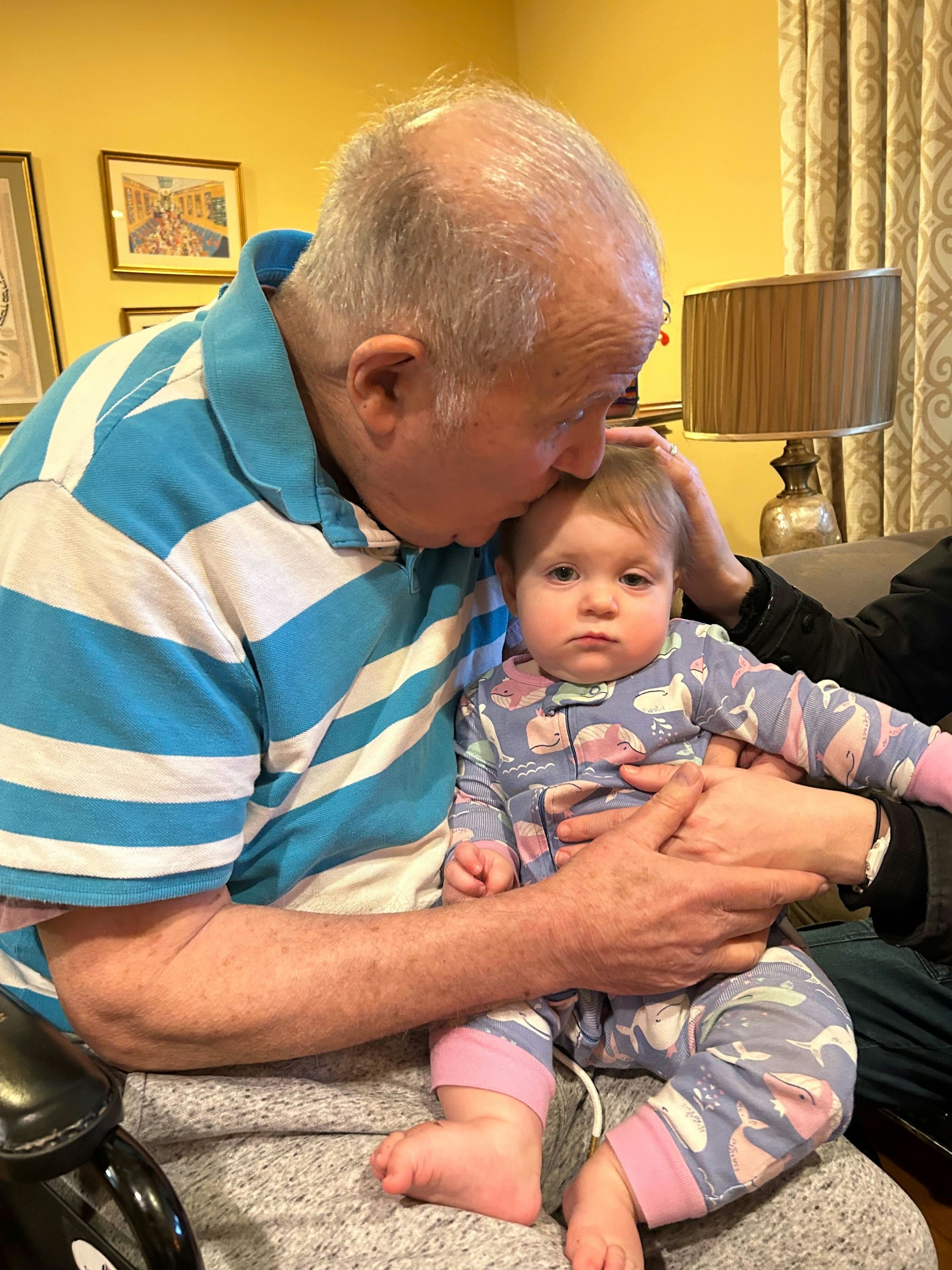
In the final few years, my dad somehow kept his essence. He was confined to a wheelchair and had lost his words, but whenever we visited, we still found him surrounded by his beloved newspapers and magazines, even when he no longer understood what they said or which way to hold them. (At one point, he began eating the pages, which was upsetting but also, perhaps, just my dad doing what he’d always done—voraciously consuming the news.)
I also came to a kind of peace. I still didn’t like visiting, but I could more easily bring myself to do so. I understood that although his inability to recognize us was devastating for us, it was not for him; he loved visitors, loved people and chatter and touch, and he still registered us—if not as family, then as warm, friendly presences. I often brought with me my two younger daughters, and they would gambol around him on the great big porch. That’s when you’d see the brightest flicker of his old self, as he’d make funny sounds to try to make them laugh. Once, I placed my youngest in his arms; he still instinctively knew how to gently cradle and kiss his littlest granddaughter. Even near the end, when he could barely speak, every now and then he would look at my girls with awe and manage to whisper, “You’re so beautiful.” Another time when I visited, my dad looked at me, his eyes curious and dancing as if trying to place me; finally, he smiled and whispered: “She’s mine. She’s mine.”
It was a long decline but a quick goodbye, exactly a week after we brought in hospice care. His prognosis seemed to change constantly. He was not “actively dying,” we were first told, and likely had months to live; the next day, he had “weeks to months”; the day after that, it was “days to weeks.” He then began having trouble swallowing, and another hospice nurse told my mom she suspected that my dad would be gone in “hours to days.”
My sister and I went nearly every day to visit, sometimes multiple times. I didn’t want to remember him like this—curled back into himself, mouth stretched open, rasping with each slow breath—but I remain thankful to my therapist, who told me to hold his hand, to take pictures, to savor him even then. I was grateful to be able to stand by his bed and tell him what I needed to: that I loved him, that he was a great dad, that he could rest now, that we would be okay.
The end came in the predawn hours of the first warm Saturday after a stretch of biting cold, catching us all by surprise with its suddenness. The absolute finality of death, I suppose, is like that—sneaky, unexpected, painful, even when you’ve spent years bracing for it. He had been gone, in so many ways, for so long. I had expected the silver lining of his protracted deterioration to be that his actual death, when it came, would be more bearable, less gutting somehow. Yet in those final moments, his illness again transformed him into everyone he had ever been, almost simultaneously—the frail man on the cusp of relief, yes, but also my vibrant, maddening dad, whom I had loved and missed, and would love and miss, again and again.
The post The Endless Goodbye appeared first on The Atlantic.