In 1982, I walked onto a Broadway stage in the premiere of “Cats” as Grizabella, a faded glamour cat lit by a single shaft of moonlight, and I sang about memory. We in the cast knew we were part of something exciting. Something great even. We didn’t know yet that we were stepping into a cultural phenomenon.
What’s easy to forget is how singular “Cats” felt when it first arrived on Broadway. It was an Andrew Lloyd Webber musical built from T.S. Eliot’s poetry with no plot to speak of. The evening unfolded less like a story than a ceremony — a tribe introducing itself one by one through music, dance and character, until a single cat would be chosen to begin a new life. It was extravagant, mysterious — a kind of pageant.
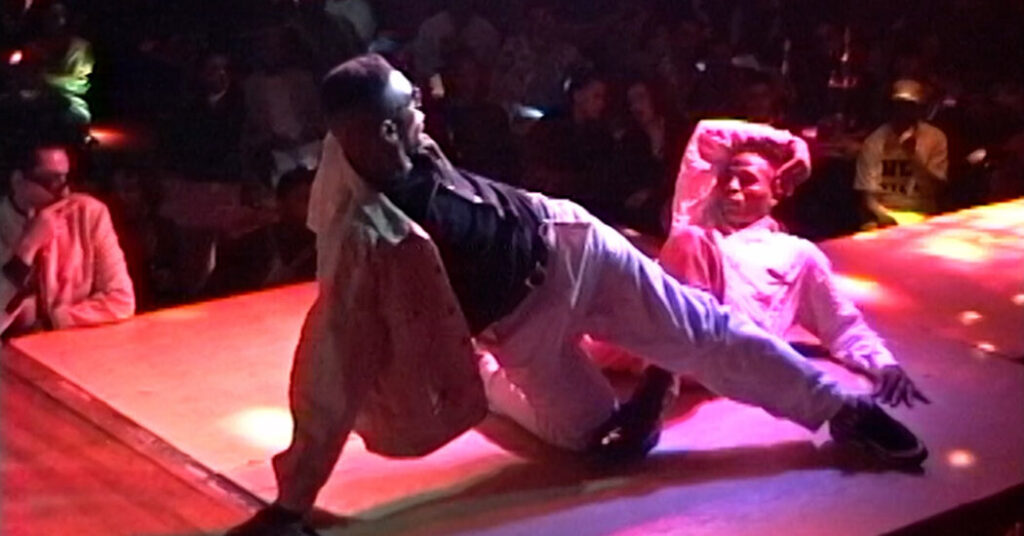
A few miles uptown, unknown to many sitting in the Broadway audience, another fantastically costumed ritualistic form of pageantry was underway known as ballroom. It’s where the competitive dance form called “voguing” was first developed.
Members of the Black and Latino L.G.B.T.Q. communities built a dazzling cultural world entirely their own. They grouped themselves into chosen families called Houses and competed against one another in elaborate categories. At balls, style, movement and identity were celebrated with fearless invention. In those years, even as the AIDS epidemic tore through those communities, ballroom became an act of care, of survival and of insisting on joy in the middle of devastation. It was theater in its purest form: performance as self-creation.
These two forms of pageantry traveled very different paths. “Cats” stepped immediately into the mainstream spotlight and became, for many years, the longest-running show in Broadway history and a must-see for generations of visitors to the city. The balls lived on in a parallel world, outside the tourism spotlight, sustained by the community that created them and the dreams of all those who watched and competed. The reasons aren’t complicated: The most vital expressions of Black and Latino queer culture simply weren’t welcome in the mainstream spaces where American entertainment took place. The artistry was always there. It just wasn’t being let in.
I first saw a new production titled “Cats: The Jellicle Ball” at the Perelman Performing Arts Center in New York in 2024 at the invitation of a friend. I had never myself been to a ball, and I knew little about ballroom culture. My exposure, as for many people, was through the documentary “Paris Is Burning,” the music video for Madonna’s “Vogue,” and later, the television series “Pose.”
From the first moment, the audience went nuts! People were singing along. As I watched this new iteration of “Cats,” I thought it was more than a reimagining. By intertwining two extraordinary traditions that were blooming in the same city at nearly the same moment, “Jellicle Ball” revealed something to me about New York as a crucible of self-expression in all its forms.
Broadway grows and stays relevant when it listens to the culture outside. It has the power to introduce new audiences to forms of expression they knew nothing about, and to provide stages for performers who deserve the spotlight. Jazz, hip-hop, mambo — all these forms have found their way to the midtown stage.
But that journey is rarely smooth and rarely fast, and the terms on which it happens matter enormously. Broadway also has the responsibility to recognize the creators and innovators of those forms — and too often the industry has borrowed from underrepresented communities and neglected to credit the source.
I’m pleased to see “Cats: The Jellicle Ball” bringing the architects of ballroom into the room itself — whether its Leiomy Maldonado, who helped define the modern vocabulary of voguing, or Junior LaBeija, a legend in ballroom culture, or Chasity Moore, who steps into the role of Grizabella that I played more than 40 years ago. When Grizabella made her first appearance onstage, I felt protective of the character. I needn’t have. As her journey in the show unfolded, Ms. Moore brought a beautiful, dynamic and resilient Grizabella to life.
The more I sit with the show, the more inevitable the connection between ballroom and Broadway seems. “Cats” has always been a ballroom: Distinct personalities enter the floor, presenting their style and story, and a community watches to see who commands the room. This new production doesn’t impose anything foreign onto the musical. For me, it illuminates what was always there.
I’ve also spent a long time with the song “Memory.” I sang it at the Tony Awards in 1983, and I sang it at The Saint, a gay club in the East Village. At the song’s core is a simple plea of longing to be seen again — to be recognized and to be welcomed back into the circle. It is Grizabella, after all, who is chosen for the evening’s highest honor at the ball. It is Grizabella, the pariah cat who was neglected, cast out and left to fade at the margins of society, who in the end, is truly seen and celebrated. She reclaims her dignity, earns her acceptance and takes center stage.
It’s fitting to me that she be celebrated again at “Cats: The Jellicle Ball.” This time, performers long kept at the margins can step into the spotlight, not as ornament, but as a force reshaping the stage itself.
Betty Buckley is the actress and singer who, in her decades-long career onstage and screen, has performed in “Sunset Boulevard,” “Triumph of Love” and the film “Carrie.” In the Broadway production of “Cats,” she originated the role of Grizabella, for which she won the Tony Award for Best Featured Actress in a Musical in 1983.
The Times is committed to publishing a diversity of letters to the editor. We’d like to hear what you think about this or any of our articles. Here are some tips. And here’s our email: [email protected].
Follow the New York Times Opinion section on Facebook, Instagram, TikTok, Bluesky, WhatsApp and Threads.
The post ‘Cats’ Were Always Meant to Vogue appeared first on New York Times.