This is an edited transcript of “The Ezra Klein Show.” You can listen to the episode wherever you get your podcasts.
What is the status of America’s war with Iran? If you are trying to follow it through what President Trump is saying, you are going to be hopelessly lost.
Trump — within a single day — veers wildly between saying the war is almost over and that he’s preparing to escalate it dramatically; that negotiations are going great and that there’s no one to talk to; that Iran must open the Strait of Hormuz and that America doesn’t care if it’s closed.
On Wednesday night, in a nationally televised address, Trump sought to finally dissipate the fog and make the path forward clear to the American people and to our allies.
Archival clip of Donald Trump: I’ve made clear from the beginning of Operation Epic Fury that we will continue until our objectives are fully achieved. Thanks to the progress we’ve made, I can say tonight that we are on track to complete all of America’s military objectives shortly, very shortly. We are going to hit them extremely hard. Over the next two to three weeks, we’re going to bring them back to the Stone Ages, where they belong.
But it’s hard to say which goals we’ve achieved. Iran seems to think it’s winning this war. Its regime has survived. It has learned how much power it can exert over the world economy by choking off the Strait of Hormuz. It has seen sanctions lifted on its oil and is looking toward a new order where it charges countries to pass through the strait.
Trump actually appears to be abandoning the strait. That, I think, was the most shocking part of his speech — telling our allies it’s their problem now.
The promise Trump made was an end to threats from Iran. He repeated that promise on Wednesday night.
Archival clip of Trump: Tonight, every American can look forward to a day when we are finally free from the wickedness of Iranian aggression and the specter of nuclear blackmail. Because of the actions we have taken, we are on the cusp of ending Iran’s sinister threat to America and the world.
But if you listen to experts on Iran, that is not what they see coming. They see an Iran that has learned quite a lot from this war — and that might emerge much more dangerous.
Suzanne Maloney is the vice president and director of the Brookings Institution’s foreign policy program. She is one of Washington’s leading Iran experts, having advised multiple presidential administrations, both Democratic and Republican, and written and edited a number of books on Iran.
I was surprised by how blunt she was here. Iran, she said, thinks it’s winning this war. And there’s a good case that they are.
We spoke on Wednesday morning, before Trump’s address, but his speech reflected her analysis almost perfectly.
Ezra Klein: Suzanne Maloney, welcome to the show.
Suzanne Maloney: Thanks so much for having me.
I find the state of the war in Iran confusing, even as somebody who has been covering it. I hear Donald Trump talking daily now about how the war only has two to three more weeks in it, negotiations are going great, this is almost over.
And I also see that we’re moving about 10,000 more troops into the area alongside other military assets.
What should I believe here? Which of these should I be tracking?
I think at this point we have to be tracking both the language that the Trump administration and the president himself are using, especially on social media. But we also have to be watching what’s happening on the ground.
Because what we’ve seen even in the buildup to the war is that the president has often said one thing and done something different.
That’s something that the Iranians are well aware of and very much prepared for.
I think he’s probably getting different opinions, and it’s not entirely clear that President Trump himself has decided precisely what he wants to do — other than it’s quite clear that he is trying to bring a close to this war that will enable him to declare victory and to walk away from the conflict.
Last week, the Trump administration sent the Iranians a 15-point peace plan. This was supposed to be the basis for negotiations. What was in that plan?
Well, it was a lot of the same demands that the president and his negotiators had put on the table prior to the war itself.
He wants a durable commitment to no enrichment, to no nuclear weapons program in the future. He was looking for a number of other steps that the Iranians would take to end their support for proxies, to end their ballistic missile program.
These have all been longstanding concerns on the part of the United States. They date back to the negotiations that the Obama administration led that produced a deal that temporarily put constraints on a number of Iran’s nuclear activities.
I think what President Trump is trying to achieve is what he’s been pushing for, throughout both his first and second terms. And he’s not able to achieve that conclusively through military action.
How did the Iranians respond?
The Iranians effectively believe that they have the upper hand at this point in time, so they have indicated that they don’t really see themselves as prepared to negotiate directly with Washington.
They are embittered, obviously, as a result of the negotiations that were taking place in the days before the president launched the strikes, about a month ago — and from the same dynamics that preceded the June war, where negotiations were really just a prelude to military action and, to some extent, a ruse to dupe the Iranians into complacency even as the attack was being mobilized.
It’s a little bit difficult to get direct diplomacy with Tehran in the best of circumstances. This is a regime that has based its ideology on anti-Americanism. It has often — frequently, in fact — refused to deal directly with American negotiators.
So under the current circumstances, where there have been thousands of strikes and many deaths in Iran, including some of the top leadership, they’re not terribly inclined to sit down. Nor are they particularly inclined to compromise with the United States.
Why do they believe they have the upper hand?
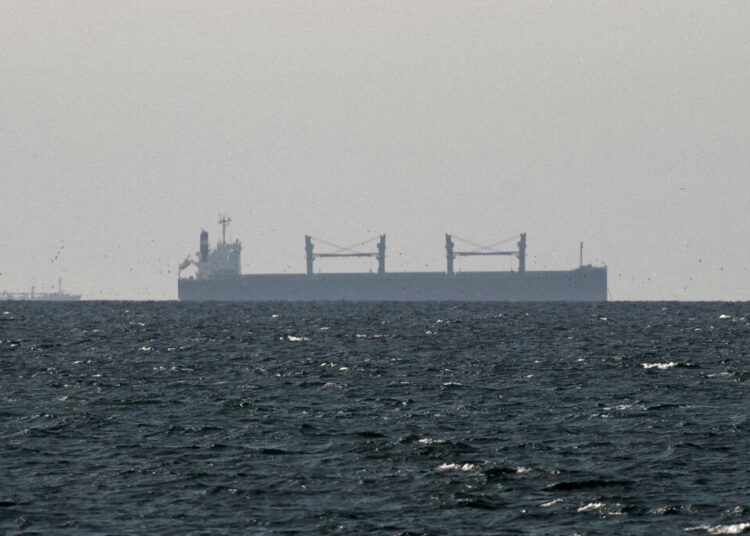
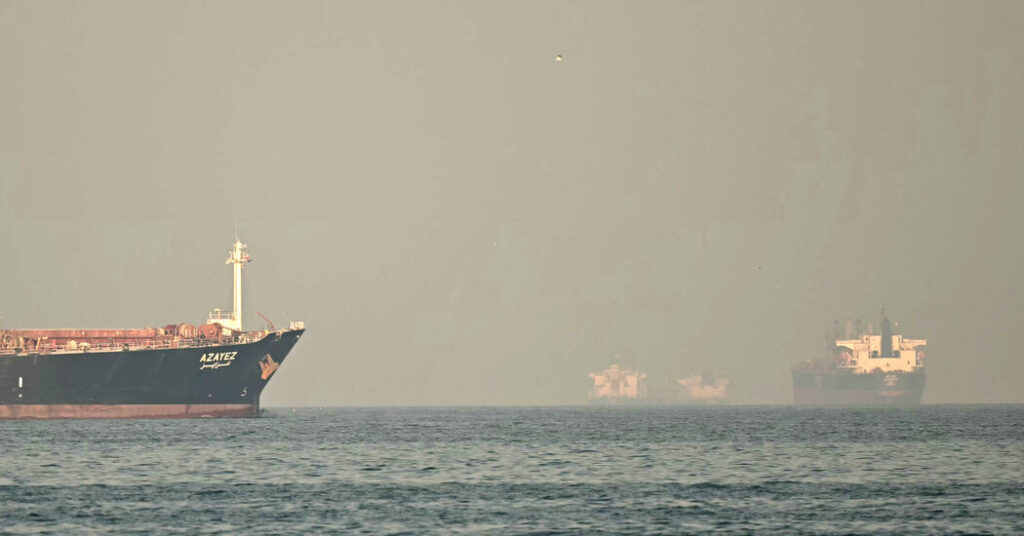
They believe they have the upper hand precisely because they were able to seize control of the Strait of Hormuz, which is, of course, the strategic waterway through which about 20 percent of the world’s oil and natural gas exports pass on a daily basis.
What the Iranians did in the first days of the war was to strike at ships that were passing through the Gulf and effectively persuade insurers and shipping companies and oil companies to avoid the Gulf unless they had some kind of assurance from the Iranians that they could pass.
In the prewar period, there would have been anywhere from 130 to 140 ships traveling to and from over the Strait of Hormuz every day. We’ve seen only a handful over the course of the last month, and that has had a severe impact on oil exports, on prices for oil around the world.
And it will, over time, have a catastrophic impact on the global economy if there isn’t a resolution to this stoppage of the strait.
Go a level deeper on that for me. Why does that give them the upper hand?
They’ve had, I think, more than 10,000 sites attacked by the U.S. and Israel. They’ve had a huge number of senior political and military leadership killed in strikes. They are, militarily, tremendously outmatched.
So yes, they’ve been able to close the strait, sending energy prices, fertilizer prices, other key components of the global economy rising. But so what? That’s pain for them, too.
Why do they seem so confident?
They can afford to wait. They have already suffered, as you know, tremendous losses to the leadership. This has had a terrible impact on Iranian cities across the country.
But, in effect, they have the advantage of time at this point. Every day that the stoppage goes on, the impact on the global economy is magnified, and that will have a direct impact on President Trump’s political standing.
It also hurts all of America’s partners and allies in the region and around the world. This is creating huge constraints in Asia, and that is going to be something that the United States is going to hear from all of its partners and allies when it is engaged in diplomacy — that they’re looking to see an end to this war, too.
So for the Iranians, this is an existential crisis. They’re prepared to wait this out as long as they can. I think that’s the real question now: Who blinks first?
Talk to me for a minute about the timing. Trump, as you note, seems much more incentivized to end this quickly than the Iranians do — at least in the two sides’ public statements.
My understanding is that we are entering a period where the closure of the strait is going to start really biting the global flow of energy and commodities.
We’ve been in a period where tankers that had already gone through were still arriving at ports around the world. But we’re moving into something where you’re going to cease having the landings in Asia of energy tankers that had been needed. In Europe, fertilizer is about to get crunched.
Right now, we’ve been really worrying about futures, and people are pricing things higher out of fear of the future. But we’re about to hit the point where these shortages become material in the present.
So when Trump looks forward two to three or four weeks, if this keeps going, what have been modest price rises can become globally something much more severe. And for the Iranians, they see their leverage increasing very rapidly in the coming weeks.
Is that accurate? How would you complicate that? Talk to me a bit about that question of the coming timing.
I think that’s exactly right. We’ve never had a prolonged closure of the Strait of Hormuz. We’ve never had this length of disruption in terms of oil exports and, as you note, other petrochemicals and commodities that are key to the global economy.
This is something that is completely unprecedented and, in effect, markets haven’t fully priced in the potential impact at this point. Americans are still effectively paying the price at the gas pump that is determined by production in the United States and by supplies on hand.
But we’ve already seen rapid and severe increases in prices of oil and other products in Asia — and they’re closer to the source. As prices normalize over time, as the disruption is priced in, we will be seeing not just $4 and $5 and $6 prices for gasoline at the pump, but much, much higher.
It will play out, as you note, in all sectors of the economy, particularly some of the key sectors that are crucial for the whole affordability debate here in the United States.
Food and commodity prices. Chips are going to be impacted by the limits in the supply of helium. That will have an impact on all the tech that we buy. Everything from our televisions to our cars could be impacted as a result of this.
Prime Minister Modi, in India, compared this to Covid and the pandemic and their impact on global supply chains. I think that is a very apt comparison, particularly if this extends over the course of another month or so.
Are we moving into a period now where the asymmetric balance of the two sides’ weapons are changing? We have done a tremendous amount of damage to Iran. We’ve killed many of the senior leadership, and they have effectively absorbed that.
The question of what we can do next that is worse than what we’ve already done — it’s not impossible to imagine. But all those things, like taking Kharg Island, expose us to much more risk.
Whereas for Iran, the weapon they have been using, which is choking off the Strait of Hormuz, is about to become a much more potent and powerful weapon as shortages become real and material as opposed to notional.
Yes, I think that’s exactly right. From the Iranian perspective, they now believe that they have survived this war. The regime was not taken down even though Ayatollah Ali Khamenei, the individual who had been the supreme leader for 37 years, was killed on the first day of the war and a number of other senior figures have been eliminated. And we see this happening on an ongoing basis.
But if regime change was one of the goals of the war from the Trump administration, and, of course, this was something that President Trump’s first messages around this war really highlighted, the Iranians now believe that they have been able to survive and that the regime itself, despite its having been grievously wounded, will remain intact.
That is something that is also quite a threat for their neighbors. We do see this debate happening both in public and certainly in private between the United States and some of its regional partners — the United Arab Emirates, the Saudis, the Qataris and others — who are very concerned about being left with a wounded, embittered and emboldened Iran on their doorstep.
An Iran that still has managed to preserve its missiles and its drones and its capability to fire on its neighbors, and also, by the way, has some stockpile of highly enriched uranium — perhaps buried under the ground in Isfahan, perhaps dispersed at other sites. Whatever restraint they had around their nuclear program is likely to be eliminated, as well, in the aftermath of this crisis.
We may see a regime that would be looking to move very quickly to nuclear weapons capability.
This brings up Iran’s counterproposal. We mentioned the Trump administration’s 15-point peace plan. There has been talk of a five-point plan from the Iranians. What’s been in that plan?
Well, the Iranians would like compensation for the suffering and the economic losses that they’ve experienced during the war. They would like to retain some control over the Strait of Hormuz and effectively continue to monetize their ability to determine who and what might pass through this particularly strategic waterway.
So they’re looking to come out of this war, I think, in a stronger position. And that’s not entirely inconceivable. It’s going to be a regime that has taken enormous hits.
The country has suffered tremendous losses in terms of its productive capabilities, in terms of its own economy and, as we know, that was in pretty dire straits. The economy had collapsed to a point where people went to the streets back in January, and in very large numbers all around the country.
So they’re facing a really difficult situation, but their goal is to essentially use their leverage at this key moment to ensure that they come out in a stronger position.
There is a difference between these two plans as I understand them. Trump’s plan requires the Iranians to affirmatively do a series of things.
Iran’s plan, at least in some of its dimensions, seems actually somewhat under their control. They clearly have the capacity to turn the Strait of Hormuz into a tollbooth, where in order to pass through it, you need their permission. That either comes from alliance with them or paying them off.
I doubt they’re going to get reparations from America, as they’re asking for, but if they begin monetizing the strait, that is a form of money coming in.
The sanctions thing, I would think, would be absurd — except that we’ve, in fact, temporarily lifted sanctions on Iranian oil. My understanding is that they’re making more money from that than they were before. So that also seems suddenly possible, particularly if the global energy supply is highly squeezed, and as such, the oil they are exporting to other players is more valuable to them.
To what degree is this not even a negotiating position so much as simply their articulating what their strategy is going to be whenever this ends?
I think that’s, to some extent, the truth. But they do want the reparations. They do want the acknowledgment that they were wronged in this war, and I don’t think they’re going to receive that.
So the question is: What is it that they’re likely to settle for?
The other concern is that the international community does not want to see a tollbooth put at the mouth of the Strait of Hormuz. Because that effectively means that the Iranians retain control in perpetuity and can change the terms if and as they like.
That would be highly unpredictable. And no one wants to give Iran that kind of control.
Is it under anybody’s power to deny it to them?
Well, this is the question. There certainly could be a military solution if we were prepared to pay the cost.
That would take much larger numbers of troops and military assets moving to the region than we’ve already seen happening at this point in time.
It would be very time-consuming, very costly, and, of course, we would feel the hit to the economy even before we’ve succeeded — and it could take many months to do. But that is certainly an alternative that’s available to the president.
There could be mitigating missions. The escort effort that has been put underway with some support from the U.K. and others in Europe would enable some amount of tanker traffic to reopen.
So there are avenues that we have to try to undertake this without conceding to the Iranians. The best solution for everyone here is one that ends this crisis as quickly as possible. So that probably isn’t going to be a military solution. It’s going to have to be a diplomatic solution.
Even for President Trump, the velocity at which his statements have become self-contradictory has accelerated. You listen to him, and within a single paragraph, he seems to take positions that are diametrically opposed to each other.
So I find it hard to take anything he’s saying at this point too seriously as a statement of American policy.
That said, he has begun saying something in various interviews over the past week that has surprised me, which is that America will simply leave in two to three weeks without any agreement with Iran and without opening the Strait of Hormuz.
Trump told the New York Post on Tuesday: “My attitude is I’ve obliterated the country. They have no strength left, and let the countries that are using the strait, let them go and open it.”
He has talked about this, specifically about the U.K. He said: If you want the oil, you go do something. I weaken them. You go secure the strait.
What would it mean for Trump to simply say: We’re done. We have declared victory. We are not worrying about the strait.
Trump’s view seems to be that we don’t really need the strait. You can buy oil from us, or you can secure the strait if it’s so important to you.
He seems very embittered toward countries that did not participate in this operation and almost seems to see it maybe as his way to punish them for that.
What would that mean?
Well, the logic of the president is somewhat questionable. It’s not clear to me or to anyone who understands the economics of the energy markets that if the strait remains closed that somehow the prices in the United States wouldn’t be impacted.
It’s very clear that we would feel the hit both in terms of energy prices, but also to wider markets. That’s something the president himself is very sensitive to. So it’s not a very well-thought-out plan.
I think the other piece of it is that to put the burden on our friends and partners and allies, or even on other world powers like China — to try to drive toward some solution to this crisis when none of those parties were consulted or in any way participated in the decision to launch the war against the Islamic Republic of Iran that was undertaken by the United States and Israel — would mean the end of some of those very longstanding partnerships and alliances that have been so critical to our ability to promote security and prosperity around the world.
They are core to the identity of the United States as a global power.
There’s no other party that’s going to come in to play that role in our absence, and it will mean a much less safe and much less prosperous world as a result.
I don’t know that Trump fears relinquishing that role for America. Let’s take him at his word, or that particular version of his word, for one moment.
Let’s say in two weeks he announces: We’re done. We have hit the military targets. We have set back their programs. We’ve obliterated them — as he said last time. And: If somebody else wants to open the strait, good on them.
What would happen then?
I think the likely outcome of a United States withdrawal from this conflict would be that, first of all, the Israelis would probably continue to try to strike Iran, and so the conflict itself would not be over.
The Iranians would essentially assume the role of toll collector at the Gulf. And they would use this opportunity to really rebuild their own finances and to exert more power over their partners and allies.
I think it would have a very destructive impact on the global economy over time because we would still see a continued constraint in terms of traffic.
So again, that’s going to fall on our own doorstep very quickly. We’re not insulated from these dynamics around the world.
We would probably wind up with very different relationships with countries that have been very important to our security in the region, as well as around the world — whether that’s our NATO allies or countries like Saudi Arabia, the United Arab Emirates and Qatar that have been really important — and important, frankly, to the president in terms of his own monetization of his role.
They have, in many cases, invested in his family. I can’t imagine they’re going to be very happy holding the bag for this crisis.
All right, then let’s flip the possibility here.
The Iranians know he’s moving more military assets into the region — about 10,000 troops.
As I mentioned before, I’ve seen many military analysts and, at this point, if you look at betting markets, they have a more than even odds view that the U.S. will be conducting ground operations in Iran before the end of April.
How likely do you think that is?
It’s very difficult to assess where the president’s tweets and his actions connect.
But I do think it’s a realistic possibility that we will see American forces occupying some, or attempting to occupy some, ground positions in Iran. The most obvious contenders are Kharg Island, which is the export terminal through which much of Iran’s oil passes.
It is not the production facility — it is really just the place where the tankers are loaded. And if Kharg Island were taken by American troops, then theoretically, the Iranians would not be able to export their oil.
That’s been one of the interesting dimensions of this crisis. In all the war gaming and planning and thinking about what might happen in a closure, the assumption was that Iran would feel some pressure because its economy would be hit.
What they’ve been able to do is very selectively enable their own exports to go. If that changed, then they might have some more time pressure. But, of course, the risks to American troops on Kharg Island would be severe. Our ability to resupply them with munitions, as well as just basic living conditions, would also be severe.
We would have the impact to the global economy because we would have turned off the spigot on another million or 1,500,000 barrels a day.
There have been war games that have looked at how a United States-Iranian war might play out. They have all involved some threat to the Strait of Hormuz, as well as some response from the international community led by the United States to reopen it.
The military options for the United States in terms of reopening the strait are not particularly attractive ones.
This is a very small and narrow passageway, but the entire coast of the Persian Gulf would have to be defended if we were going to ensure that we could have normal tanker traffic moving through the Gulf.
You’d really have to occupy a significant swath of territory because obviously those troops would be vulnerable to Iranian attacks. It’s not something that 5,000 or 10,000 or 20,000 troops are going to be able to do over a sustained period of time in an effective way.
I think that this idea of Kharg Island or Qeshm Island, which is another large, strategically positioned island in the Gulf, or taking parts of Iran’s coastline — they sound great on paper. In practice, they don’t fix the problem quickly or neatly, and they probably result in a large number of casualties for the United States.
I think that all of this just underscores that there wasn’t really a plan thought through around this military operation.
The president and Prime Minister Netanyahu seem to have engaged in magical thinking that somehow the regime, which had been heavily weakened by the internal protests; by the June war that had obliterated — in the president’s words — the nuclear program; and by the erosion of Iran’s proxy militias around the region over the course of the past several years, would just collapse on Day 1 or Day 2 or Day 3. That hasn’t happened.
It doesn’t appear likely to happen, at least under the current circumstances. So we’re stuck with just an array of very bad options — bad diplomatic options, bad military options.
I don’t really understand what that achieves in the long term.
In a world where you are not committing the ground forces necessary for regime change and trying to install and secure your own regime, you can plausibly land our forces and secure the strait for a period of time. But as long as the Iranian regime is in place, eventually they will take it back.
What has not been discussed — certainly what the American people have not been prepared for or asked to prepare for, what Congress has not been prepared for or asked to prepare for — is a regime change and rebuilding operation, such that there’s not an ongoing threat to American troops or ongoing capacity of the Iranian regime to secure the strait.
The idea that we are just going to be stationed in Iran in an extended way, holding the strait as the regime rebuilds itself and presumably launches constant asymmetric attacks on our forces, doesn’t seem like a plausible long-term equilibrium to me.
No. I think you said it better than I possibly could. There isn’t really a military solution to the strait that can be achieved by the United States as long as the regime remains in power.
The Islamic Republic was intended to fall as a result of this military operation by the United States and Israel. When that didn’t happen, I think the president didn’t really have any other options.
It’s clear that he has campaigned on, and in some ways was prescient in, appreciating the impact of the “forever wars” on the American people, on the American economy. It’s something that has been a long trend and theme in his own political career — from his first bid for the presidency throughout his first term, and again in this term.
And yet he has been very prone to using military action in this second Trump term, but in discrete, limited ways that were intended as decapitation strikes or other very small bore efforts.
It seems that he didn’t fully recognize the potential fallout from an Iran strike, that there was no way to decapitate the regime and quickly move to some kind of an alternative power that would be more friendly to the United States. It simply doesn’t exist within the Islamic Republic.
Well, he seems to me to have had two theories on this. One theory was the regime will fall as the Iranian people rise up to destroy it.
And the other, which he talked about at other times, was more the Venezuela option — that he would decapitate the regime, they would kill Ayatollah Ali Khamenei, and a layer or two down, there would be some set of pragmatic, more business-minded, more transactional leaders who would cut a deal with the U.S.
They would get our support, and the structure of the regime could remain in place, but they would be friendlier to our interests and do what we said. And it seems, when neither of those things happened — and I’d be curious for your perspective on why they didn’t happen — there was actually never a Plan C.
Yes, I think that’s exactly right. I think neither of those outcomes happened for very much the same reason, which is that this is a deeply embedded regime and one that has very strong control over all aspects of society, the economy and the government.
It is not a personalistic regime where you can swap out a leader and somehow get one that might have a different view. This is a regime that came to power through a popular revolution. So it has spent 47 years ensuring that no one can do to it what it did to its predecessor, the monarchy.
That meant that when the decapitation happened on the first day, when Ayatollah Ali Khamenei died, there was joy heard from many Iranians, but they were also still terrorized.
They also did not have a political movement that they could turn to that could, in fact, potentially challenge the system at a moment of vulnerability. They could go to the streets, but they had done so only a month before, and they had been slaughtered in historic numbers by the regime itself. They could see that those forces were still out there.
Government officials were sending text messages. The pace of executions of dissidents and protesters has remained high. They’re sending a very clear signal to the population: Don’t you dare take this opportunity.
And in the aftermath of the massacres that occurred in January, it’s understandable that Iranians weren’t going to take that risk for the same reason: the deeply embedded nature of the regime.
This is why we are not seeing a different perspective or a more pragmatic or rational perspective from those who are somewhere lower in the ranks of the regime itself when the top echelon was killed. Their successors, in many ways, are more radical or more hard-line.
That was true of the supreme leader himself. He has been replaced by his son, who had fewer religious credentials, less political experience, but who is very closely aligned with the Revolutionary Guards and is likely to govern in an even more authoritarian way than his father.
That has been true of many of the figures who have come into senior positions as individual leaders have been picked off. It is a much more heavily militarized regime, but one that has no real differentiation in terms of the anti-American, anti-Israeli radical ideology.
Trump told the Financial Times, speaking here of Ayatollah Ali Khamenei’s son, who’s now the new supreme leader: “The son is either dead or in extremely bad shape. We’ve not heard from him at all. He’s gone.”
What do we know about who’s in charge?
It’s a very good question. We know that there are still a number of officials, most of whom have senior military experience, who appear to be essentially running the government. There is also an administrative side to the governance in Iran, which is still being led by a president who was elected in the aftermath of the death of another potential contender for the supreme leader just a couple of years ago.
He has very little power, but he can keep the system running. The key figures are those from the military. Mojtaba Khamenei, who has been named the supreme leader, who has issued several statements, has not been seen in public. There are a wide range of rumors about the state of his health — that he may have been grievously injured in the same attack that killed his father, his mother, his wife and other members of his family on the first day of the war.
But in effect, it’s almost irrelevant at this point. Mojtaba can remain a kind of cipher. He can govern from afar because there are these military officials who are essentially running the show. The system that his father set up has ensured that this is highly institutionalized.
The supreme leader had representatives in every aspect, every administrative office of the government. They will continue running the state in the vision of the Islamic Republic.
And if Mojtaba is never seen in public, if he is known to be grievously injured — of course, his father had experienced a significant terrorist attack early in his career and lost the use of his right hand — that actually just plays into the themes of martyrdom and sacrifice that are so important to this regime.
So I don’t think it’s actually a deficit that we have this shift in the balance of power away from the clergy toward the military. It’s something that the regime is leaning into at this point in time.
Mohammad Bagher Ghalibaf doesn’t seem amenable to negotiation. I’ve heard from many people the belief that he’s one of the key people in charge.
But to the point you’re making, he posted on X — which is kind of amazing, that this is a place where Iran and America are communicating: “We believe the aggressor must be punished and taught a lesson that will deter them from attacking Iran again.”
What is Iran learning here? What is the perspective on the war and future security for Iran that has taken hold among the people who do seem to still be there and who are still in charge?
That’s a really important point. The Iranians want to ensure that they don’t face yet another round of attacks.
One of the concerns that they have about a potentially pre-emptive end to this war is that it will just be the prelude to another set of strikes. This is what they experienced in June 2025.
They were waiting for the next round. They understood it was coming. They studied the war in June, and they have studied how the United States has prosecuted its wars in other parts of the region, particularly in Iraq.
So they were very much prepared this time. What they want to do is ensure that the pain level is high enough that the United States and the Israelis will be dissuaded from taking further action — so that they can rebuild, so that they can reconsolidate their power without the fear that there’s just another set of strikes lurking around the corner.
I want to ask about some of these other joint war aims of America and Israel — and I want to do so with the recognition that maybe our aims somewhat diverge.
Certainly core to Netanyahu’s long-term advocacy for a war of this nature was eliminating the threat of Iran’s nuclear program to Israel.
We had a bombing campaign about a year ago. We were told after that the Iranian nuclear program had been obliterated — that this was done. Then, at the launch of this war, we were told Iran was days, weeks, away from getting a nuclear weapon.
To what degree has that aim been achieved, pushed forward, set back? How would you describe the state of the goal of ensuring Iran will never have a nuclear weapon?
I think we are still some ways away from ensuring that Iran can never have a nuclear weapon. That is simply because Iran still has the technical expertise, and it still has potentially large quantities of highly enriched uranium, which would enable it to move quickly.
This current state of the war, this current round of strikes, has done even more significant damage to Iran’s nuclear infrastructure than was done during the June war. So it has compounded the technical challenge that the Iranians would have to reconstitute the program. But as long as they have the expertise, as long as they have the potential fuel and they have the know-how to build the machines and create the infrastructure, they can get there again.
What we know is that Ayatollah Ali Khamenei, the supreme leader who was killed, was one of the sources of some constraint on the decision to move forward or not with a weapons program.
Iran had a weapons program that it had put on ice in 2003, after the U.S. invasion of Iraq. The intelligence community has been somewhat confident that a weapons program was not active at this time. But we can’t verify that.
And we know that much of Iran’s activities were underground.
So there isn’t the level of visibility and confidence that we have hit every possible element of the program, even in the second round of war.
How about the ballistic missiles program?
The latest that we’ve heard is that the U.S. assesses that about 30 percent of Iran’s missile capabilities have been taken out by strikes.
They’ve also expended some of the rest of their missiles in their own strikes. But we believe that they still have both the missiles and the launchers. And again, even if the production facilities have been destroyed, they have the capability to rebuild at some point in time.
We have seen the Israelis, in particular, take wider strikes, clearly aimed at undermining the larger economic infrastructure in Iran, whether it was at the South Pars gas field or, more recently, the steel-manufacturing plants around the country. I think that’s all intended to make the road harder and longer toward reconstituting a really industrial-scale ballistic missile program.
But the Iranians have also been very calculated in how they’ve used those missiles. They appear to be improving their accuracy over the course of this war, and they still have the capability to strike both their neighbors and Israel with ballistic missiles. They have an even larger and probably more flexible capability when it comes to drone construction.
If you listen to Pete Hegseth, the secretary of defense, in his commentary, we’re always pretty close to destroying Iran’s ability to fire missiles, to have offensive capability. Trump himself talks constantly about obliterating their ability to project power.
We don’t seem to have been able to do it. Why is that? Why has it proven militarily so hard to shut Iran’s capability to threaten infrastructure throughout the region, to threaten ships coming through the strait?
We have destroyed a lot of Iranian capabilities, but they have more than we fully appreciated, and they’ve also been able to both hide and reconstitute some of those capabilities that were already hit.
I think that kind of resilience was something that was not fully appreciated by the Trump administration or by the war planners — that this is a regime that has seen the worst before.
I often point to the first several years of the Islamic Republic, when there were tribal revolts, there was urban street fighting, there was intense factionalism and terrorist attacks on the leadership, severe economic constraints — and then the Iraqi invasion in September 1980. The presumption was that Iran would simply collapse.
That didn’t happen. They fought back. I think what we’re seeing now is that same resilience, that same determination to push forward, even when the odds seem tremendously negative.
We discounted their ability to do exactly what they have done in the past.
Countries learn things during wars.
Ukraine is a very different country in terms of its know-how in fighting, in terms of what it produces and how it produces it, than it was before Russia’s invasion.
What is Iran learning during this war? Assuming some coming scenario, whether it’s in two weeks or six months, where America and Israel are not bombing any longer, what will Iran have learned? And how will that, in your view, change the way it tries to rebuild its defense, its deterrent capability, its strategic capabilities?
What have we turned Iran into here under this pressure?
I think they’ve learned a lot of very dangerous lessons. This is something that we know the Iranians have studied — not just America’s wars, they’ve studied their own wars. The Iran-Iraq war was the subject of a hundred-volume study by the Revolutionary Guards, and this is something that the entire Iranian leadership has essentially been tutored on over the course of their careers.
So they’re watching this war, and I think some of the lessons they’re taking are that time can be on their side. They can actually seize the strait, and then they have the upper hand. That ingenuity and some of the same skills that they used to sustain the war with Iraq at a time when they were largely cut off from international weapons supplies, as well as battered economically, can be applied here — that they can still manage to sustain a war.
And again, that time will be on their side.
Finally, I think they have seen in real time that they can hit their neighbors in a way that strikes not just at the economic infrastructure, but at the larger political and strategic aims of their leadership.
Particularly in the Emirates and in Saudi Arabia. These are leaders who are trying to affect a massive transformation of their societies, really, and trying to tie them much more thoroughly and in more widely networked ways with the global economy — through tech, through tourism, through sports. And all the Iranians need is a drone through a window of a luxury hotel to persuade Americans and Europeans who might have been planning a spring break in Dubai to reconsider.
A drone through an airport will cut off the traffic that is so important to these countries. The Iranians have also targeted very clearly some of the emerging tech infrastructure in the region, the data centers.
So that’s going to be a really long-term concern for their neighbors.
We’ve talked a bit about how it doesn’t really appear that the Trump administration had planned this at a high level of detail.
That’s not my view about the Israelis. I think the Israelis actually did understand their war aims. I think that they did undergo quite a lot more planning over a much longer period of time. And I think that they are willing to accept outcomes that, from the American perspective, would not be great and not have justified this — but are, from the Israeli perspective, progress.
So what is your sense of what Israel wanted and what they have achieved and what position this has put them in compared with where they were two months ago?
I think Prime Minister Netanyahu wanted to achieve the dream that he’s had for decades, which was to see the end of the Islamic Republic, the end of the threat that it posed to Israel’s existence, and that it championed this threat to Israeli existence.
So I think that for Prime Minister Netanyahu, the persistence of the regime is going to be a tremendous disappointment. But the Israelis, I think, are very satisfied with the military objectives that they have been achieving. They are prepared to maintain a long, hot war against Iran because it does present such a powerful adversary to Israel and to all Israelis.
They will continue to mow the lawn as long as they have the opportunity.
There is, I think, a consensus around this goal among much of the Israeli national security establishment at this point. It’s not purely a Netanyahu-centric effort. Israelis, by and large, feel as though they can’t wait for the threats to come to them — they have to go out and proactively eliminate those threats.
They learned this horrific lesson on Oct. 7, and they’re not prepared to live with a monster on their doorstep in perpetuity. So they will continue.
The mowing the lawn strategy refers to how Israel for many, many years, treated Hamas. Notably, in the long run, that did not actually work. But when they see a rise in capability in their enemy, they bomb, they use other sometimes more covert means to try to reduce their enemy’s capability.
Does that actually work with Iran in the long term? Because it seems, to me, that after this war, if Iran is repeatedly bombed by Israel, but they’re back in full control of their area and they’ve rebuilt their weapons programs to some degree, they’re going to use the Strait of Hormuz to force the international community to stop Israel from repeatedly bombing Iran.
It’s hard for me to imagine Iran just simply accepting a mowing the lawn scenario after this. And it’s a much more complex thing for Israel to do that to Iran than to try to do that to Hamas and Gaza.
And again, even doing that to Hamas and Gaza in the long run was not a strategy that kept Israel safe.
I don’t think mowing the lawn is a strategy that is going to keep Israel safe in the future, but I think that they don’t see better options at this point in time.
They’re also counting on the fact that the regime will have to contend with a very unhappy, very much impoverished population. It will have to figure out how to rebuild — potentially without the support of the international financial system. Iran will be a weaker, more embittered state in many respects.
We don’t know what will happen six months from here. We may see the tremors that were created by these attacks produce some fissures within the regime and actually make it less strenuous and less threatening.
We simply don’t know, and I think the Israelis are prepared to do what they have to do. I don’t think it’s a strategy for regional peace, and that is going to be something that creates some strains with their new relationships. As much as the Saudis and the Emiratis detest this regime, they’re going to have to live on its periphery, and they’re going to want to avoid the continuation of this crisis, even at a lower clip.
The war in Iran has also led to a second front in this war. You had Hezbollah, an Iranian proxy, launching missiles, and now Israel has undertaken a pretty significant invasion of Lebanon. The death toll is very, very significant. There is a large amount of troops and material involved in this.
I think in America, we’re really paying attention to what is happening in Iran. But for those who have been hearing about this, how would you describe what is now happening between Israel and Lebanon?
I think what’s happening in Lebanon deserves much, much more attention. It’s really worrisome. The Israelis are planning to occupy a large swath of territory in the south of Lebanon.
We know how that ended the last time — in a perpetual war. It contributed to the long-term weakening of the central state, the long-term strengthening of Hezbollah — and it was very costly for Israelis, as well. They lost many people.
If Lebanon becomes a failed state, if hundreds of thousands or millions of people are forced from their homes, and Israel continues to occupy a significant swath of Lebanese territory, then again, I think it’s going to be very difficult to build on the nascent Abraham Accords to create a real normalization across the region. And it’s going to be disastrous for a country that has so much potential, so many educated people, such an incredibly rich and diverse history.
And it will leave us here in the United States once again tied to an unstable, violent Middle East that we can’t seem to withdraw from.
I want to hold on that point about Hezbollah. I think it gets at something that felt like a lesson many people seem to have learned after Sept. 11 that has now been forgotten: You can think you are destroying an enemy but create a vacuum in which more lethal, more ideological, more radical enemies arise.
Al Qaeda somewhat comes out of American involvement in both Afghanistan and the broader region. Hezbollah somewhat comes out of Israel’s invasion of Lebanon. ISIS comes out of the war in Iraq.
There’s a very strange level of short-term-ism in a lot of the discussions I’ve been hearing, as if we’ve never had the experience before of having Western powers or Israeli military power appear to score victory — but then what emerges later on is more radicalized, more dangerous, does not respond to negotiation in the way that a normal state would.
Somehow the idea that this could all lead to terror or other forms of asymmetric revenge does not feel very present in the conversation. But as somebody whose formative political period was Sept. 11, I don’t really understand why.
I think that Americans have put Sept. 11 and the wars that were spawned in its aftermath very much in their rearview mirror. And President Trump is very much part of having shifted that conversation.
However, it’s a very real possibility. We know the Iranians have had relationships with terror networks all around the world. They’ve had the capability to effect terrorist attacks from Asia to Europe to Latin America.
And while we haven’t seen a lot of that on American soil in the very near term, we know that they credibly threatened both Iranian dissidents living in the United States, as well as former senior officials, some of whom served in the first Trump administration and retained their government protection until President Trump came back into office last January.
We began this conversation talking in part about the proposed 15-point peace plan from the Trump administration. We talked about the Iranian response to that.
One thing you hear from Donald Trump is various reports on how negotiations are going. One thing you hear from the Iranian government is that there are no negotiations ongoing.
Are there negotiations ongoing?
There are always negotiations ongoing. I think it’s highly unlikely that we have Americans and Iranians sitting across the table from one another, but there are messages that are being passed, there are efforts that are being launched.
Particularly if the president goes forward with his announcements that we are simply going to leave once the mission is finished, even if the strait is not open, we do see other actors coming to try to play a larger role — particularly the Chinese, the Pakistanis.
Others are looking for some sort of an opportunity to end this crisis because this will impact the entire world if it plays out for weeks and months unended.
How serious are the Pakistani and Chinese efforts here? I ask this from two perspectives.
First: Could they actually create the form in which this is brought to some kind of conclusion?
But second: If America launches an ill-thought-through war with Iran that then ends in a confusing, somewhat humiliating absence of achieved objectives — and the people who end it are the Chinese, who come in as the adults in the room to sort of help negotiate a settlement.
I imagine, to a historian writing a book on changing world orders in 50 years, that might feel like one of those moments when you begin to see the balance of responsibility and weight shifting in the global order.
Well, I think however this ends, it is a critical juncture. It is the end of American global leadership. It is the end, or the diminishment, of our partnerships and alliances that have been so critical in the postwar era in preserving stability and security and prosperity in many places.
What’s also interesting is that the timeline for the end of this crisis is very much also influenced by the Chinese. The president had scheduled a summit in Beijing. He moved that as a result of the war being a bit more protracted than he had presumably intended.
But that new date for the summit in Beijing is May 14 and 15. He would presumably need to have this in his rearview mirror by the time he goes to Beijing.
That will give all the parties a bit of a stronger hand to try to push for a solution, but it will not be a solution that will probably be driven by the United States. President Trump went into this war without a plan for the day after — not even a plan for Day 2 or Day 3 of the war.
And what we now see is that the rest of the world is going to have to pick up that mantle and try to drive toward a solution for this crisis. Because if it continues, it will have an absolutely catastrophic impact.
Just thinking through our conversation here, if you imagine a world a month from now where the war is winding down or has wound down because America couldn’t bear the disruption to global energy, helium, fertilizer, supplies, etc.; the Iranian regime remains in place, controlling the Strait of Hormuz, probably charging different ships tolls to go through or making particular deals with different countries that benefit Iran in order to have safe passage through the strait — that feels like a war we would have lost. Is that wrong?
I think that’s correct. I don’t see a victory in real terms at the end of this crisis. We may be able to extricate ourselves without even more catastrophic human losses than have already been experienced. But there is very little evidence that we’re going to be able to come out of this war with a different regime in Iran with less control over the Strait of Hormuz.
And that is a very dangerous outcome for the long term — the wider implications of the United States having undertaken this action in a way that has alienated partners and allies in the region and all around the world, having effectively ceded huge financial benefits to the Russians and potentially ceded some diplomatic opportunity to the Chinese. And it’s not clear that President Trump is prepared to sustain American leadership or that even if he were, in the aftermath of this — what appears to be a catastrophic overreach and miscalculation with the attacks on Iran — that, in fact, the United States will be trusted to do that by countries around the world. It feels like a Suez moment in some respects.
This is also one of my other concerns. Maybe that has left a more dangerous Iranian regime that has learned lessons about what its deterrence capabilities actually are — but has also learned lessons that negotiations cannot be trusted.
We entered into a deal with Iran under the Obama administration. Trump ripped it up. He then negotiated with Iran and bombed them twice during negotiations.
So you might end with an Iranian regime that has learned a lesson that you cannot negotiate with the United States. You cannot trust the negotiations.
Even if you do have a partner you can work with, it could just be ripped up by the next administration. Your only true safety is your deterrence capability to impose tremendous pain on the global economy through the Strait of Hormuz, through attacking infrastructure throughout the Gulf — data infrastructure, energy infrastructure — and ultimately, perhaps trying to get a nuclear weapon.
So a world in which we have somewhat degraded Iranian weapons capability in the near term — but left a regime in charge with that set of lessons for the long term and with that set of battle-hardened learnings — that seems not like a contribution to world security at the end of this.
I think that’s exactly what the Iranians are driving toward.
It now appears as though they may, in fact, achieve those aims of being stronger at the end of this war — even if the economy has been battered, even if they’ve lost thousands of their own people. That they believe that their ability to endure the worst that two technologically superior, economically superior adversaries have given them and come out on top, I think, will be tremendously emboldening for a regime that has been very dangerous, even at its weaker moments.
I think that’s a sobering place to end. Always our final question: What are three books you would recommend to the audience?
I would recommend a couple of books outside of the norm, perhaps. I know you’ve had a lot of folks talking about Iran lately, and they all mentioned some of the great classics in the field. But especially because we’ve been talking about the U.S.-Iran relationship, I wanted to recommend “The Twilight War” by David Crist.
The subtitle is “The Secret History of America’s 30-Year Conflict with Iran,” so it’s obviously a little bit outdated, but David Crist is a Pentagon historian, and he writes about the tanker war period as well as other skirmishes between the United States and Iran. I think it’s a particularly important one for understanding how the history has shaped the crisis.
Another one I would recommend is an even older book of the hostage crisis, edited by Warren Christopher — who, of course, served in many senior positions. It’s called “American Hostages in Iran: The Conduct of a Crisis.”
It talks through all of the diplomats, the military officials and the bankers who played a really important role in helping end what was also a very protracted crisis that diminished the United States in many respects in the world.
And the third book I’d recommend is by Misagh Parsa, an Iranian author and academic, now retired, called “Democracy in Iran: Why It Failed and How It Might Succeed.”
And I hope that it will in the long term.
Suzanne Maloney, thank you very much.
Thank you.
You can listen to this conversation by following “The Ezra Klein Show” on the NYTimes app, Apple, Spotify, Amazon Music, YouTube, iHeartRadio or wherever you get your podcasts. View a list of book recommendations from our guests here.
This episode of “The Ezra Klein Show” was produced by Rollin Hu. Fact-checking by Michelle Harris with Kate Sinclair and Mary Marge Locker. Our senior engineer is Jeff Geld. Our recording engineer is Aman Sahota. Our executive producer is Claire Gordon. The show’s production team also includes Marie Cascione, Annie Galvin, Kristin Lin, Emma Kehlbeck, Jack McCordick, Marina King and Jan Kobal. Original music by Pat McCusker. Audience strategy by Kristina Samulewski and Shannon Busta. The director of New York Times Opinion Audio is Annie-Rose Strasser. Transcript editing by Sarah Murphy and Marlaine Glicksman.
The Times is committed to publishing a diversity of letters to the editor. We’d like to hear what you think about this or any of our articles. Here are some tips. And here’s our email: [email protected].
Follow the New York Times Opinion section on Facebook, Instagram, TikTok, Bluesky, WhatsApp and Threads.
The post Why Iran Believes It Has the Upper Hand appeared first on New York Times.