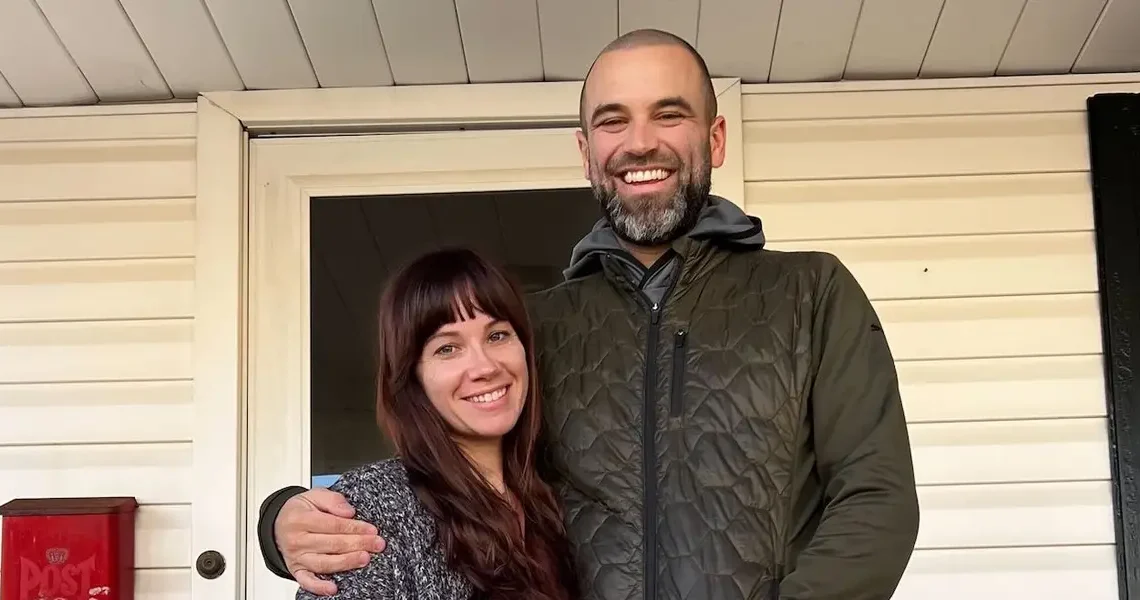
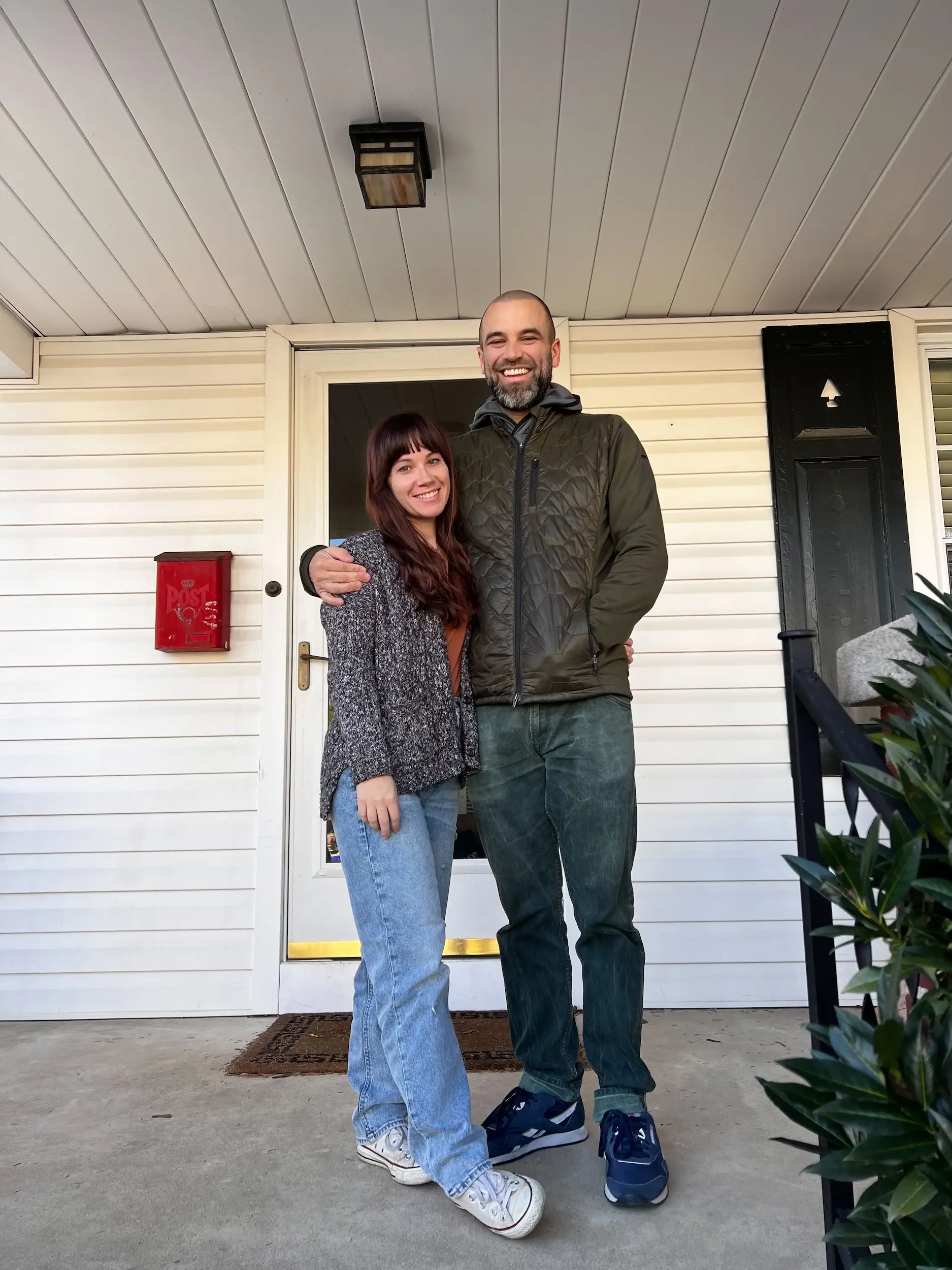
This as-told-to essay is based on a conversation with Derek Feinberg, 41, and Kate Feinberg, 38. The couple purchased a small home in Wayne, Pennsylvania, that they wanted to expand immediately. With little equity, they used RenoFi, a financing platform that allows borrowers to secure a loan based on a property’s future value. The following has been edited for length and clarity.
Kate: I never thought we’d be homeowners — I thought we’d be renters forever. But I woke up one day and said, “I want to buy a house.”
We were renting an apartment in Ardmore, Pennsylvania, so we were looking there and in the surrounding towns in the area. Wayne, Pennsylvania, was a pipe dream. It’s beautiful, but it is very pricey.
Derek: It’s probably one of the wealthier, well-known towns. There are a lot of beautiful neighborhoods of suburban Philadelphia popping up off the main line, and Wayne’s one of them.
Kate: I stumbled across an open house one day, and I sent Derek’s parents to go look at it, and they said, “You need to come see this house.”
We ended up buying it.

Immediately, my first thought was, “This house is too small. It’s not going to work. We can’t do this.” But after some convincing, I realized you can’t relocate your house. So we bought this property because of its location. You just can’t beat it.
I made Derek promise me that if we were buying this house, then we would do an addition within five years. We started a little bit sooner than five years, but after living in the home, I wanted it to be bigger, but I didn’t want to move because I love our community.
Our home was priced well below others in the neighborhood, but it’s small
Kate: There were a lot of houses going over asking in the area. We had to go well above asking to get this house, and interest rates weren’t great like they were during the pandemic, when everyone got those 3.5% interest rates. It probably wasn’t the best time to buy a house, but we did anyway.
We closed on the house in November 2022 for $420,000.
For comparison, the median home price in our neighborhood is somewhere around $1 million. [According to Realtor.com, the median listing price in Wayne, Pennsylvania, was $1,050,000 in March 2026.]
Derek: I remember our bid for the house actually wasn’t the highest, but I think the owner knew we were going to be living there and knew that the people above us were basically buying the house as an investment project to either rent it out or knock it down.
I think the owner wanted someone to continue living there and occupying it.
Kate: We bought it as a three-bedroom, one-bath with about 1,100 square feet, a large fenced-in backyard, and a beautiful porch.
Since the house was so small and had three very tiny bedrooms, we actually had to cut down a wall between two of the adjoining bedrooms because our bed wouldn’t fit in any of the rooms. So now, before the renovation starts, it’s actually a two-bedroom, one-bath.
We were kind of laissez-faire about the whole thing because we didn’t have these ideas of what we wanted; we just knew we wanted more space.
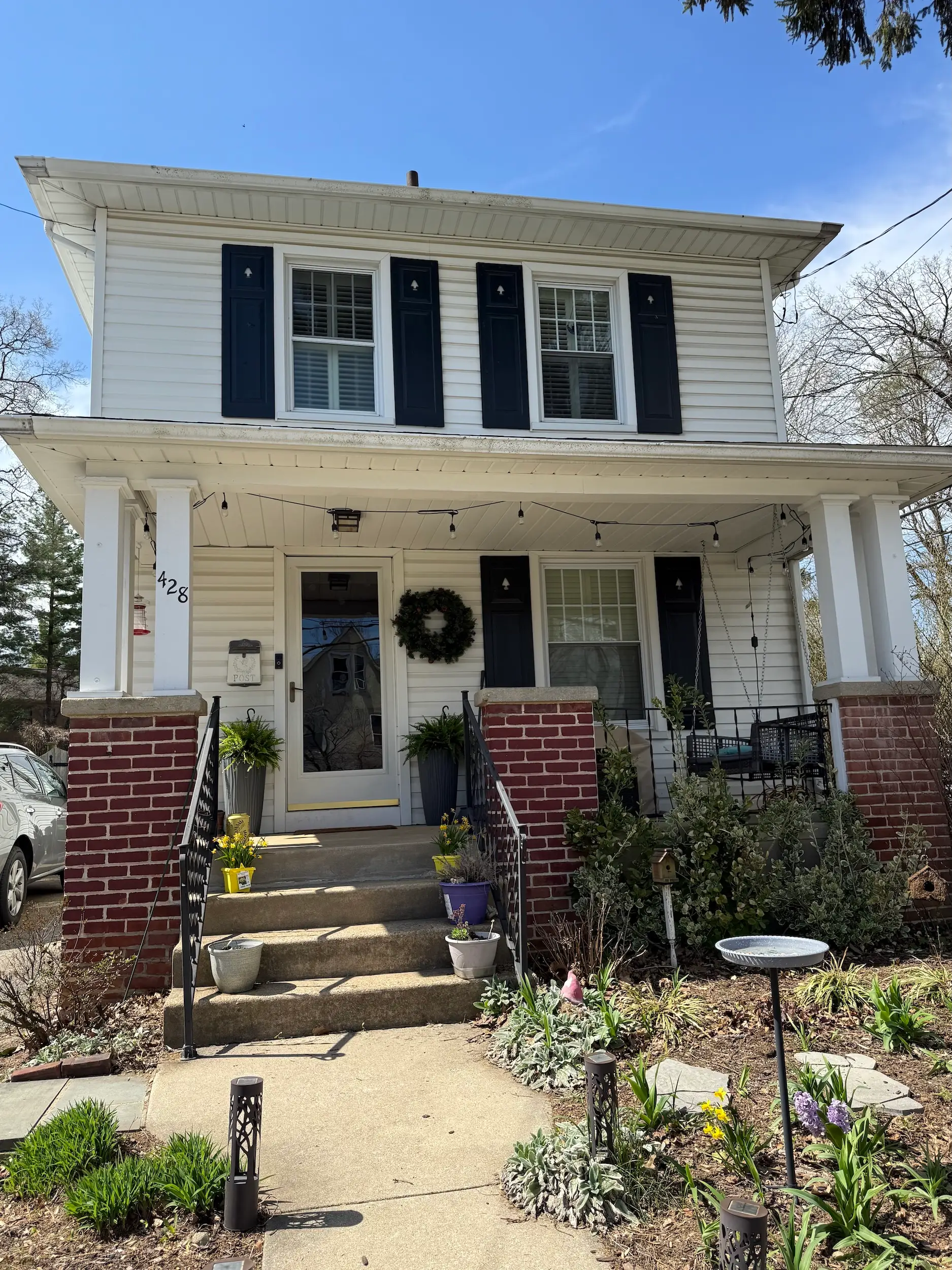
This addition will be adding about 700 square feet onto our home at the back, blowing out the back, and adding a big open living space, a big open kitchen, a big living room, two more bathrooms, and another bedroom.
This is going to be the only time we’re doing an addition, so it’s just all in, basically.
We had no idea how much our renovations would cost
Kate: When we bought the house, we knew we were going to put an addition on it. In my head, I’m thinking, an addition is going to cost, what, $100,000? It’s going to be nothing.
After doing research and talking to people who are experts in this field, we discovered that that’s not the case, and it’s way, way more expensive than that.
I was constantly running the numbers, comparing our equity and how much the project is going to cost and all of these things, and discovered I didn’t think there was any way that we could financially do this.
Derek: We just didn’t have any idea how much things would cost until we started talking to people who have done stuff like this. Then you’re like, “Oh crap, we may have to wait a little longer or figure out a way to borrow from our family or something.” That was not something that we wanted to do.
Kate: I called my personal bank and another credit union a family member had used, ran some numbers, and realized that number’s not going to cut it.
Derek: I was talking to some friends about it, and one mentioned that his friend does this thing called a construction loan with this company, RenoFi.
It was something that we never even considered, that a company would consider the value post-renovation as part of what they would give you in a loan.
Kate: We submitted our plans for our house, and they sent out an appraiser to our home. They appraised the value of our home now, and then they would develop what they think the house will be worth post-renovation.
The current value was around $600,000, and the estimated appraisal post-renovation is a little over $1 million.
The loan that we got with RenoFi was $300,000, and the amount that we would have been able to get through a conventional HELOC loan, just going off the current value of our home, probably would have been somewhere around $175,000.
It was a great option for us because instead of having this little amount in equity, we’re going to have a lot in equity because it’s taking into account the future.
Derek: The numbers kind of made the decision for us. We could have bought a different house in a less desirable location. But every time we went and checked something out, it just confirmed to us that the move was to renovate a smaller home in our ideal neighborhood, because we were never finding what we wanted elsewhere.
Kate: We did explore renovating versus buying a new home, but we love Wayne. We love our community. We love the walkability of it.
Ultimately, if we wanted to get a home of the size we would get with our renovation, the price is astronomical — we’d be priced out of our area.
Read the original article on Business Insider
The post We bought a house that’s too small so we could afford our dream neighborhood. A $300,000 third-party loan will help us renovate. appeared first on Business Insider.