When presidents go on television in wartime, they do not merely describe events. They try to impose meaning on them. On Wednesday night, President Trump presented the war with Iran as a stern but necessary undertaking that is nearing a favorable conclusion.
The threads of this victory narrative have been coming together since the United States launched Operation Epic Fury in late February. Elements of it are undoubtedly true: American and Israeli forces have been dominant from the air, able to penetrate the Islamic republic’s porous defenses almost at will. They have degraded not only Tehran’s military capabilities, but also the industrial base producing its missile and drone fleets. The attacks have also once more exposed Iran’s substantial intelligence vulnerabilities, allowing the targeting and killing of the supreme leader, Ayatollah Ali Khamenei, among other senior military and political leaders, at the campaign’s outset.
But the central question in this war was never whether Iran could be hurt. It was whether pain would translate into submission. So far, it has not.
The notion of having achieved regime change is belied by the replacement of one Khamenei with another. Most of the senior political echelon remains intact, while power has gravitated toward more hard-line military figures. Weakening Iran’s military capacity has not stopped Tehran from being able to muster regular drone and missile salvos at Israel and Persian Gulf allies, including on Thursday, the day after Mr. Trump’s speech.
Perhaps most significantly, the Iranians have managed to subdue traffic through the Strait of Hormuz, responding in the one arena where weaker nations have often found leverage against stronger ones: not by matching force with force, but by changing the terms of the contest.
If Iran cannot prevail in a conventional military exchange, it can still prolong the conflict, widen its costs, disrupt the global economy and make the exercise of American and Israeli power more expensive than its architects anticipated. In the process, it has shown that a degraded military and a severely damaged state do not need a weapon of mass destruction to hold its adversaries hostage.
This is why the three tacks Washington has taken to pressure Iran to cede control of the waterway — threatening to destroy Iran’s energy infrastructure, downplaying the disruption as a problem for others to deal with and saying the strait will open “naturally” after the war, and adding it to the long list of requirements for a potential agreement — have not yielded results.
Between the military shortcomings Iran displayed in the 12-day war last June and the nationwide protests it brutally suppressed this year, proponents of this war may have concluded that a regime already hollowed out by sanctions, corruption and popular anger would crack once struck with sufficient force, perhaps proving an exception to the conventional wisdom that air power alone cannot produce a more favorable political order. But a regime built to endure, its leadership infused with a culture of martyrdom and resistance and bereft of mercy, can continue to repress and remain in power.
Though the war may well end up compounding the challenges the Islamic republic faces, for the moment, a tightened grip has enabled Iran’s leaders to recast themselves as guardians of a besieged nation, rather than its tormentors.
Mr. Trump now has three options. He can escalate, thus the talk of sending American forces onto Iranian territory or seizing strategic positions to reopen shipping lanes. Ground intervention would not represent a simple intensification of the current war. It would transform it entirely. Iran most likely would mine waterways, target U.S. troops more directly, strike Gulf infrastructure more aggressively and draw additional regional actors into the fire.
The conflict would cease to be merely about Iran’s nuclear ambitions or even its regime. It would become a struggle over commercial arteries — a war whose consequences would radiate far beyond the battlefield.
The president can also just keep degrading Iran’s capabilities at a steady pace for a longer period of time and then walk away. That seems to be his plan for the near term. In his speech, he promised to hit Iran “extremely hard over the next two to three weeks.” Mr. Trump has raised the prospect of “spot hits” against Iran even after the conflict ends, and said in the speech he would send missiles if Iran tries to approach nuclear sites under the rubble.
While stopping the bloodshed would be a positive development, that scenario would also be disastrous for the Gulf States and the rest of the world, which would have to deal with a wounded and belligerent Iran that has shown it can disrupt the global economy at will.
The final option is a deal, which does not look promising now, given that the United States and Iran have widely differing conceptions of its terms. Squaring that circle requires the two sides to engage in a diplomatic effort that actually addresses underlying differences rather than merely silencing the guns.
If the past is prelude, the process will be maddening, imperfect and far less emotionally satisfying than promises of victory. But it remains the only path that addresses the actual stakes: in addition to the reopening of Hormuz, the questions of what happens to the stockpile of highly enriched uranium in Iran, the future of the region’s security architecture and what will happen to the Iranian people, to whom he promised help, not more harm.
Mr. Trump was right when he said on Wednesday that the United States has won every tactical exchange against Iran. What he did not admit to is that as commander in chief, he still managed to lose command of events.
Indeed, that is often how wars devolve from hopes of quick and decisive wins into more prolonged and uncertain endeavors, not through sudden defeat, but through a succession of so-called necessary steps, each one presented as the final push, each one making retreat more politically difficult and strategic clarity more elusive.
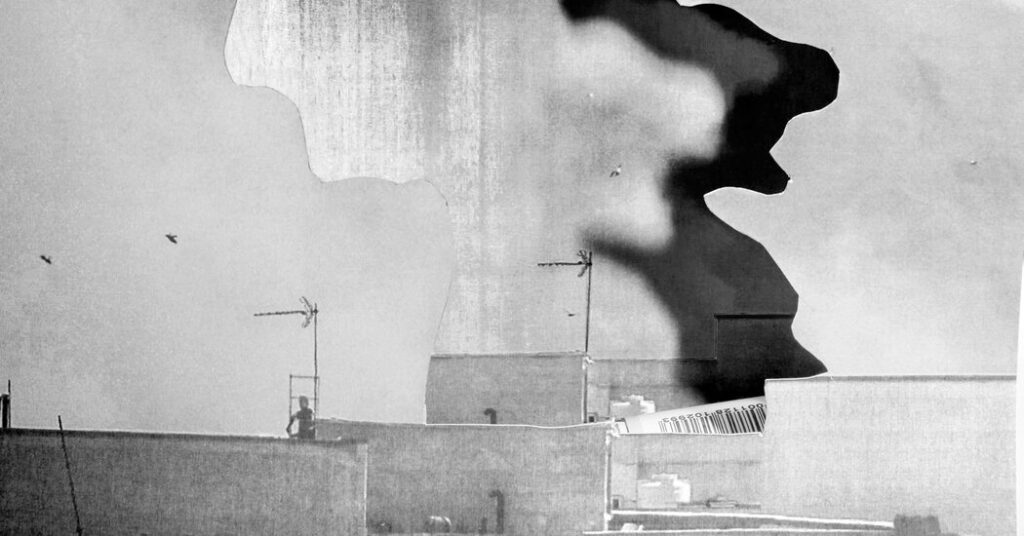
Source photograph by Agence France-Presse — Getty Images
Ali Vaez is the Iran project director for the International Crisis Group.
The Times is committed to publishing a diversity of letters to the editor. We’d like to hear what you think about this or any of our articles. Here are some tips. And here’s our email: [email protected].
Follow the New York Times Opinion section on Facebook, Instagram, TikTok, Bluesky, WhatsApp and Threads.
The post Trump Has Lost Control of His War appeared first on New York Times.