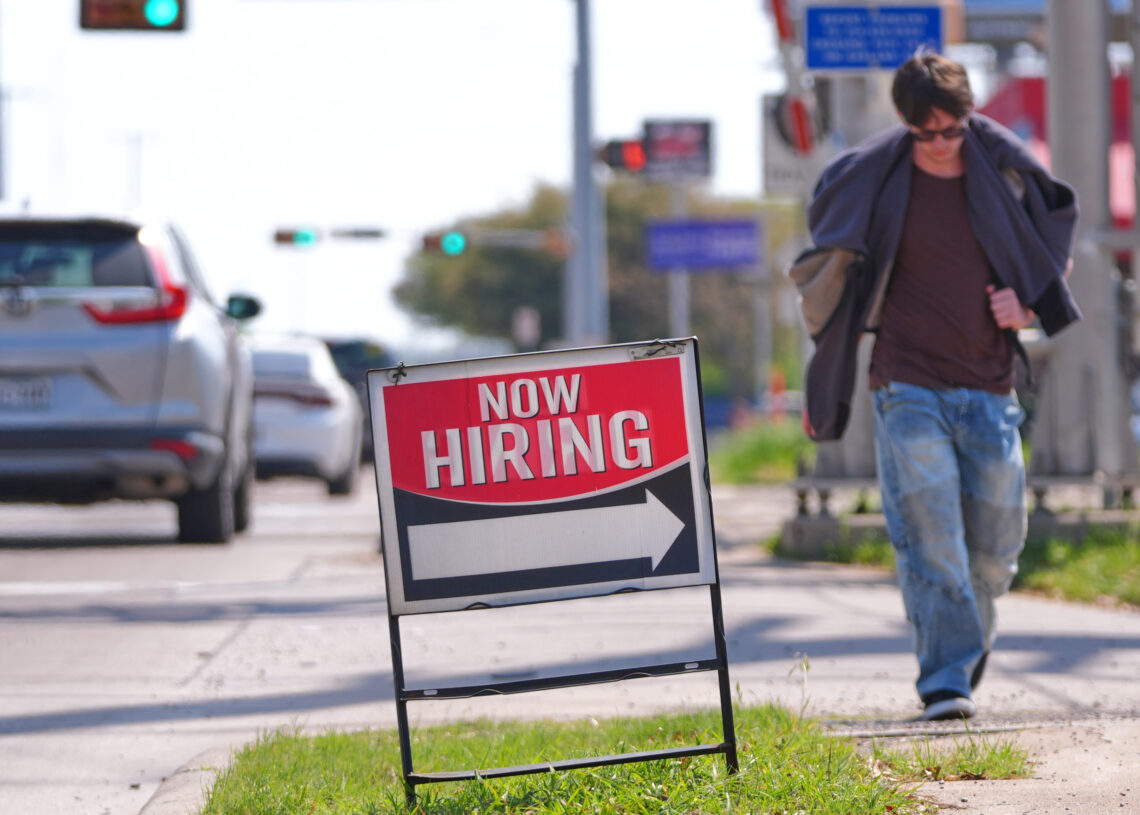
Employers added 178,000 jobs in March, notching a robust gain for a vulnerable labor market that faces challenges ahead as energy prices soar due to the conflict in Iran.
The unemployment rate edged down to 4.3 percent, according to data released Friday by the Labor Department.
The March jobs report, which blew past expectations, was boosted by the return of workers from West Coast health-care strikes and stormy winter weather. It also showed signs that employers had begun to regain confidence in stable business conditions following the volatile policy swings of the first year of the second Trump administration.
February job losses were revised down, showing the labor market shed 133,000 positions that month, which was worse than initially reported. However, January job creation was revised up to 160,000, stronger than initially reported. Average monthly job creation over the past year is around 20,000 jobs, the lowest level in years.
“We are on a bit of a roller coaster with job market data,” said Daniel Zhao, chief economist at career site Glassdoor. “That said, there are sources of uncertainty looming on the horizon — the most obvious one being the U.S.-Iran war and the prospect of rising energy prices.”
The jobs data reflects the period after the United States attacked Iran, however before the global supply shocks had begun to take hold. Economists forecast that soaring fuel prices tied to the war will weaken job creation in the months to come, dampening expectations of a rebound.
The Trump administration trumpeted Friday’s jobs numbers.
“America’s economic comeback is on full display: Job growth smashed expectations,” Labor Secretary Lori Chavez-DeRemer said in a statement.
Health care continued to drive job creation in the United States, adding 76,000 positions, reflecting the demands of an aging population. The manufacturing sector, which has been shrinking for most of the past year, added 15,000 positions in March. Employment also grew in construction, leisure and hospitality, social assistance, and transportation and warehousing.
Other industries remained stagnant or lost jobs. The federal government shed 18,000 positions, reflecting Trump administration cuts, and is down by 11.8 percent since its peak in October 2024. The finance sector cut 15,000 positions.
Average hourly wage growth slowed considerably in March, rising 3.5 percent over the past year to $37.38 an hour. Wage growth continues to beat inflation, in a boost to Americans’ standard of living. But with a sluggish labor market and stubbornly high prices, that gap has begun to narrow.
“We’re converging on a point where soon workers are going to feel like they have less money at the end of the day because wage growth is just not going to be able to keep pace as businesses are cutting back,” said Nicole Bachaud, labor economist at ZipRecruiter.
March’s drop in unemployment rate benefited Americans across racial demographic groups, in particular African Americans who had seen a troubling surge in joblessness.
But the drop in unemployment was driven by workers exiting the labor market. In March, the share of Americans actively working or searching for a job fell to the lowest level since 2021, a period when many people withdrew from the job market because of the covid-19 pandemic.
Before the U.S.-Israeli assault on Iran, the jobs market was flashing warning signs. In February, the pace of hiring slumped to its lowest level in nearly six years, according to a separate labor market report released Tuesday. Job openings fell by more than 350,000, according to that same report.
So far, the labor market has avoided widespread layoffs. Sharply reduced immigration and a flood of baby boomer retirements means that the economy hardly needs to create any jobs to keep the unemployment rate steady. The unusual situation for the United States has drawn parallels to countries with weak population growth due to aging and low birth rates, such as Japan and Italy.
“There’s zero net job creation in the private sector,” Federal Reserve Chair Jerome H. Powell said at a March 18 news conference. “But actually that looks like that’s about what the economy needs in terms of dealing with very, very low — nonexistent, really — growth in the labor force.”
Indeed, data on job losses remains stable. New filings for unemployment insurance are around the lowest level in two years, according to separate data released Thursday by the Labor Department. And layoffs remain low, despite a grim labor market with large numbers of people out of work for more than six months. In other positive news, consumer confidence ticked up in March despite soaring oil prices.
Still, hiring can only slow so much before unemployment begins to rise, economists say.
“The biggest impact that we could see given the information we have right now is going to be energy and gas prices remaining elevated,” Bachaud said. “Those things are going to impact consumer spending and sentiment and business input costs as transportation costs increase. And all of that is likely to lead to a slowdown in hiring.”
The post March jobs report blows past expectations appeared first on Washington Post.