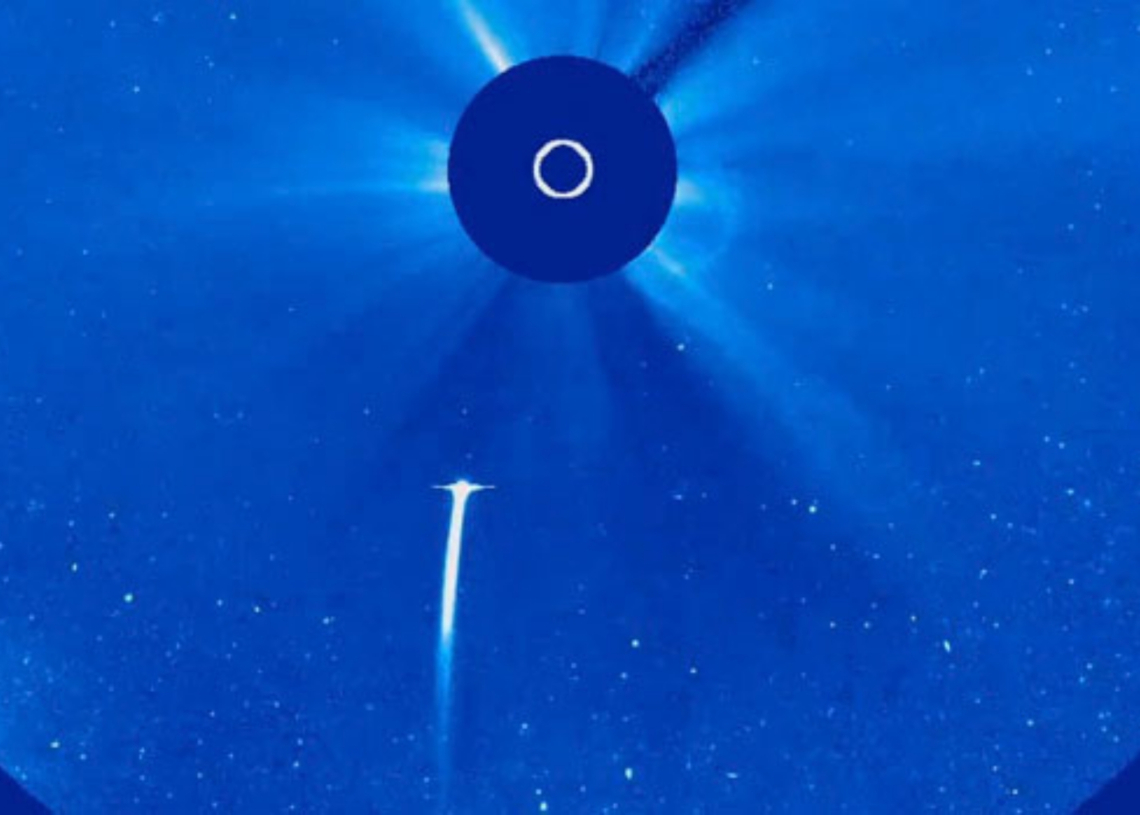
A comet is about to do something pretty wild this Saturday, April 4th, which is flying absurdly close to the sun and hoping for the best.
The object in question is Comet C/2026 A1, better known as MAPS, a rare Kreutz sungrazer that will make its closest pass by the sun on April 4. According to the British Astronomical Association, it’s expected to skim about 98,000 miles above the sun’s surface and pass through the lower corona around 9:30 a.m. EDT.
MAPS was discovered on January 13 by French astronomers working at the AMACS1 Observatory in Chile. Early estimates had the nucleus at around 1.5 miles wide, but later observations from the James Webb Space Telescope cut that down to roughly 0.4 kilometers, or about a quarter mile. This isn’t good news for the sungrazer, because the smaller they are, the less likely they are to survive a visit to the sun. Sky & Telescope described that size as roughly comparable to Comet Lovejoy, another sungrazer that famously survived a brutal solar pass in 2011.
What Has to Happen for You to See the Rare Sungrazer Comet This Weekend
The survival of this comet is the big draw. Kreutz sungrazers are comets that swing terrifyingly close to the sun, blaze brighter, and often break apart in the process. The European Space Agency notes that many of them simply evaporate. If MAPS holds together, even in part, it could put on a gorgeous show after sunset in the coming days. The British Astronomical Association says a bright tail may become visible in the western evening sky starting around April 9.
There’s also the possibility that it disintegrates and still gives us a decent show, because comet forecasts always come with a heavy dose of “maybe.” Space.com laid out the likeliest possibilities this week: total disintegration before perihelion, breakup after perihelion, or survival long enough to give observers a bright post-sunset display. Given the comet’s relatively small nucleus, that first outcome is very much on the table.
For anyone tempted by the “daylight comet” angle, don’t be dumb about it. Viewing anything near the sun can permanently damage your eyes. Space.com recommends following the action through NASA’s SOHO LASCO C3 camera rather than trying to spot it yourself in broad daylight. If MAPS survives, the safer and much less dangerous plan is to wait a few days and look west after sunset.
The post Here’s What Has to Go Right for You to See the Rare Sungrazer Comet This Weekend appeared first on VICE.