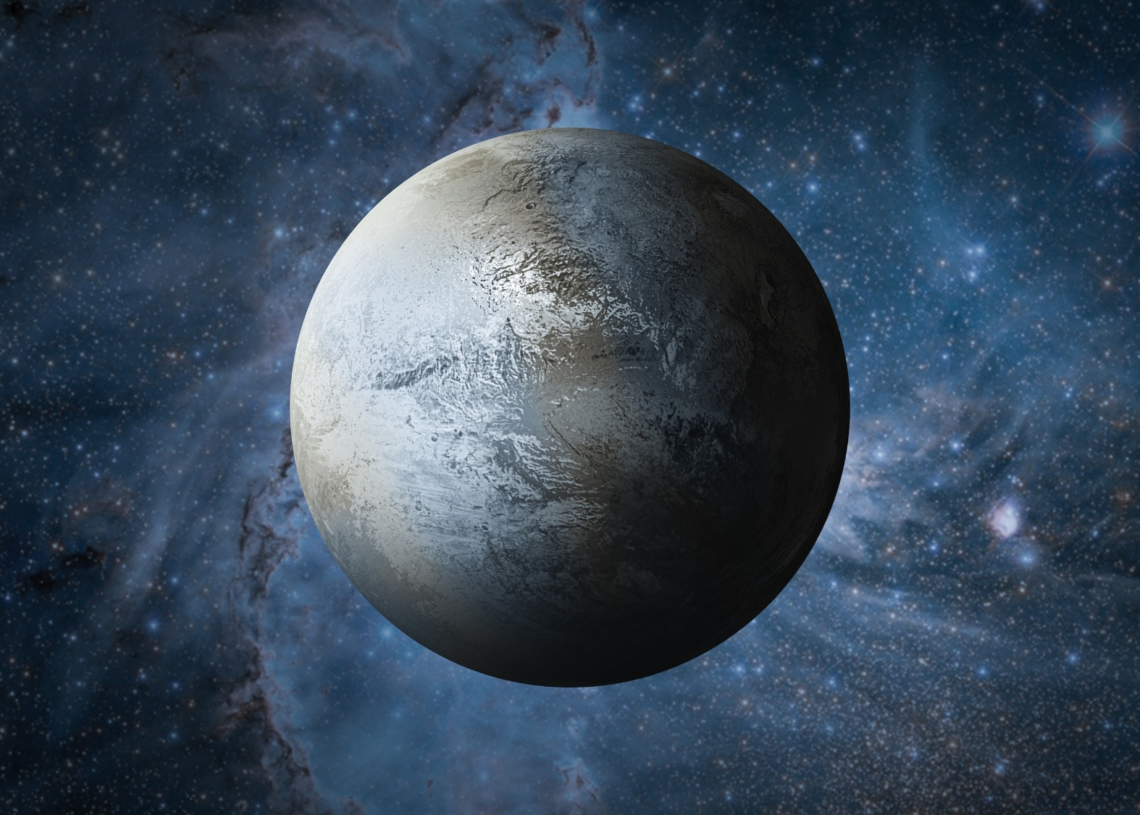
16 Psyche is a gigantic space rock roughly the size of Massachusetts. Initial analysis reveals that it might be unusually rich in a variety of metals, prompting some scientists to wonder whether it might be more than a common space rock. Maybe it was the exposed core of a planet that never quite came together?
Let’s say that’s true, hypothetically speaking. It would mean that, scientifically, 16 Psyche would instantly become one of the most worthwhile space objects for research purposes. It would also have an earthly monetary value that is, frankly, absurd and obscene. It would, by itself, represent the exact reason so many countries and private businesses are scrambling to be the first to figure out how to mine in space.
But before people can really start dreaming about the knowledge and money to be mined from 16 Psyche, we first need to figure out exactly what it is.
An Asteroid Called 16 Psyche Might Actually Be The (Extremely Valuable) Core of a Failed Planet
In a recent study published in the Journal of Geophysical Research: Planets, and detailed by Phys.org, scientists used 3D simulations to recreate impacts on Psyche’s surface. They focused on a large crater near its north pole. These digital reconstructions serve as forensic tools, using the shape and depth of craters to infer what lies beneath.
The study’s results didn’t settle any debates, but it did narrow the list of what 16 Psyche could be: a multilayered rock with a dense metallic core covered by a thinner rocky shell, collectively suggesting that 16 Psyche could have been a protoplanet that never finished forming. Or it could all mean that it’s just a weird, random mix of metal and rock that resulted from a series of violent collisions that all melded together inside.
Researchers still want to know more about its porosity. If it’s airy inside, like the crumb of a well-risen focaccia bread, then it might not have as much valuable material in it as a denser asteroid that preserves some of the material from whatever slammed into it over its life span. That seemingly minor detail could determine whether or not this thing is worth drilling into.
NASA won’t be getting any clarity until its Psyche Mission arrives in 2029. A spacecraft will provide what could end up being the closest thing we’ve ever seen to a planetary core, something we can’t access here on Earth without drilling thousands of miles beneath our feet.
The post Why Scientists Think This Asteroid Is the Core of a Dead Planet (and Extremely Valuable) appeared first on VICE.