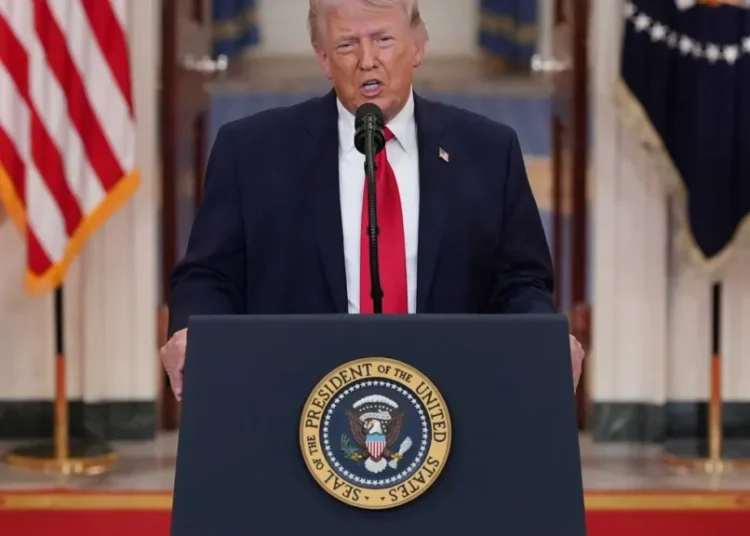
Hours before he was set to address the nation about the war in the Middle East, President Trump said that he no longer cared about Iran’s stockpile of enriched uranium because it was buried deep underground.
“That is so far underground, I don’t care about that,” he said in a Reuters interview, referring to near-bomb-grade uranium that international inspectors say could be used to produce nuclear weapons. The comment undercut one of his primary justifications of the war, which was preventing Tehran from developing those weapons.
The shifting message came as Iran’s president, Masoud Pezeshkian, appealed directly to the American people in a letter. His message was at times defiant or patronizing, and at others conciliatory. In it, he suggested the possibility of diplomacy, saying that “the path of confrontation is more costly and futile than ever before.”
It was unclear if the message reflected the views of Iran’s leadership as a whole. U.S. intelligence agencies in recent days have assessed that the Iranian government remains skeptical of negotiations.
Here is what else happened:
Iran: Formidable strikes rocked Tehran early Wednesday morning, damaging buildings and sending residents seeking cover. Iranian media reported an attack on an airport in Isfahan province, and strikes that wounded seven people on Hengam Island in the Strait of Hormuz.
Kamal Kharazi, a former Iranian foreign minister who officials said was helping facilitate a potential meeting between Vice President JD Vance and Iranian authorities, was injured in an attack on a residential building, according to a semiofficial Iranian news outlet.
Israel: Iran launched what its state-aligned media called one of the largest attacks on Israel yet, causing extensive damage to several cities, according to Israel’s rescue services. At least 14 people were wounded after missile strikes to central Israel. The attacks came as Israelis prepared for Passover.
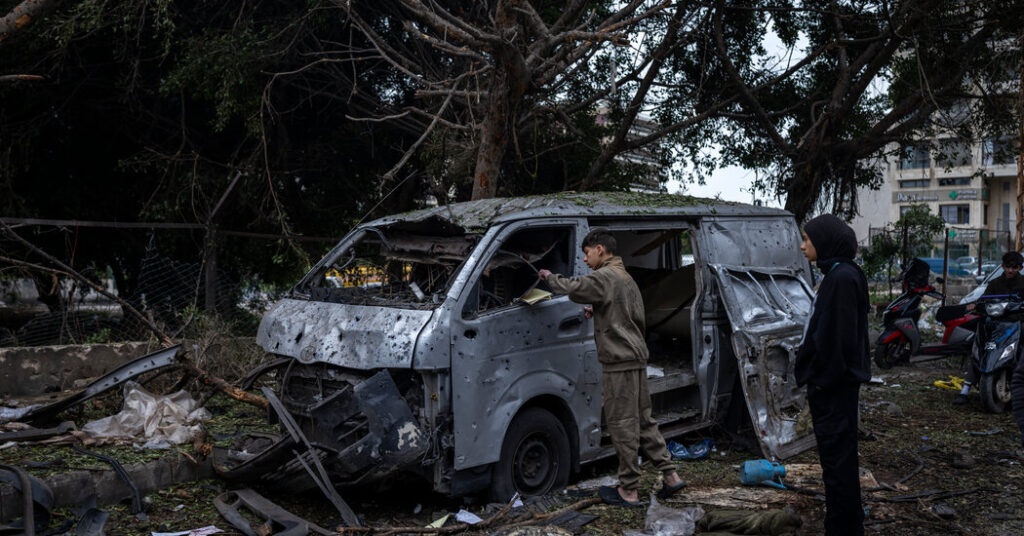
Lebanon: Israeli strikes in Beirut killed at least seven people and wounded 24 others early Wednesday, according to Lebanon’s national news agency. Israel also continued striking southern Lebanon, a day after outlining plans to occupy and control a stretch of land and demolish entire towns. Israel on Wednesday announced that it had killed one of Hezbollah’s senior commanders, Yusuf Ismail Hashem, during a Tuesday attack on Beirut.
Strait of Hormuz: After Mr. Trump declared the war had largely achieved its goals, Ebrahim Azizi, head of the Iranian Parliament’s National Security Commission, responded in a post on social media, saying that “The Strait of Hormuz will certainly reopen, but not for you.” Mr. Trump, after previously stating that reopening the waterway was an issue for other countries to handle, wrote Wednesday that he would not consider a deal until the Strait was “open, free, and clear.”
United States: Even as Mr. Trump said he wanted the war to end in two to three weeks, the Pentagon moved to increase capabilities in the region, more than doubling the number of A-10 attack planes in the Middle East by bringing in 18 more aircraft to join around a dozen already there. U.S. Central Command said American forces had struck more than 12,300 targets inside Iran since the war began, though it offered few details about the attacks.
Gulf states: Three cruise missiles were launched at Qatar, with one striking an oil tanker in Qatari waters, though no one was injured. In the United Arab Emirates, falling debris from a drone interception killed a Bangladeshi national in Fujairah. The Houthis in Yemen said they had also launched a ballistic missile at Israel.
Global economy: Oil prices fell and stocks climbed on Wednesday as Mr. Trump said the United States was winding down its war with Iran “very soon.” Brent crude, the international benchmark for oil, is now just above $100 a barrel, down from $120 a barrel in recent days. However, international concerns lingered. Australia’s prime minister made a national address urging people not to hoard fuel and take public transportation if possible.
Eve Sampson is a reporter covering international news and a member of the 2024-25 Times Fellowship class, a program for journalists early in their careers.
The post What Happened in the War in the Middle East on Wednesday. appeared first on New York Times.