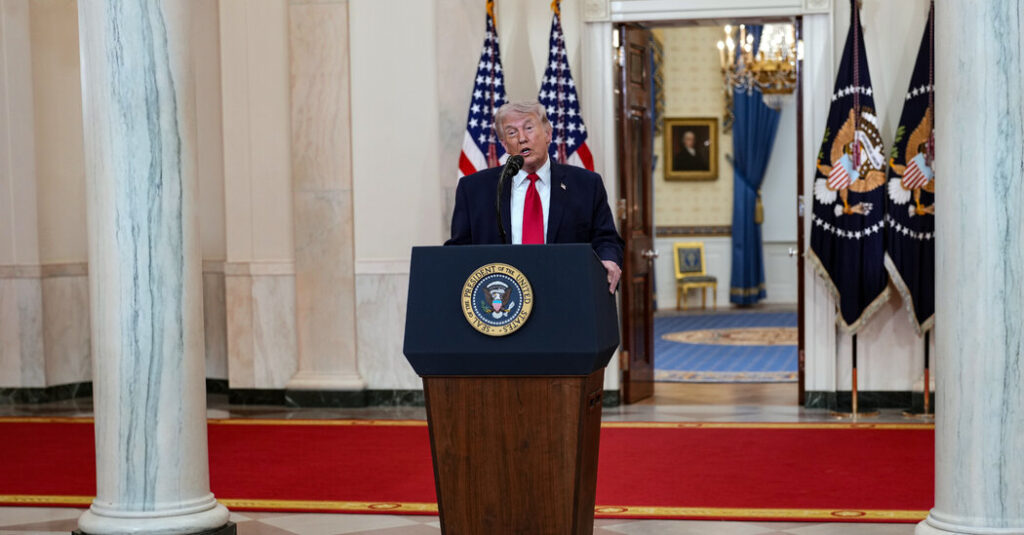
In remarks to the nation on Wednesday, President Trump had been expected to lay out a timeline to end the conflict in Iran. Markets rose and oil prices fell ahead of his speech.
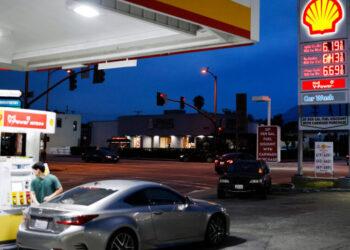
Instead, Trump did not offer a clear path toward the end of the war, though he estimated it would wind down in three weeks. He largely repeated talking points from recent days, and suggested that Americans were insulated from the supply shock that has increasingly caused an energy crunch in parts of Asia and Africa. The war has prompted Bangladesh to ration fuel for vehicles and Sri Lanka to turn off billboards after 9 p.m., for example.
Calling the spike in gas prices a “short-term increase,” Trump said other countries should be responsible for reopening the Strait of Hormuz, a narrow waterway that conveys up to a fifth of the world’s oil and a similar proportion of its natural gas. “They must grab and cherish it,” he said.
Markets fell and oil prices rose on Thursday morning.
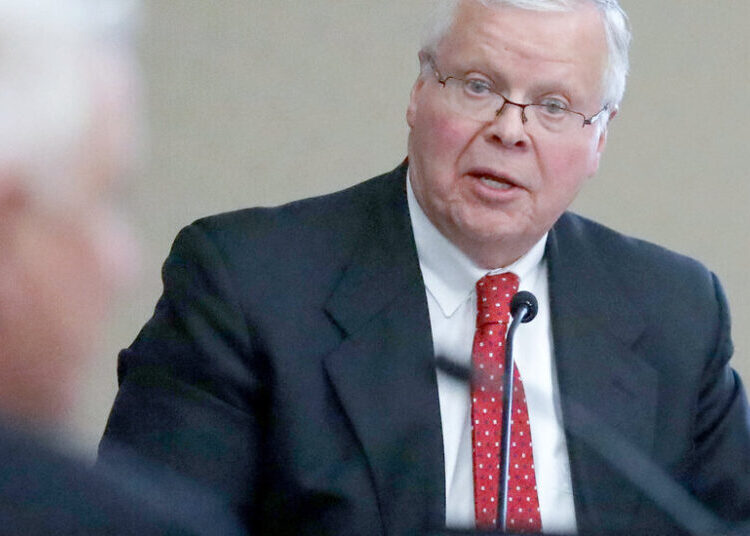
Trump’s comments were in stark contrast to recent remarks from other world leaders, who have begun making increasingly urgent public statements as they plan for many more months of disruption to the world’s oil and gas supplies.
World leaders hunker down
World leaders abroad have offered sobering assessments this week.
“The current crisis is not like a passing shower that will stop, but rather like a massive storm that could last indefinitely,” President Lee Jae Myung of South Korean said on Thursday, urging citizens to “save every drop” of fuel.
“We will not go back to normal in the foreseeable future,” Dan Jorgensen, the E.U. energy commissioner, said this week, urging people to work from home, drive slower and fly less.
The Australian prime minister, Anthony Albanese, in a speech on Wednesday implored people to use public transportation and announced plans to cut a fuel tax, reducing gas prices in the short term. “The reality is, the economic shocks caused by this war will be with us for months,” he said.
And announcing temporary moves to help reduce household electricity bills and cut fuel taxes, Prime Minister Keir Starmer of Britain emphasized a long-term strategy to pivot to renewable power sources. “Frankly, I am sick and tired of your energy bills fluctuating up and down because we are on the international market,” he said in a speech on Wednesday.
Countries are also re-evaluating their use of coal, the most polluting fossil fuel. Many had planned to phase out coal in the coming years to meet climate goals. Now, Germany and Italy are both considering delaying the closure of existing coal plants. South Korea and Japan have announced plans to increase coal use, too.
How long could the crisis last?
Economists and oil analysts have ripped up their forecasts several times since the war began. But it’s becoming clear that once the Strait of Hormuz reopens, it will take months for energy flows to return to normal.
Before the war, the strait conveyed about 20 million barrels per day of oil, said Claudio Galimberti, chief economist at the research firm Rystad Energy. That number has fallen to near zero. Once it reopens, he estimates traffic will tick upward at a rate of about half a million barrels per day.
“If all the stars aligned, then it’s going to take at least a month to reestablish the flows,” he said.
But that’s just an estimate of traffic through the strait. Restarting oil and gas production facilities that have shut down will take longer. Damaged infrastructure, like the large natural gas facility owned by QatarEnergy that lost about a fifth of its capacity when it was attacked last month, could take years to fully repair.
Galimberti estimates it will take five or six months for the supply chain to normalize. His best guess is that the process will begin in mid-April.
So what does that mean for the world’s energy supplies? He doesn’t expect oil prices to return to prewar levels in the months it will take to re-establish shipping traffic. That means major oil and gas importers like Europe, Japan, and South Korea will remain exposed to high energy costs, increasing the risk of recession. The turbulence could shake up regional energy politics, he said.
“This crisis could put new wind in the sails of renewables, specifically on the policies supporting renewables in Europe,” he said, “on the basis in this case not of the climate objective, but of energy security.”
Related: How High Are Gas Prices Where You Live?
Climate law
Republicans seek protections for oil giants against climate lawsuits
Republicans at the state and federal levels are working to shield fossil fuel companies from laws and legal claims that aim to make them pay for some of the damage caused by climate change.
Lawmakers and oil-industry advocates are running a two-track campaign, in statehouses and in Congress, to pass laws to protect companies from paying some of the costs of intensified wildfires, storms, floods and other effects of global warming. The goal is broad immunity, similar to what Congress granted to gun manufacturers two decades ago.
The effort comes as major fossil fuel companies including Exxon, Chevron and ConocoPhillips face a wave of lawsuits from cities, states and individuals who say the companies knew their products would dangerously warm the planet.
Last week, Utah became the first state to enact a law that shields companies from climate related claims. Republican lawmakers in at least four other states, including Oklahoma, Louisiana, Tennessee, and Iowa, are working on similar bills. — David Gelles and Karen Zraick
Transportation
Are people (slowly) beginning to switch to E.V.s?
Tesla said on Thursday it had sold slightly more cars in the first three months of 2026 than it did in the same quarter a year earlier, Jack Ewing reported. That’s one of several tentative signs that more people are looking at electric vehicles and hybrids as the war in Iran pushes gas prices higher.
Hyundai said Wednesday that sales of its electric Ioniq 5 in the United States rose 13 percent in March, he writes. The company’s Kia division said on Wednesday that sales of its electric models rose 30 percent during the first quarter.
General Motors’ Cadillac division recorded a 20 percent increase in sales of electric models during the first three months of the year, a sharp contrast to the company’s overall sales, which fell 10 percent.
Climate science
The vital climate data that Maine’s lobstermen help catch
Bob Hersey Jr., a Maine lobsterman, is among nearly 150 fishermen who have installed temperature sensors on their traps or trawl nets from Maine to North Carolina as part of a program run by a nonprofit organization with help from the National Oceanic and Atmospheric Administration.
The soda-can-size sensors go down to the seafloor, giving fishermen and scientists a three-dimensional map of the ocean. The data is continuously collected and fed into regional weather and climate models. While the data is valuable to researchers, it’s also helping Hersey and others find the best places to fish.
As New England’s fishing industry faces declining catches, restrictions to protect endangered right whales and a rapidly changing ocean ecosystem, the data collection program is fostering connections between fishermen and scientists, two groups with a history of occasional conflict. — Eric Niiler
More climate news from around the web:
-
Renewable energy made up almost 50 percent of global electricity capacity last year, according to the International Renewable Energy Agency. Reuters notes that renewable growth was led by record solar installations.
-
The Wall Street Journal reports on what it calls “America’s E.V. rust belt.” Companies that manufactured electric vehicle parts have shuttered factories as American automakers have pivoted away from E.V.s.
Read past editions of the newsletter here.
If you’re enjoying what you’re reading, please consider recommending it to others. They can sign up here.
Follow The New York Times on Instagram, Threads, Facebook and TikTok at @nytimes.
Reach us at [email protected]. We read every message, and reply to many!
Claire Brown covers climate change for The Times and writes for the Climate Forward newsletter.
The post Trump Said Gas Prices Would Fall Quickly. World Leaders Are Not So Sure. appeared first on New York Times.