One of the ongoing mysteries of my adult life is why I don’t like heavy metal anymore. Back as a young teenager, distorted riffs with shredded vocals were my introduction to serious music fandom. I remember feeling pride when my dad sized me up in a giant black hoodie and wondered when I’d become a “metalhead.” Somewhere along the way, though, my listening turned toward the delicate or the dance-y. I try to stay current with all sorts of genres, but it’s been extremely rare for metal to pierce my skull.
Maybe metal itself has changed: When Tool and Deftones caught my ear in the early 2000s, the genre was a mainstream force. Its musicians seemed to want to conquer the world rather than—as I now perceive whenever I dip in—to burrow in extreme directions for true aficionados. But I suspect that the real reason for my apathy is how I spend my time. One might guess that I grew too soft for noisy aggression, but the truth is that I became too hard, as in jaded. Metal’s irony-free histrionics and fatalism ceased to impress. Life is busy, and negativity comes cheap. I tell myself that all forms of listening are valid, but deep down, I think I’ve developed a wariness of wallowing.
So when I hit “Play” last week on a new metal album drawing critical acclaim, I expected to be screamed at for a few minutes and then turn on something else. Instead … whoa. Full-body chills. A cartoonish dropping of the jaw. I was experiencing the miracle of sudden and unexpected emotion. Distraction, disinterest, numbness: All of these, I was reminded, can be disrupted by the right combination of sounds.
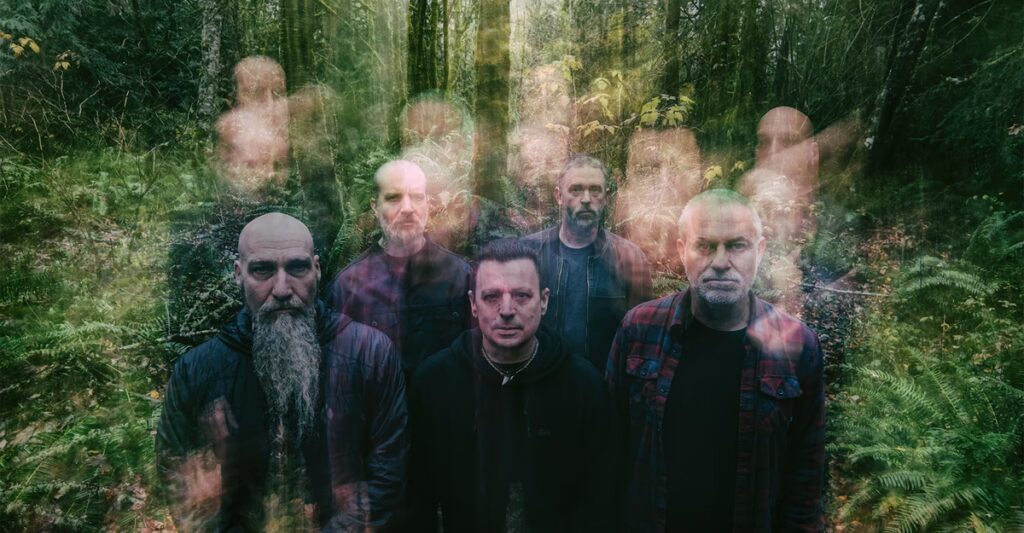
The album is An Undying Love for a Burning World, by Neurosis. Since 1985, the Oakland band has pushed metal in psychedelic directions by employing spacey synthesizers and cosmic lyrics. The band is also heavy. Its guitars evoke appliances crashing off of high surfaces, and its singing is a lot like belching. Over the decades, Neurosis became revered as one of metal’s trustiest guardians—until, in 2019, the band mysteriously parted ways with its longtime vocalist, Scott Kelly. In 2022, the reasons for that departure were made clear when Kelly publicly admitted to “emotional, financial, verbal and physical abuse of my wife and younger children.”
Many fans assumed that the band was done for good. But in secret, it enlisted the journeyman singer-guitarist Aaron Turner and got to recording its first album in 10 years, which was surprise-released in mid-March. The rapturous response that An Undying Love for a Burning World has received indicates that my reaction is not merely the result of naivete: Neurosis has, through some blend of skill and inspiration, made the right kind of noise to stand out in this overwhelming moment.
The opener is a stop-you-in-the-street vocal collage that’s less than a minute long. “We are torn wide open,” shouts the vocalist-guitarist Steve Von Till, sounding far away and very agitated, like he’s calling for help with his leg caught under a boulder. The phrase repeats, and Von Till’s voice seems to come closer. He screams about other things, including “isolation”: a word commonly found in didactic editorials about the spiritual crisis of the smartphone era. But no intellectualized response is needed here. This track is an urgent warning. In sound alone, it grips the gut.
For song two, “Mirror Deep,” the album’s first riff crashes in like an asteroid. It’s a jagged chunk of sound, but it’s accompanied by smooth, smeared elements: a synth drone, clouds of reverb. Turner begins grunting in a choppy cadence that plays counterpoint to the riff. Some heavy metal seeks to make the listener lose themselves in a blur of sound, but Neurosis is playing a different game: Every measure of music is its own drama, with tension and release, expectations fulfilled and subverted. The band wants you up, on, furiously alert.
[Read: The savage empathy of the mosh pit]
It uses that attention to stage moment after moment of sublime intensity. Songs often drop from chaos into quiet passages whose keyboards and strummed guitar glimmer like constellations. And the band does more than play with the live/soft dichotomy; it likes to engineer tricky blends of fast and slow, complex and simple. The astonishing crescendo of “Seething and Scattered” pairs sustained swells of noise with swarms of percussion. The effect is like being pulled from placid water into a rushing undertow. Throughout, a varied palette—industrial sound effects, drum machines, and even some pretty singing—gives the songs a sense of painterly depth.
My first response to the cleverness of this music was giddiness, but as I relistened, a classically metal feeling surfaced: sorrow. The band is prophesying the inevitable death of our species. Many of the lyrics embody the point of view of lifeless particles floating in space, encoded with the sad memory of the civilization they were once a part of. And modern alienation seems to have something to do with that civilization’s end: In “Seething and Scattered,” the band members trade off vocals, singing that “the source of our fall” is our disconnection from “ourselves,” “each other,” and “all that is sacred.”
Disconnection is one of the buzzwords of the 2020s, and none of us really needs another reminder that humanity may be sleepwalking into personal or planetary doom. What we do need is art that can wake us up to the things that humans are uniquely capable of—genius, craft, collaboration. In kicking me back to the mind frame I inhabited decades ago, when all sorts of music felt new, this album reminds me that the time I thought was spent wallowing was really spent doing something else—listening actively, and tapping into a universe larger than the one I existed in day-to-day. Today, tuning out the parts of the world you don’t understand, that you don’t have time for, that you’ve grown away from, is all too easy. Staying open is a struggle, but when it pays off, an entirely different future seems possible.
The post The Album That Made Me Fall Back in Love With Heavy Metal appeared first on The Atlantic.