Lost Science is an ongoing series of accounts from scientists who have lost their jobs or funding after cuts by the Trump administration. The conversations have been edited for clarity and length. Here’s why we’re doing this.
Peter Frazier: I lead a research program that works with the Navy and the Marine Corps on logistical decision making. To succeed in any mission, armed forces require food, water, ammunition and medical supplies. Often these needs are urgent, and the transport vehicles delivering them may be under fire.
The goal of our project is to provide Marine logisticians with modern, artificial-intelligence-based tools to better determine how to get supplies where they need to go.
One critical item to transport is blood. After a traumatic injury, people have a higher survival rate if they receive a transfusion within an hour. That window is difficult to meet when someone is wounded near a combat area, especially because blood is perishable and must be refrigerated. Demand is also highly variable; sometimes you need none, and sometimes you need a lot.
I led a team of students developing software, based on mathematical models, to provide recommendations on how much blood to store in various locations. We worked with blood logistics officers to refine the program. Then, in April 2025, I received a message from the Department of Defense: All funding had been frozen.
It made no sense. We were working to save the lives of Marines — why was our funding being frozen?
While the money was frozen, the master’s students on the project graduated, and we lacked the funds for Ph.D. students to continue the work. We got money through a defense contractor, but we still had a significant amount of work to do to polish the software for real-world application.
This tool could have worked almost anywhere, but we were specifically motivated by the need for blood in the Indo-Pacific. In that strategic region, the base of operations is typically a ship. When the United States military is overseas, blood is sourced from donations by its own personnel. The tool was designed for settings where the military collects blood in a secure location, such as a ship or a base, and then transports it. It could even have been used by forward-deployed units in areas like the Persian Gulf.
In the fall the funding was restored, but the money did not come through Cornell until January. By then, we had lost a year of progress. We got the money back, but we lost the time. Eventually, we had to focus on other logistical areas, such as the transport of food, water and ammunition.
This project was important because when someone is wounded and survival depends on the availability of blood, this software would have made that survival more likely. Now it will not. In the end, it is a matter of someone’s life.
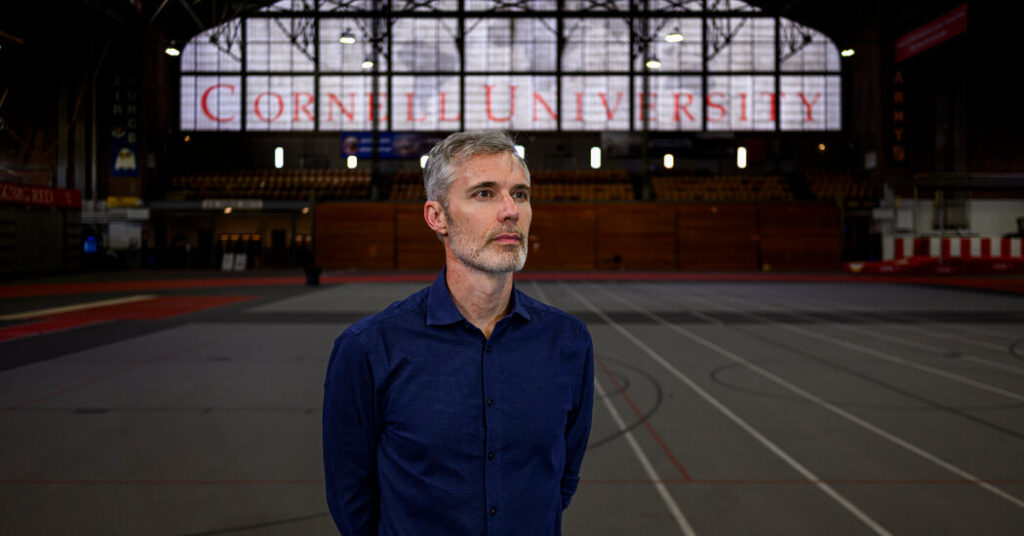
Peter Frazier is an operations researcher at Cornell University.
Alexa Robles-Gil is a science reporter and a member of the 2025-26 Times Fellowship class, a program for journalists early in their careers.
The post He Studied How to Transport Blood to Wounded Marines appeared first on New York Times.