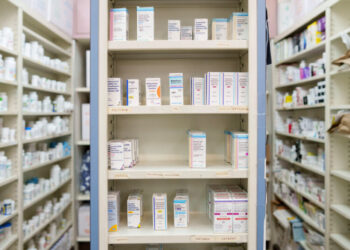
The Trump administration on Thursday said the federal government would try to curb levels of microplastics and pharmaceuticals in the drinking water of hundreds of millions of Americans.
Lee Zeldin, the administrator of the Environmental Protection Agency, said the agency would propose adding microplastics and pharmaceuticals to a list of priority pollutants.
The move could unlock more federal research into how prevalent the substances are in the environment, how they harm human health and how drinking water could be treated to remove them. It could also lead to costly new standards that water utilities would need to meet.
“For too long, Americans have vocalized concerns about plastics and pharmaceuticals in their drinking water,” Mr. Zeldin said in a statement. “That ends today. The E.P.A. is sending a clear message: we will follow the science, we will pursue answers, and we will hold ourselves to the highest standards to protect the health of every American family.”
Supporters of the Make America Healthy Again movement led by Health Secretary Robert F. Kennedy Jr., welcomed the announcement. Mr. Kennedy was expected to join Mr. Zeldin at a news conference at the E.P.A.’s headquarters on Thursday afternoon.
The praise from MAHA activists was notable because they had recently criticized the administration for a contentious move to increase the domestic production of glyphosate, a weedkiller linked to cancer.
“This is what the Make America Healthy Again movement is about: identifying the hidden chemical exposures that are contributing to chronic disease and finally bringing them into the regulatory process,” said Vani Hari, a prominent health activist and supporter of Mr. Kennedy’s agenda. “You can’t regulate what you don’t officially track, and now microplastics and pharmaceuticals are officially on the federal government’s radar for drinking water.”
Still, environmentalists pointed out that the Trump administration recently decided not to regulate a single new chemical from a previous list of priority pollutants. President Trump has also rolled back drinking water standards for a group of toxic chemicals, called per- and polyfluoroalkyl substances, or PFAS, that the Biden administration had moved to regulate.
“It’s just incredibly ironic,” said Erik D. Olson, senior director for environmental health at the Natural Resources Defense Council. “This is smoke and mirrors. I would not hold my breath that this is going to amount to anything.”
Experts similarly cautioned that the designation was the first step in a yearslong process that ultimately may not lead to new regulations. The work involved in assessing the chemicals, including toxicological and epidemiological evaluations, would pose a heavy burden for an agency that has been cut by the administration to its lowest staffing level in 40 years.
Trump Administration: Live Updates
Updated
- Bondi’s firing ends a turbulent 14-month term atop the Justice Department.
- A lawsuit against the Department of Homeland Security says the agency allowed agents to enter homes without warrants.
- The House failed to take up the deal to fund Homeland Security amid hard-right opposition.
“This is encouraging. But we really need to see what they’re actually going to do,” said Vasilis Vasiliou, the chair of the Department of Environmental Health Sciences at Yale University.
Scientists have yet to come up with a standard way to measure microplastics, the tiny pieces of plastic that can shed from everyday products like synthetic clothing, packaging or car tires, Dr. Vasiliou said.
Microplastics vary widely by type, size and physical properties, which makes tracking them tricky. And while scientists have detected microplastics in human and animal blood and organs, they are only beginning to understand their health effects .
Animal studies have suggested that exposure to microplastics may harm reproduction and may increase the risk of lung and colon cancer. In humans, scientists have shown associations between higher concentrations of microplastics and cardiovascular disease, dementia and preterm births, though the findings so far do not prove cause and effect.
Scientists are also still trying to understand the full implications of medications like painkillers, hormones, antibiotics and antidepressants that find their way into the nation’s water supply — another area of focus for many MAHA activists.
At the very low levels found in water, pharmaceuticals are not a major toxic concern for humans but they can harm aquatic life. Lab testing has shown drugs can accumulate in fish brains, for example, affecting their mating behavior.
Coming up with appropriate limits for a wide range of pharmaceuticals will be a challenging, yet necessary, task, said Diana S. Aga, the chair of the chemistry department at the University at Buffalo. Pharmaceuticals can interact with each other, and scientists are still developing ways to measure their toxicity when they mix, she said.
The E.P.A.’s move to address microplastics and pharmaceuticals is part of a wider “MAHA agenda” that the agency has been preparing for months in an apparent bid to appease a vocal segment of President Trump’s base.
This week, a group of top MAHA activists released a fresh list of demands that the administration may have more difficulty meeting, including conducting an emergency review of toxic pesticides and halting approvals of new plastic manufacturing facilities.
An E.P.A. spokeswoman said the agency is coordinating its work on the issues with Mr. Trump’s supporters.
“E.P.A. is working with agency partners, Americans, and leaders in the MAHA movement to ensure we get this plan right, and address the concerns we are hearing directly from Americans to the best of our ability,” said Carolyn Holran, the spokeswoman. “Once we conclude these conversations, we plan to release a full MAHA agenda in the coming days.”
Nina Agrawal contributed reporting from New York.
Hiroko Tabuchi covers pollution and the environment for The Times. She has been a journalist for more than 20 years in Tokyo and New York.
The post E.P.A. Targets Microplastics and Drugs in Drinking Water appeared first on New York Times.