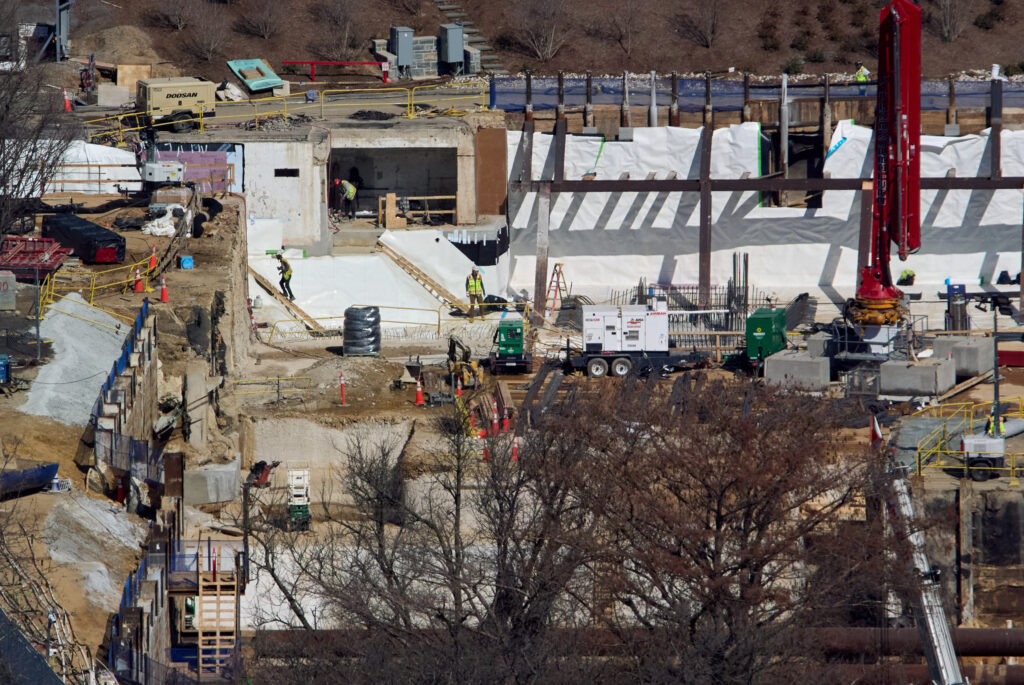
President Donald Trump isn’t inclined to seek Congress’s approval for his controversial $400 million White House ballroom — and many lawmakers are not inclined to give it.
A federal judge ruled Tuesday that Trump must obtain congressional authorization to complete his ballroom project, which the president has sought to fund with private donations. The White House immediately appealed the decision, and Trump struck a defiant tone in remarks to reporters and on social media.
“In the Ballroom case, the Judge said we have to get Congressional approval. He is WRONG!” Trump wrote Tuesday on his Truth Social platform. “Congressional approval has never been given on anything, in these circumstances, big or small, having to do with construction at the White House.”
In interviews with The Washington Post, lawmakers and aides said that Trump was wrong about Congress’s role, pointing to decades of examples of legislators approving changes to the White House grounds, including setting aside funding to construct the White House’s original West and East wings more than a century ago.
“What happens now if the law is followed is that Trump is forced to do the thing he hates the most: actually play by the rules and go through Congress,” said Rep. Jared Huffman (California), the top Democrat on the House Natural Resources Committee. That committee has historically overseen construction in national parks, including the park surrounding the White House.
Lawmakers and staff also said they expected any legislation around the White House ballroom to spark a fight in Congress, noting polling showing the project is unpopular and many Democrats’ opposition to it. Fifty-six percent of Americans said they disapproved of Trump’s renovations to the White House, according to an Economist/YouGov poll conducted March 27-30, while 28 percent said they supported them. Members of the public sent more than 35,000 comments about the project to a federal commission reviewing the project, and a Post analysis found more than 97 percent of those comments were critical of the president’s plans.
Multiple Democrats have opened probes into Trump’s use of private donors to fund construction, and even some Republicans have acknowledged concerns about the pace and size of the planned 90,000-square-foot project.
Trump has insisted that a ballroom is necessary to entertain VIP guests. A federal panel, which Trump has packed with his allies, is set to vote Thursday on whether to approve the project — the final procedural hurdle, outside of the legal challenges, before the Trump administration planned to proceed.
GOP leaders have largely steered clear of the topic, wary of engaging with an unpopular issue in a midterm election year. Senate Majority Leader John Thune (R-South Dakota) has not said anything publicly about whether the Senate will take up legislation to authorize construction of the ballroom or to fund it. Several Republican lawmakers declined to comment Wednesday, saying they didn’t want to engage on hypothetical legislation tied to a controversial topic.
“I think it’s how Trump is doing it that makes it toxic,” said a senior House GOP aide, speaking on the condition of anonymity because they were not authorized to comment. The aide cited the project’s size and cost, as well as Trump’s decision to disregard precedent on working with Congress and preservationists.
Lawmakers also noted the distinction between congressional appropriation of funds — where the Trump administration would seek potentially hundreds of millions of dollars to pay for the ballroom and probably spark an extended funding fight — versus authorization of the project, where lawmakers could more easily approve Trump’s existing plans to rely on private donations.
Some Democrats said it didn’t make a difference.
“I’m a hell no on Donald Trump’s vanity ballroom,” said Sen. Richard Blumenthal (D-Connecticut). “His wrecking ball destruction of the East Wing and attempt to construct a gigantic eyesore has rightly been halted as illegal, because he failed to come to Congress for authority. Now Congress should stop him.”
The White House did not directly respond to questions about whether it would now ask Congress to approve the ballroom but noted that it immediately appealed U.S. District Judge Richard Leon’s ruling to halt the project.
“President Trump clearly has the legal authority to modernize, renovate, and beautify the White House – just like all of his predecessors did,” White House spokesman Davis Ingle said in a statement, adding that the administration was “confident we will prevail” in the legal challenge.
Trump has barreled forward on the project, demolishing the East Wing last year without waiting for required federal reviews, and soliciting donations from private companies to fund the most significant change to the White House grounds in decades.
Leon, a George W. Bush appointee, wrote Tuesday that Congress was required to have oversight of significant White House construction projects. He also cited Congress’s role approving past projects, such as lawmakers appropriating funding for a new White House perimeter fence about a decade ago, as a model for what the Trump administration should do now.
“Unfortunately for Defendants, unless and until Congress blesses this project through statutory authorization, construction has to stop!” Leon wrote. “But here is the good news. It is not too late for Congress to authorize the continued construction of the ballroom project.”
Legal experts said that Trump appeared to be girding for a continued court battle, rather than embarking on a new legislative fight.
“There’s two routes, right? One would be pausing the litigation and asking Congress for approval, and the other is appealing,” said Andrea Scoseria Katz, a professor at Washington University School of Law in St. Louis who studies the presidency. “I think the administration has every incentive to continue through the appellate route, hoping that they’re going to find a sympathetic voice.”
Some experts also noted that if the Trump administration tries to pursue both routes simultaneously — appealing the case while also seeking approval from Congress — judges could decline to intervene and defer to the legislature.
Theodoric Meyer and Marianna Sotomayor contributed to this report.
The post Congress is in no rush to authorize Trump’s ballroom after judge’s ruling appeared first on Washington Post.