Military planners from about 30 nations will hold talks next week on making the Strait of Hormuz secure for shipping, the British government said on Thursday, a day after President Trump called on other countries to “build up some delayed courage” and reopen the crucial sea route.
But it was not clear that the talks, to be held next week in northwest London, would satisfy Mr. Trump’s demand that other nations take a more active part in the Iran war. Prime Minister Keir Starmer of Britain said on Wednesday that plans to secure the strait would be implemented “after the fighting has stopped.” Mr. Starmer has insisted that Britain will not get dragged into the war.
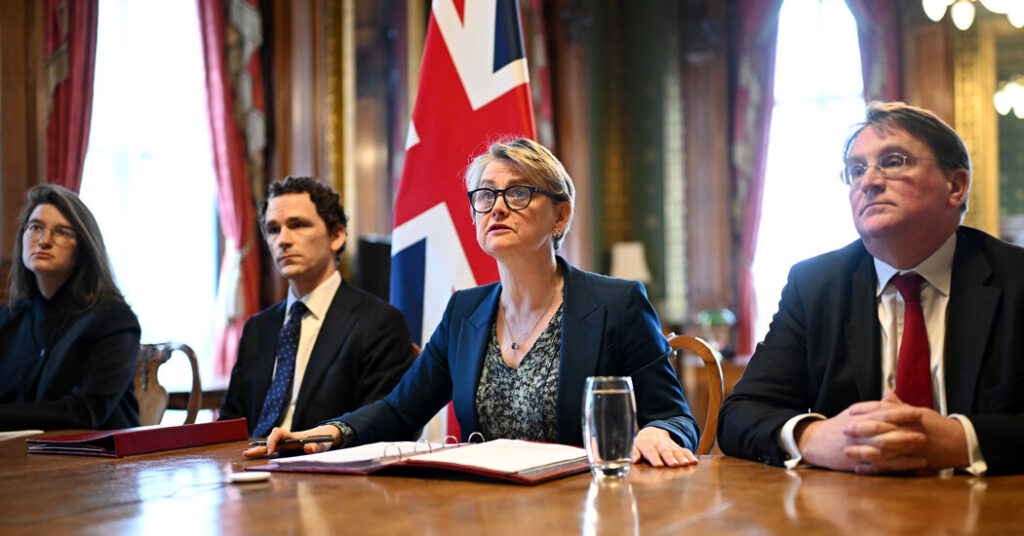
The military talks were announced by Britain’s foreign secretary, Yvette Cooper, on Thursday as she convened a virtual meeting of foreign ministers from dozens of countries to discuss a political and diplomatic response to the war. A list of the participating countries was not immediately released, but the United States was not among them.
Iran, responding to American and Israeli strikes, has attacked several vessels in the strait since the war began, choking off traffic there and prompting a global surge in energy prices. Ms. Cooper said that during the past 24 hours, 25 vessels had navigated the Strait of Hormuz, which would normally be used by 150 ships a day, and that about 2,000 ships were stranded nearby. She said the closure of the strait was threatening “our global economic security.”
Britain’s defense ministry said the military planners at the meeting next week would discuss “viable options to make the Strait of Hormuz accessible and safe for navigation,” but it did not elaborate. Planners from many of the countries will join the meeting remotely.
Many of the same governments that joined the Thursday talks released a joint statement last month demanding that Iran cease its “threats, laying of mines, drone and missile attacks and other attempts to block the Strait to commercial shipping.” That declaration was signed by Germany, France and other European Union countries, as well as Japan, Canada, Australia and some Gulf states.
Mr. Trump has persistently accused NATO and European nations, including Britain, of doing too little to support the U.S.-Israeli offensive in Iran. Mr. Starmer initially refused to let the American military use British bases to strike Iran, although he reversed that position soon after the Iranians began retaliating.
The United Nations Security Council was scheduled to convene on Thursday to vote on a resolution, drafted by Bahrain and supported by other Gulf states, that would authorize countries to use military force to open the Strait of Hormuz to shipping. The U.N. secretary general, António Guterres, called on Iran to reopen the strait to traffic, while also calling on the United States and Israel to end the war.
Stephen Castle is a London correspondent of The Times, writing widely about Britain, its politics and the country’s relationship with Europe.
The post Britain Says It Will Host Military Talks on Securing Strait of Hormuz appeared first on New York Times.