I’m writing this newsletter in advance of the speech President Trump is set to give tonight about the war in Iran.
Over the past four weeks, his statements about America’s goals for this war have been wildly inconsistent. But Trump and his administration have been sending signals that they might be getting ready to pack up and go home. “We will be leaving very soon,” Trump told reporters on Tuesday, giving a timeline of two to three weeks.
Will he follow through? Today’s newsletter is about what the U.S. would leave behind in Iran and the Middle East if he does.
The chaos Trump may leave behind
This is not the first time that President Trump has made public statements that appear to signal that the war in Iran might be drawing to a close.
The president’s top aides have increasingly been making the case to reporters that the U.S. has accomplished what it set out to achieve. At the same time, Trump has been threatening to escalate the war with ground troops and attacks on Iran’s civilian infrastructure.
And so there are big questions around what Trump is going to say in his speech. Even so, in light of the administration’s statements, it’s worth taking this moment to step back and look at what has changed, and what hasn’t, as a result of the joint U.S.-Israeli war against Iran. Because whether the U.S. accomplished the goals it started the war with seems questionable at best. And there’s also one clear way in which most of the world is worse off than before the war. (Are you among those worried about your heating bill, or fuel prices? Then you probably know what it is.)
The nuclear material? Iran still has it.
My colleague David Sanger has a story looking at whether the war has had an effect on Iran’s ability to build a nuclear weapon — a danger that has preoccupied multiple U.S. presidents, and dominated the relationship between the two countries for at least a generation.
The threat of a nuclear Iran was central to the speech that Trump gave when the military campaign began. “They’ve rejected every opportunity to renounce their nuclear ambitions, and we can’t take it anymore,” he said.
A month later, there is no evidence that the U.S. or Israel has removed or destroyed the country’s stockpile of near-bomb-grade fuel — thought to be enough for at least 10 bombs.
Trump said yesterday that he no longer cared about Iran’s enriched uranium, which was largely buried after U.S. and Israeli airstrikes last year. “That’s so far underground, I don’t care about that,” he said in a Reuters interview. Analysts agree that, should the U.S. and Israel leave without securing it, Iran will have more incentive than ever to build a bomb as fast as possible.
The regime? It’s still intact.
The administration began the war with a full-throated call for Iranians to rise up and overthrow their government. Then those goal posts moved — multiple times. As my colleague Edward Wong noted, according to the president and his aides, regime change has already occurred in Iran. Or it hasn’t. It is a goal of the war. Except it isn’t.
“We’ve had regime change, if you look, already because the one regime was decimated, destroyed. They’re all dead,” Trump said this weekend. “So I would consider that regime change.”
Hmm.
Maybe regime change is in the eye of the beholder, but most analysts don’t agree. The Islamic Revolutionary Guards Corps is still the dominant power in the country; the supreme leader killed by Israel has been replaced by his hard-line son. One Iran scholar Edward spoke to called it “personnel change,” not regime change: “Different men with the same ideology.”
The state of the strait
But these were problems before the U.S. went into Iran. What has changed is the situation in the Strait of Hormuz.
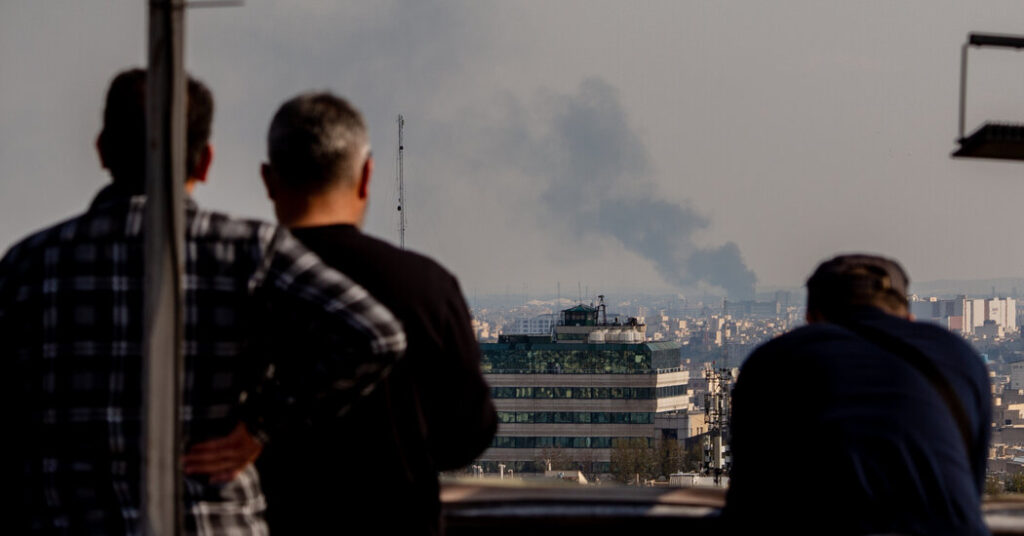
This is a big one. Iran has used its chokehold over the crucial oil and gas transit route to maximum effect over the course of the war. Traffic is at a near standstill. The last tankers to make it out of the Persian Gulf before the war began are starting to reach their destinations. World leaders are worried, bordering on panicked.
We’ve written before on the many challenges to opening the strait through military means. And Trump’s entreaties to U.S. allies to help have not found much traction.
The U.S. is a net oil and natural gas exporter, but it’s not immune from the effects of Iran’s control of the strait. Oil prices are set by the global market, and energy disruptions would also ripple through the U.S. economy. Still, in the past week, Trump has indicated that he’s increasingly coming to view this as someone else’s problem. “Go get your own oil!” he told European allies on social media on Tuesday.
Iran, in the meantime, has been moving to formalize a toll system in which it would collect fees for safe passage, giving it one more revenue stream it didn’t have before the war. It’s learned from the past few weeks that it doesn’t need a nuclear weapon to wreak large-scale havoc.
And if it maintains control of the strait — an outcome that looks difficult to avoid — the entire world would be left to handle a problem that didn’t exist before the U.S. and Israel attacked.
Other developments:
-
The Pentagon is dispatching 18 A-10 attack planes to join roughly a dozen already in the Middle East.
-
Trump told The Telegraph he was considering pulling the U.S. out of NATO over the war with Iran.
-
Stocks jumped and oil prices fell after Trump said the U.S. military would wind down its campaign in Iran.
-
Iran’s president released a letter addressed to the American people that suggested the possibility of diplomatic engagement.
-
Trump’s address is at 9 p.m. Eastern. Follow our live updates.
MORE TOP NEWS
NASA is sending astronauts to the moon
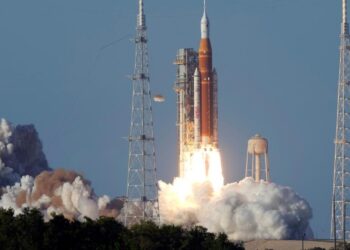
The Artemis II mission is scheduled to launch today from Kennedy Space Center in Florida. It will be NASA’s first crewed journey to the moon since 1972. But the four astronauts — three Americans and one Canadian — will not land there. During their 10-day trip around the moon, they will test life support and other systems. Follow our live updates.
My colleague Kenneth Chang explained the journey to the far side of the moon and why this mission paves the way for other U.S. goals in space. Watch his video here.
OTHER NEWS
-
A majority of the U.S. Supreme Court appeared skeptical of Trump’s efforts to limit birthright citizenship. In a presidential first, Trump attended the oral arguments.
-
French prosecutors said that a foiled bomb plot against a Bank of America office in Paris may be linked to a pro-Iranian Islamist group.
-
SpaceX, Elon Musk’s rocket and satellite company, filed to go public in what could be one of the largest I.P.O.s ever.
-
The U.S. is planning a military expansion in Greenland and is negotiating with Denmark for access to three additional bases there.
-
An Iraqi militia allied with Iran offered to negotiate with the Iraqi government for the release of a kidnapped American journalist.
-
A Russian military transport plane crashed in Crimea, killing all 29 people on board.
-
Israeli military officials have pressed Christian and Druse leaders in Lebanon to expel Shiite Muslims from southern towns.
-
Robot taxis in Wuhan, China, stopped moving in traffic after a “system failure,” stranding passengers.
-
Cambodia extradited the leader of a money-laundering conglomerate to China.
Top of The World
The most clicked link in your newsletter yesterday was about a landmark ruling that Meta and YouTube harmed a young user through addictive design features.
SPORTS
World Cup: Italy failed to qualify for the tournament after losing to Bosnia and Herzegovina on penalties. Here are the 48 teams that will participate.
Golf: Tiger Woods said he is “stepping away for a period of time to seek treatment,” after crashing his vehicle and being charged with driving under the influence.
FASHION TREND OF THE DAY
Power clashing
A track jacket over a trench coat. Psychedelic florals on top of checkerboards on top of prints. Bright, contrasting colors. At Tokyo Fashion Week, people leaned into outfits with bold mismatches.
MORNING READ
Two dozen Palestinian babies born prematurely were evacuated from a hospital in Gaza to Egypt for treatment during the early days of the war. Eleven of them have now returned home. The healthy toddlers were reunited with their families to many hugs and tears.
The emotional reunions have been a cause for celebration among Palestinians, though the children are returning to a territory ruined by two years of war, where plans for reconstruction have stalled. Read more.
AROUND THE WORLD
Priced out in Cape Town
On a Cape Town corner sits a modern condo building called the Sage that many locals would love to call home. But it’s meant mostly for tourists.
Properties like the Sage are at the heart of a raging debate in the South African city over affordable housing, tourism and the persistence of apartheid segregation. Many Cape Town residents complain that out-of-control housing prices have forced them to live far from the city center.
Some 70 percent of the downtown residential housing stock is dedicated to hotel rooms or short-term rentals, according to a city report. The challenges may sound similar to those of over-tourism in Barcelona and Venice. But they are playing out against entrenched poverty that exists alongside staggering wealth, with multimillion-dollar coastal homes a short distance from informal settlements where families live in shacks. Read more.
RECOMMENDATIONS
Read: Yann Martel’s “Son of Nobody” asks: “What is it that makes a hero a hero?”
Cope: Here are things to consider before switching your antidepressants.
Chat: Check out these five homes for sale with conversation pits.
RECIPE
Brisket is the perfect meal for Jewish holidays, especially Passover, when there is a big crowd for dinner. The secret for getting it just right? Slowly braise it in ample liquid, and add lots of onions for flavor.
WHERE IS THIS?
Where is this road?
TIME TO PLAY
Here are today’s Spelling Bee, Mini Crossword, Wordle and Sudoku. Find all our games here.
That’s it for today. See you tomorrow! — Alicia
We welcome your feedback. Send us your suggestions at [email protected].
The post Trump’s Endgame in Iran? appeared first on New York Times.