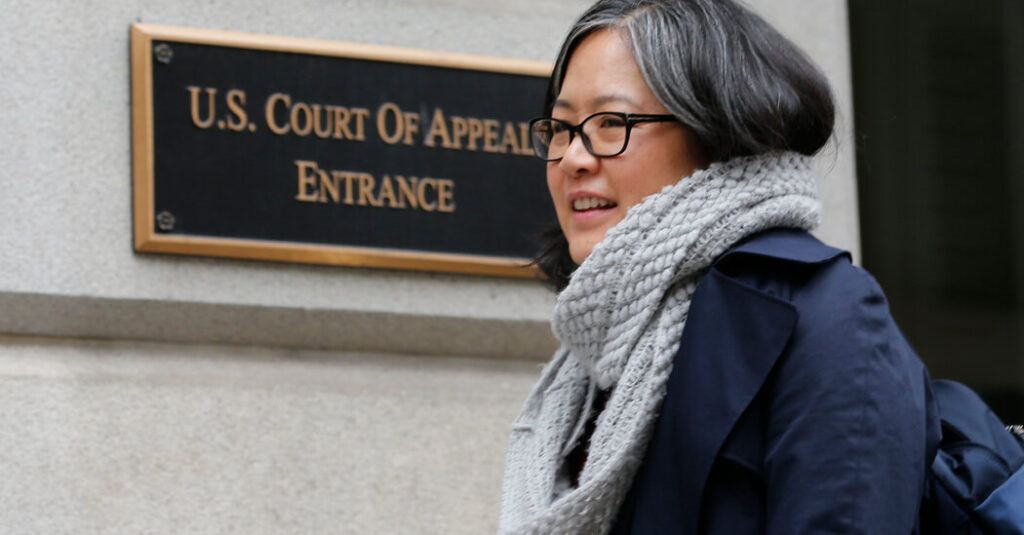
Cecillia Wang, the lawyer who is arguing before the Supreme Court for birthright citizenship, has spent much of her career defending immigrants’ rights in America.
But there is a personal element, as well. Ms. Wang, 55, is herself a birthright citizen.
In a recent telephone interview, she described the case as a culmination of her work for over two decades as a constitutional lawyer at the American Civil Liberties Union, defending the rights of noncitizens in America.
Ms. Wang said that she is defending a right that has long been central to defining what it means to be an American.
“It feels like I’m meeting a historic moment both for so many families who might be affected by the executive order, but also for all Americans,” said Ms. Wang, who is now the A.C.L.U.’s national legal director. “This administration is really attacking a foundation stone of American life.”
Ms. Wang said her parents moved to the United States from Taiwan in the late 1960s to attend graduate school. They were able to do so, she said, because of the Immigration and Nationality Act of 1965, which lifted race-based quotas on immigration from Asia and was a part of the broader civil rights movement.
Ms. Wang was born in Oregon in 1971 when her parents were still on student visas, making her a U.S. citizen by birth.
She grew up in Fremont, Calif., and graduated from the University of California, Berkeley, and Yale Law School. She clerked for two Supreme Court justices, Harry A. Blackmun and Stephen G. Breyer.
During Mr. Trump’s first term, Ms. Wang helped the A.C.L.U. challenge the administration’s so-called Muslim ban, the border wall and family separation policies.
She argued her first Supreme Court case in 2018, unsuccessfully challenging the Trump administration’s detention of immigrants facing deportation without the possibility of bail if they had committed crimes, no matter how minor or how long ago they had been released from criminal custody.
The vote was 5 to 4, with the court’s more conservative justices in the majority.
Her personal background will most likely inform her arguments as she seeks to persuade the justices of the unconstitutionality of Mr. Trump’s executive order ending birthright citizenship for the children of undocumented immigrants and temporary visitors, including international students like her parents.
“Your parents could be undocumented immigrants who fled here with nothing but the clothes on their back, or your ancestors could have come on the Mayflower,” she said. “But you and I are exactly the same as U.S. citizens.”
Amy Qin is a national correspondent for The Times, writing primarily about Asian American communities.
The post Lawyer Arguing at Supreme Court to Save Birthright Citizenship Is a Birthright Citizen appeared first on New York Times.