As Israelis prepared to usher in Passover this year, the conversation focused less on how many guests could fit around their Seder table than on how many could fit into their bomb shelter.
Passover, the Jewish festival of freedom, will begin after sundown on Wednesday with the traditional Seder meal. This year, celebrations are likely to take place under ballistic missile and rocket fire from Iran and from Hezbollah, the Lebanese militant group it backs.
A month into the war with Iran, millions of Israelis are still rushing into bomb shelters day and night. Schools and many businesses are shuttered. Israelis were wishing each other a “quiet” or “tranquil” holiday this week, though many said they expected it to be anything but that.
A hotel at the Dead Sea, in an area of southern Israel that has largely been spared from incoming fire, was advertising itself as “a protected space for a quiet and pleasant stay.”
Synagogue services around the country were to be limited to a few dozen congregants because of a ban on large public gatherings.
Adding to the somber mood, the Israeli military announced on Tuesday that four of its soldiers had been killed during combat with Hezbollah in southern Lebanon. That brought the March death toll for Israeli soldiers in that area to 10 as Israel expanded its ground invasion.
The Seder is traditionally a joyful gathering of family and friends. Together, they follow a ritual order of blessings over symbolic foods as they retell the biblical story of the ancient Israelites’ liberation from bondage in Egypt.
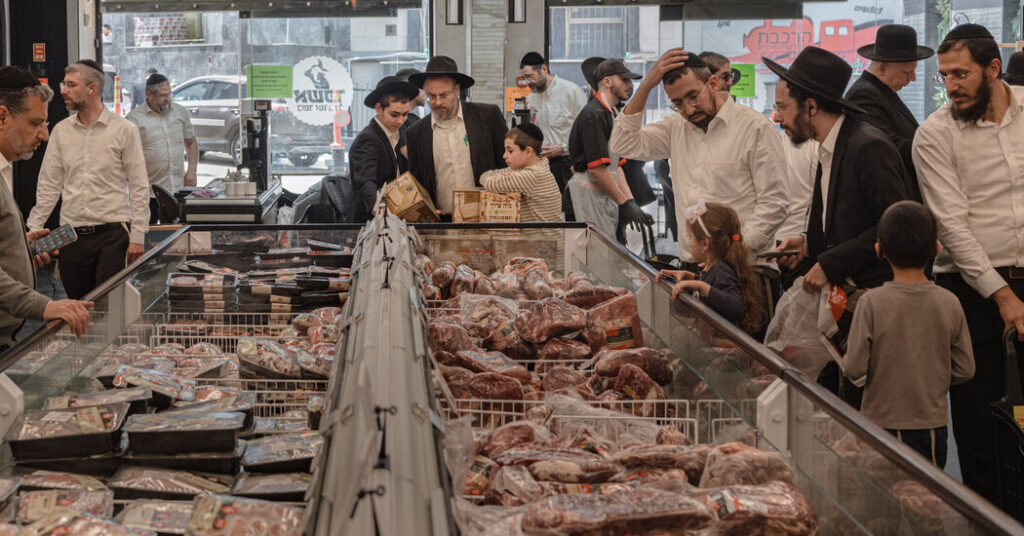
For traditional and observant Jews, the days leading up to Passover are generally a hectic whirl of spring cleaning, shopping for gifts and clearing the house of all traces of leavened goods, which are forbidden during the festival.
The atmosphere appeared more subdued this year, with people afraid to stray far from their homes and shelters.
“We are taking a more relaxed approach, partaking less in the usual carnival,” said Yifat Bonen, 47, who was shopping for a holiday gift on Tuesday in an eerily empty mall in Jerusalem.
“We are focusing more on the essence of the holiday,” she said, adding that she had two children serving in the army. “This year will be more intimate, and more about people than things.”
The prohibition on leavened goods is meant to commemorate the Israelites’ hasty exodus from Egypt. According to the Torah, their rapid departure left no time for their dough to rise.
Matzo, the unleavened wafers eaten on Passover in place of bread, must be made quickly — ideally within 18 minutes — before the dough of flour and water has a chance to rise.
In Kiryat Shmona, a city near Israel’s northern border with Lebanon that has come under intense rocket fire in recent weeks, an artisanal producer of handmade matzo told Israeli news media that he had had to throw away many batches that had been interrupted by rocket alerts and spells in a bomb shelter.
Typically, Passover is a major travel holiday, with many Israelis going abroad and tourists coming to Israel. This year, travel has been severely disrupted: Only one international airport in the country is operating, and its capacity is extremely limited by military needs and the risk from missile fire.
Instead, thousands of Israelis have been leaving by one of the few alternative routes — the land border into Egypt’s Sinai Peninsula. According to the Book of Exodus, it is on that desert peninsula that Israelites arrived to freedom after escaping slavery in ancient Egypt.
Isabel Kershner, a senior correspondent for The Times in Jerusalem, has been reporting on Israeli and Palestinian affairs since 1990.
The post Israelis Prepare to Celebrate Passover in Shadow of War appeared first on New York Times.