Shortly before 3 a.m., the sedan pulled up on a residential London street. In surveillance footage used later in court, a man can be seen leaving the vehicle and tending to an object on the ground.
Moments later, the object — a drone — rises into the air and disappears.
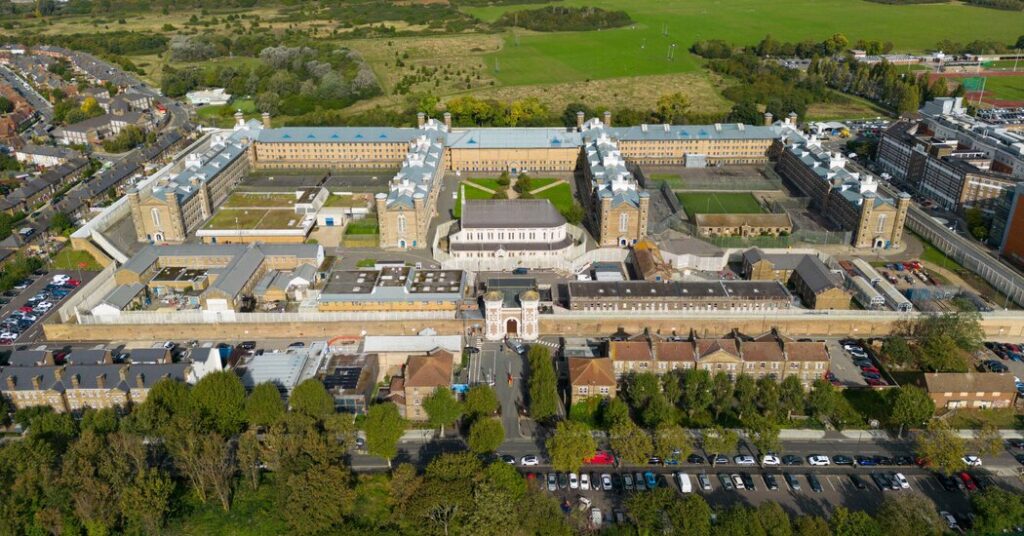
The location was just outside the perimeter of one of Britain’s largest prisons, Wormwood Scrubs, and the drone was carrying illegal contraband to inmates.
The man operating the drone that morning, in December 2024, was Shafaghatullah Mohseni, 29, who was later convicted of being the leader of a gang that ran an estimated 140 illegal flights to nine prisons in England between December 2024 and his arrest in February 2025. Mr. Mohseni was paid almost 27,000 pounds, about $36,000, by inmates and by their friends and relatives, prosecutors said, fulfilling orders for drugs, phones, chargers, tobacco and knives.
According to government figures, the lucrative enterprise made up only a small fraction of the drones sent into British prisons in recent years, transporting contraband that prison governors say is driving up violence and drug use.
Such is the efficiency of the smuggling that prisoners are ordering products such as weight-loss injections as well as sought-after items like phones and weapons, according to Tom Wheatley, president of the Prison Governors’ Association of Britain. “They’re bringing in all sorts of stuff,” he said in an interview. “Anything that has value in the prison, that someone in the prison wants, that they can’t get through legitimate means.”
Judge James Lofthouse, who sentenced Mr. Mohseni in early March to five years and three months in prison, said the illegal packages had been landing inside prison walls “frankly, as if by Uber Eats.”
The number of drone sightings recorded in prisons across England and Wales has risen steeply since the first flights were spotted in 2014, hitting a record of 1,712 in the year ending March 2025, according to British government figures. The figure is likely to be an underestimate, experts say, because recording rules require prison staff to see the drones themselves, and flights are mostly conducted in the dead of night when staffing is at its lowest.
“We’ve had machetes delivered by drones,” said Mark Fairhurst, chairman of the British Prison Officers’ Association. “It’s only a matter of time before we get a firearm delivered or there’s an escape.”
Contraband has always been smuggled into prisons, often by corrupt employees or visitors. In the past, packages known as “throwovers” were sometimes launched over prison walls and fences. Mr. Fairhurst, who became a prison officer in 1992, recalled gruesome concealment attempts including people flinging over “dead pigeons full of drugs.”
Det. Chief Supt. Lewis Hughes of Greater Manchester Police, who led a recent counter-drone operation at four prisons in his city, said in an interview that one popular ruse used to involve people stuffing drugs into tennis balls. The balls would then be covered in razor blades and thrown at bedsheets that inmates would hang from cell windows.
Today, “drones have become the most accessible method,” Mr. Hughes said. He noted that most British prisons were built decades or even centuries before drones were invented, meaning the buildings “are secure from the ground and not from the air.”
Inmates order deliveries using phones concealed from the prison authorities or through contacts inside prisons, who relay the requests to gangs outside. The items are usually then paid for by relatives and friends. Packages are attached to commercially available drones and flown to a prearranged location, like an exercise yard or a cell window.
Mr. Fairhurst estimated that items bought illicitly cost five to 10 times their normal value. “It spirals into the communities outside, because quite often families get threatened to pay off a debt that’s owed inside,” he said.
A report released this year by Britain’s public spending watchdog, the National Audit Office, found that drug addiction among prisoners had been rising, partly as a result of drone deliveries. “Compared with other routes, drones have the potential to deliver relatively large packages of illicit items in a very targeted way,” the report said. It noted that prisons across Europe faced a similar challenge.
To prevent drones dropping off packages, netting has been installed over some prison buildings and security grilles fitted on cell windows. In February, the British government opened a competition offering funding to develop technology that could “safely stop hostile drones once they breach secure prison airspace.” The government has also said it will try to learn from techniques used to counter Russian drones in Ukraine.
The police have been patrolling areas around prisons in the knowledge that the devices have a limited operating range, Mr. Hughes said. Any drones found are dusted for fingerprints and undergo digital forensics to seek metadata on their flight paths.
Once a drone is airborne, “there’s very little policing can do,” Mr. Hughes noted. “We have to go through the doors of organized criminals and catch the drone pilot while he’s in bed or having his cornflakes.”
The post In Britain, Drones Are Flying Contraband Into Prisons ‘as if by Uber Eats’ appeared first on New York Times.