It’s understandable that America’s NATO allies — bullied, disparaged and threatened by President Trump — hardly want to lift a finger to help the United States and Israel in their war in Iran.
It’s understandable that congressional Democrats — barely briefed and entirely unconsulted — are skeptical of a war the president describes as a mere “excursion,” and seek a partisan windfall in a strategic failure.
It’s understandable that everyday Americans — having been told by Trump that Iran’s nuclear program had already been “obliterated” last June — wonder why they’re paying $4 a gallon to obliterate it once again.
Understandable but misguided. Even the most vociferous opponents of the war have a stake in a military result that leaves the regime in Tehran unable to terrorize its region, the world and, hopefully sooner than later, its own people.
Getting some of those opponents to see the point may be the intent behind Trump’s reported musing to his aides that he may be willing to end the war without using force to reopen the Strait of Hormuz. The president “decided that the U.S. should achieve its main goals of hobbling Iran’s navy and its missile stocks and wind down current hostilities while pressuring Tehran diplomatically to resume the free flow of trade,” The Wall Street Journal reported Tuesday. “If that fails, Washington would press allies in Europe and the Gulf to take the lead on reopening the strait.”
Maybe Trump is bluffing, to get more international support to open the strait. Or maybe (more likely) he’s flying by the seat of his pants. Either way, ending the war before retaking the strait would be a mistake for many reasons, even if it allowed the administration to wind down military operations in the next week or two.
Tehran would see it as victory and vindication, emboldening an otherwise fractured regime and making it less, not more, pliable in subsequent negotiations. The Saudis, Emiratis and other Gulf states would feel betrayed by a deal that forced them to bend the diplomatic knee to the Iranians after having been assaulted by them. The Europeans lack the means, the will and the nerve to challenge Iran if diplomacy failed — as it almost surely would. And the United States, despite being a net exporter of energy, would still feel the economic hit in a world in which the price of oil is essentially set globally.
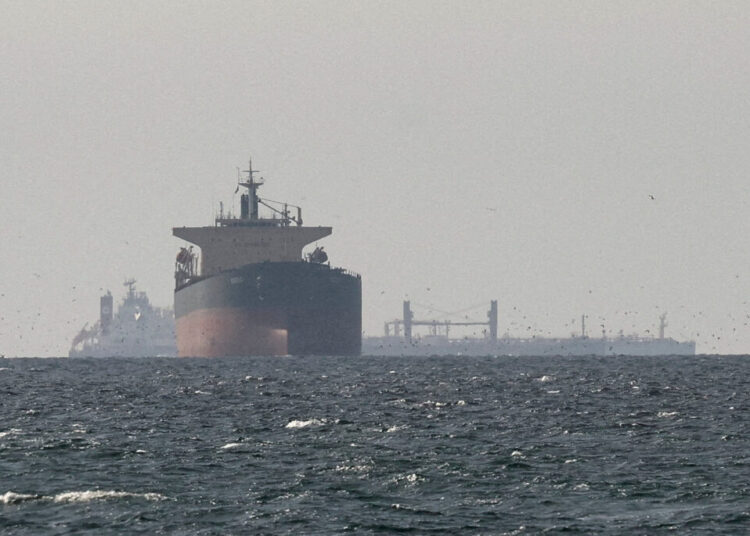
A better strategy for the administration would be to board tankers carrying Iranian crude as they emerged from the strait and then deliver the seized oil to friendly ports, much as we did starting in December against Venezuela. The principle would be “all or nothing”: Either energy flows freely from the strait, unimpeded by Tehran, or it doesn’t flow at all. Given that Iran’s own president is reported to have said that the country’s economy may be only weeks from complete collapse, the strategy could clarify Tehran’s options without putting U.S. boots on Kharg Island or other points along Iran’s coastline.
But whatever the administration decides to do, what isn’t viable is for Americans and our allies to pretend that they can be indifferent to the outcome of the war. When someone like Boris Pistorius, the German defense minister, says, “This is not our war,” the appropriate response is: Are you serious?
In June, Pistorius’s boss, Chancellor Friedrich Merz, acknowledged that Israel’s attack that month on Iran’s military and nuclear sites was “dirty work that Israel is doing for all of us.” Has something changed in his government’s strategic calculus about the threat Iran poses, other than its overriding opposition to the Trump administration?
In January, the United Arab Emirates announced in no uncertain terms that it would not allow its airspace, territory or ports to be used for an attack on Iran. The declaration was a transparent effort to insulate the Emirates from Iranian reprisals. For its pains, Iran has since hit Abu Dhabi, Dubai and other Emirati targets, military and civilian, with at least 433 ballistic missiles, 19 cruise missiles and 1,977 drones.
Now the governments of Spain and Italy are replicating the Emirates’ strategy, barring the U.S. from using bases (and, in Madrid’s case, its airspace) for attacks on Iran. Do those governments think they’ll be spared Tehran’s furies should they one day come into range of Tehran’s missiles? For that matter — given Trump’s ambivalence about the war in Ukraine — do Europeans think the administration is more likely to support NATO in the event of a Russian attack when NATO has been so hostile to American efforts to defang Iran?
For Americans, especially those who often oppose the administration, the question is whether our distaste for this president should get the better of our strategic judgments about the threats Iran poses. In The Wall Street Journal recently, the lawyer David Boies, a prominent Democrat, noted that if Trump had failed to act, “his successor would have been left with an even more dangerous choice than his predecessors left him. Three or four years from now, the Iranian missiles now hitting Iran’s neighbors could be hitting Berlin or London, perhaps even New York or Washington.”
If Democrats can’t bring themselves to support Trump, they can at least support policies that will make the strategic choices for the next Democratic president easier rather than harder.
“You may not be interested in war, but war is interested in you” is a line widely attributed to Leon Trotsky. If that’s the case — and history tells us it is — shouldn’t you be interested in winning it, too?
Source photograph by Ian Forsyth/Getty Images.
The Times is committed to publishing a diversity of letters to the editor. We’d like to hear what you think about this or any of our articles. Here are some tips. And here’s our email: [email protected].
Follow the New York Times Opinion section on Facebook, Instagram, TikTok, Bluesky, WhatsApp and Threads.
The post Yes, This Is Your War, Too appeared first on New York Times.