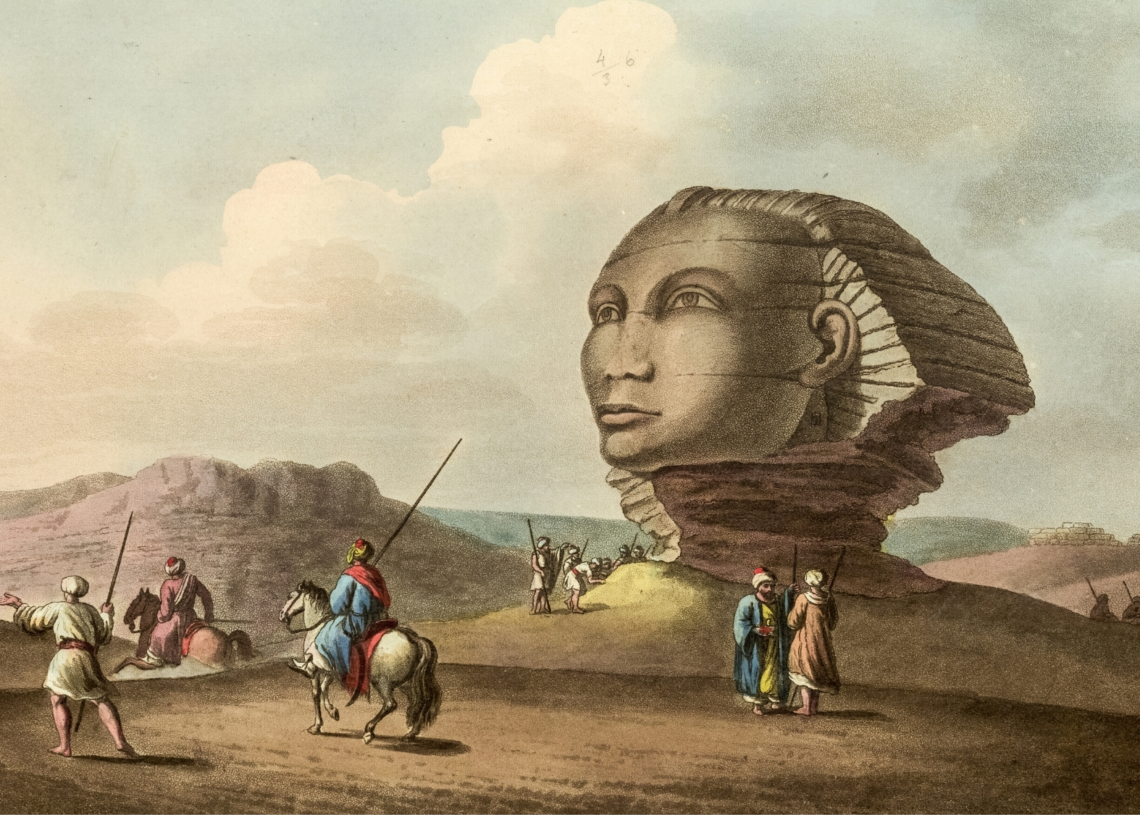
The Giza Plateau doesn’t need any help staying famous, but that hasn’t stopped a new burst of headlines from suggesting it may contain a buried second Sphinx and an underground “megastructure.”
The current theory centers on Italian researcher Filippo Biondi, who said on the Matt Beall Limitless podcast that satellite radar scans and geometric alignments point to a mirrored site across from the Great Sphinx. He added that he was about “80 percent” confident the buried formation could be a second Sphinx, with signs of something much larger below it.
Part of the theory leans on the Dream Stele, the monument placed between the Great Sphinx’s paws around 1400 BC during the reign of Thutmose IV. In mainstream scholarship, that stele is generally understood as royal messaging tied to divine legitimacy. The current theory argues that the imagery, which appears to show twin sphinx figures, could point to a literal second monument rather than symbolism. Newsweek noted that Egyptologists do not treat the stele as proof of a buried twin, and that the text itself does not mention one.
Experts Weigh In on Egypt’s Alleged Second Sphinx and Underground ‘Megastructure’
That’s where the fun part collides with the reality part. No excavation has confirmed a second Sphinx. No peer-reviewed study has validated this latest claim. Egyptian authorities have not announced any discovery. Newsweek rated the buried-second-Sphinx story false, saying there is “no confirmed archaeological evidence” for it. AFP was even more direct, reporting that experts said earlier underground-structure claims from the same circle of researchers were “unfounded,” with former antiquities minister Zahi Hawass calling them “nothing but fabrications.”
There’s also the issue of the technology itself. National Geographic reported that synthetic aperture radar hasn’t been independently verified for the kind of ultra-deep detection being claimed at Giza. Radar specialist Lawrence Conyers told AFP, “Radar waves gradually attenuate in the ground. It is impossible to reach such a depth with this technique.” That doesn’t mean nobody should keep studying the plateau. It does mean, though, the internet should maybe stop acting as if a podcast appearance counts as an archaeological breakthrough.
For now, the only confirmed Sphinx at Giza is still the one everybody already knows. Everything else remains unverified, no matter how dramatic the wording gets.
The post What Archaeologists Found While Searching for a Buried Second Sphinx in Egypt appeared first on VICE.