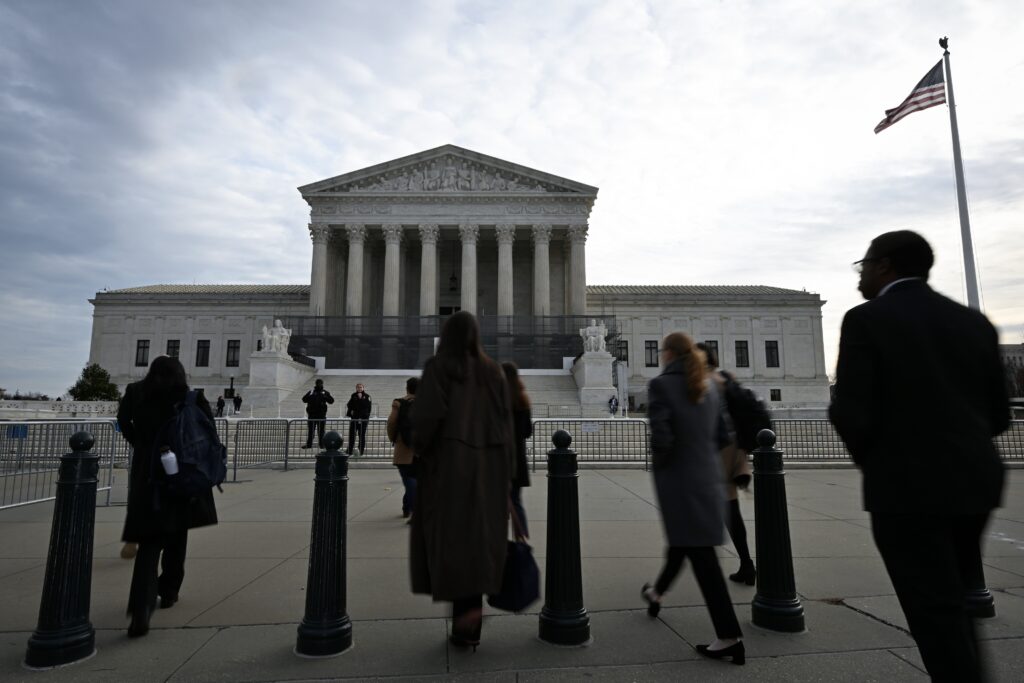
The Supreme Court’s decisions are unanimous or near-unanimous almost half the time, and one area where there is often cross-ideological agreement is the First Amendment. On Tuesday that consensus was on display as an 8-1 majority ruled against Colorado’s attempt to restrict what therapists can say to their minor clients about sex and gender.
Colorado’s 2019 law, which targeted “conversion therapy,” reached deep into the relationship between mental health counselors and their clients. Under the law, therapists treating clients under age 18 could face discipline or fines for saying things to change their clients’ “behaviors or gender expressions or to eliminate or reduce sexual or romantic attractions toward individuals of the same sex.”
The state, in other words, went far beyond banning coercive or physical interventions and tried to dictate the kind of conversations that can take place between counselors and willing clients. The law authorizes therapists to encourage clients undergoing gender transition, but bars them from offering an opposing view.
Similarly, as Justice Neil M. Gorsuch put it in his opinion for the court, while therapists can “affirm a client’s sexual orientation,” they are prohibited “from speaking in any way that helps a client ‘change’ his sexual attractions or behaviors.”
This kind of speech regulation is known in the law as viewpoint discrimination. One point of view is allowed by the government, and the opposite view is prohibited. You don’t have to take a conservative justice’s opinion for it. As Justice Elena Kagan wrote in her separate opinion, joined by Justice Sonia Sotomayor, concurring in the outcome: “The law draws a line based on the speaker’s ‘opinion or perspective,’ and thus enables ‘speech on only one side’ — the State’s preferred side — of an ideologically charged issue.”
Colorado’s legislators wanted to help gay, lesbian and transgender young people. But they wrote a law that intrudes in an especially intimate area — talk therapy — to try to rule certain viewpoints out of bounds.
Imagine if the law’s purpose was reversed. As Gorsuch notes, same-sex attraction was considered a mental disorder in the mid-20th century. “On the view Colorado and the dissent advance,” he writes, a law prohibiting therapists from “affirming their clients’ homosexuality would have been … likely upheld.”
The lone dissenter, Justice Ketanji Brown Jackson, argued that the government has broad power to regulate professional activity such as licensed therapy. It’s true that health care is heavily regulated, but Colorado did something different by extending that regulation to pure speech unrelated to any physical procedure and then banning only one side of an argument.
The closing of the majority opinion is worth quoting: “The First Amendment stands as a bulwark against any effort to prescribe an orthodoxy of views, reflecting a belief that each American enjoys an inalienable right to speak his mind and a faith in the free marketplace of ideas as the best means for finding truth. Laws like Colorado’s, which suppress speech based on viewpoint, represent an egregious assault on both commitments.”
Liberals and conservatives have many disagreements about the First Amendment. But this case shows that common ground on that guardrail of liberty persists across the ideological divide.
The post The Supreme Court repels ‘an egregious assault’ on the First Amendment appeared first on Washington Post.