“America held hostage!” That grim nightly message from ABC’s Ted Koppel transfixed the nation during the Iran hostage crisis nearly five decades ago. You can almost hear a similar chorus now during the Iran crisis — with an impatient edge that’s making the United States’ predicament even worse.
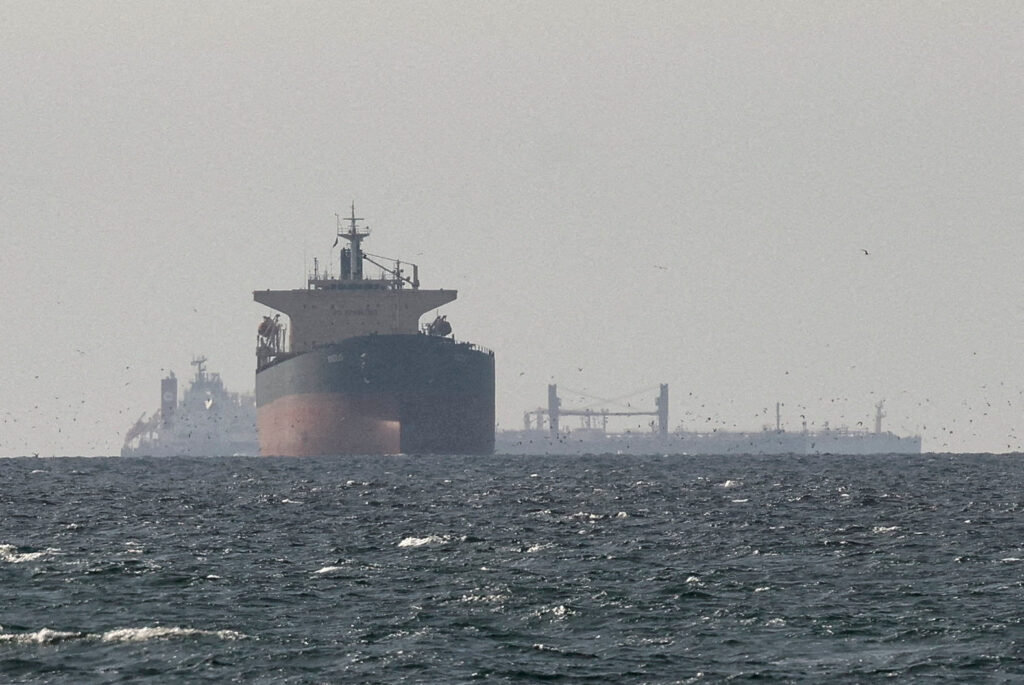
Let’s examine how the Iran war became what is essentially a hostage crisis: President Donald Trump joined Israel on Feb. 28 in an assault on Iran that demonstrated masterful military tactics but poor strategic planning. Iran responded with ballistic missiles and drones — and, most important, by closing the vital Strait of Hormuz. That last action took not just America but the entire global economy captive.
When a hostage-taking occurs, there are two basic options: Rescuers can try to free the captives through force, or they can attempt to negotiate a peaceful release. Both approaches take time, planning and coordinated action. But all those factors are missing now. Trump is in such a rush to end the crisis, he seems ready to declare victory and abandon the other parties bound up in Hormuz. Europeans are so angry at Trump that they’re refusing to form a common front.
Hostage negotiations are always complicated by media attention. The public hears a clock ticking and wants immediate action. (Koppel would accompany his nightly summaries with a counter — “Day 23,” “Day 24” and on for months — to dramatize the urgency.) But rescuers need time and low visibility to increase their leverage and options.
America is especially vulnerable in hostage situations. The United States is a warrior nation that gets into more than its share of conflicts. But it’s also an impatient country that dislikes entangling foreign commitments. That’s an awkward combination — and it has been exacerbated by Trump. He’s good at the flashy parts — starting wars and ending them — but not so good at the long slog in the middle that requires patience, calibrated military power and subtle diplomacy.
The Iran war is a paradox. The United States is winning and losing at the same time. A regime that for nearly a half century chanted “Death to America” is paying the cost of its belligerence. U.S. and Israeli forces have near-total air supremacy and can attack Iranian targets at will. But this freedom of action isn’t the same as victory. To Trump’s clear surprise, tactical dominance didn’t lead to a quick Iranian capitulation — but to a longer war that’s toxic for Trump, politically and economically.
Trump wants to claim the victory (“Obliterated!”) and ignore the defeat. Let the Europeans reopen the Strait of Hormuz, he seemed to be arguing this week. But walking away would be foreign policy malpractice, “unbelievably irresponsible,” as Suzanne Maloney of the Brookings Institution said this week. Trump would rewrite the so-called Pottery Barn Rule into “We broke it, you own it,” in the apt phrase of Richard Haass, former president of the Council on Foreign Relations.
Let’s return to the question of how to free the Hormuz hostages and end this war. Practical experience suggests that what makes sense is a combination of force and diplomacy.
Start with force: Just as police will surround a hostage-taker to make clear the cost of resistance, the United States and Israel have encircled Iran. Every day, the squeeze gets tighter. Invading Iran strikes me as a very bad idea. But there’s an argument for calibrated military power — moving in and out, picking spots that isolate and divide the regime, pushing Tehran toward a settlement. That’s what Marines, paratroopers and Special Operations forces do best. They aren’t the same as an infantry division that occupies a country.
This conflict, like nearly every war, will likely end with a negotiated settlement. Iranian leaders deeply mistrust Trump, so to obtain a stable deal, he will need help from partners who share America’s interest in reopening the strait. A model of what’s possible is the Black Sea Initiative that reopened shipping there in July 2022 despite the ongoing Ukraine War. That deal required the participation of all the key players: Russia, Ukraine, Turkey, the United States, and countries around the world that needed the grain and fertilizer that flowed over the sea.
So too with a hypothetical Strait of Hormuz Initiative. European and Asian countries have a profound interest in reopening shipping traffic — and in providing the package of military and diplomatic incentives needed to gain Iranian compliance. (No country has a greater interest in such a resolution than China.) Trump may declare a win, but any sensible person will know that this has shaken his presidency.
A start toward global involvement in a settlement was a proposal released Tuesday by China and Pakistan. It calls for reopening the strait but avoids the U.S.-Israel agenda regarding Iran’s nuclear weapons, missiles and regime change. It would defer these hard issues for the future — and perhaps another round of war.
“The world held hostage!” That’s the reality of the Strait of Hormuz blockade. European and Asian hostages may be angry at Trump for getting them into this mess, but that won’t solve the problem. The answer is collective action to cajole or compel the hostage-takers in Tehran to let go.
The post The Iran war is a hostage crisis appeared first on Washington Post.