Tricia Rojo Bushnell is the executive director of the Quattrone Center at the University of Pennsylvania Carey Law School.
A disabled grandmother charged after a drug test showed cocaine in her purse. A college football star arrested for drug possession based on bird droppings on the hood of his car. A middle school student expelled after a test showed cannabis in cookies she brought to class.
These stories share a common thread — none of these people actually had illegal drugs. They were victims of a widely used law enforcement tool called the colorimetric drug test. These $2 tests are frequently wrong and contribute to tens of thousands of wrongful arrests in the United States each year.
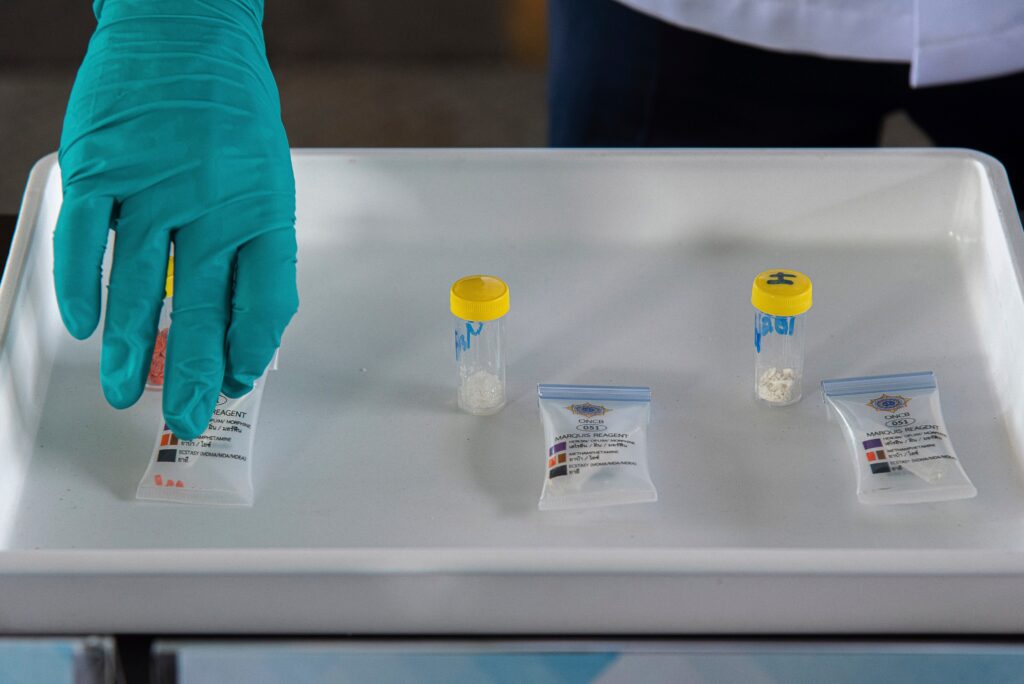
The tests are simple: Officers place a sample of the substance into a small pouch containing chemicals that cause color change reactions. If the test turns a certain color, it is considered positive for that substance. A positive result can give an officer probable cause to make an arrest. But this should not equate to sufficient evidence for a conviction. At most, the test can establish whether a chemical group is present, not that the substance is a drug. Yet because many jurisdictions do not require confirmatory lab tests before a defendant enters a plea, these field tests have become de facto and inaccurate determinants of guilt.
But there’s good news. Last week, Colorado enacted a law to curb wrongful arrests and convictions based on these drug tests. The vote for the bill was unanimous in the state’s legislature. It requires that Coloradans picked up for low-level drug possession using these tests be given a summons rather than booked into jail. It also requires that a judge inform the defendant of the test’s error rates and of the option to plead not guilty and wait for test results from a lab.
This is the kind of reform lawmakers say they want: practical, bipartisan and grounded in facts. No one should lose their freedom, job or housing because of a test that is known to be wrong far too often. And in a system where most cases are resolved through plea bargains, the danger is not abstract. Once someone is arrested and jailed, the pressure to plead guilty to regain one’s freedom can be enormous, even for innocent people who know the test got it wrong.
Colorado’s law did not emerge from nowhere. Our team at the Quattrone Center for the Fair Administration of Justice at Penn Carey Law School helped bring national attention to this problem through our 2023 report, which reviewed the prevalence and unreliability of colorimetric tests. The data showed this was not a rare malfunction or occasional mistake. Law enforcement and corrections agencies have observed false-positive percentages of 15, 38 and even 91. Using data collected from police departments, forensic labs and national arrest databases, we estimate that the tests were used in roughly half of the 1.5 million drug arrests in the U.S. each year from 2010 to 2019, with nearly 30,000 people arrested annually based on false positive results from these tests.
Too often, injustice in the nation’s criminal legal system persists for one of two reasons: There’s no data to see the problem clearly, or data exists, but leaders fail to act on it. Colorado lawmakers have shown that when presented with facts, action does not have to be partisan. It can simply be responsible. For example, some law enforcement agencies, such as the Denver Police Department, have ceased using field drug tests.
While this reform may seem small and technical, for the people impacted, it is anything but. For a person handcuffed, jailed or publicly accused because the field test got it wrong, the consequences are immediate and lasting. A false positive can cost someone their job, destabilize their family, interrupt their education and damage their standing in the community long before a laboratory corrects the record.
That is why other states should follow Colorado’s lead. And where legislatures fail to act, law enforcement agencies, prosecutors and court systems should adopt policies that require confirmatory tests before a person is booked, charged or pressured into a plea. If police and lawmakers know a tool is unreliable, continuing to use its results as a basis for criminal punishment is not just bad policy. It is a choice.
The post The $2 drug test sending innocent Americans to jail appeared first on Washington Post.