The Supreme Court on Tuesday found that a Colorado law banning conversion therapy for gay and transgender minors likely violates free speech, the latest in a string of decisions by the high court rolling back protections for LGBTQ+ people and expanding the rights of the religious.
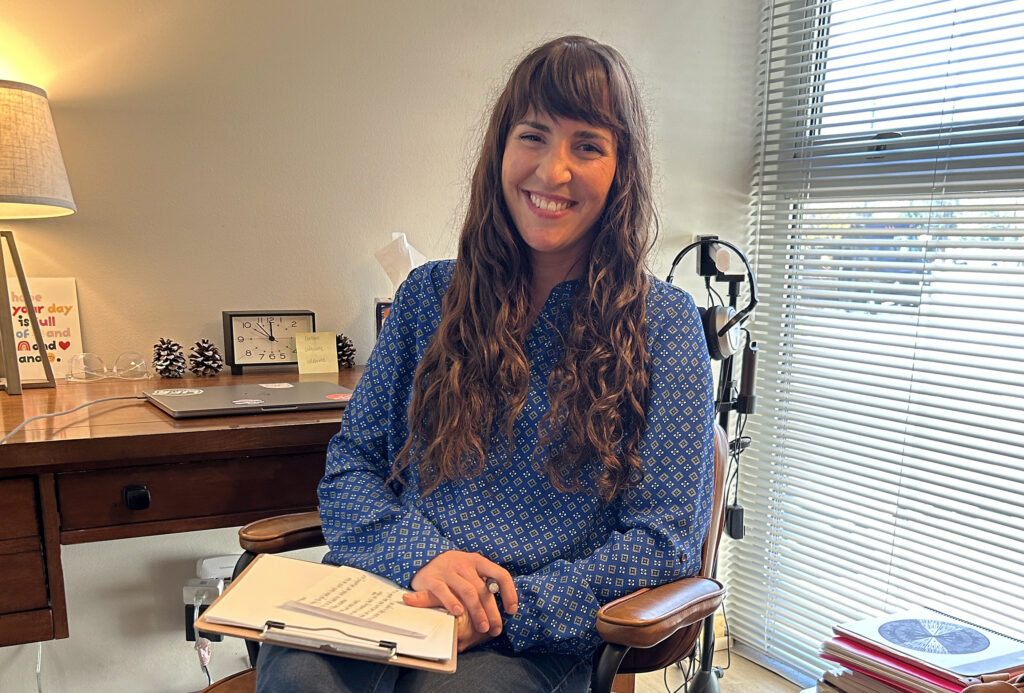
In an 8-1 ruling, an ideologically diverse majority ruled for an evangelical therapist who argued the state prohibition infringed on her First Amendment rights. Kaley Chiles said she wanted to counsel religious teens dealing with sexual orientation issues and gender dysphoria in ways consistent with biblical teachings.
The decision casts doubt on similar statutes in nearly 30 states that prohibit attempts to change the sexual orientation or gender identity of youths. Many states passed the laws over the last decade as evidence grew that the treatment was harmful.
The ruling is the first of several this term that are expected to be consequential for gay and transgender rights.
Chiles, a licensed therapist from Colorado Springs, sued Colorado in 2022 over its Minor Conversion Therapy Law, which was passed in 2019. The law prohibits physicians and mental health professionals from giving therapy to young people intended to change “behaviors or gender expressions” or “eliminate or reduce sexual or romantic attraction” to the same sex.
Violating the law can result in a penalty of up to $5,000 and loss of a counseling license. Colorado officials say no one has been disciplined to date under the law.
In previous decades, conversion therapy has included techniques including talk, hypnosis, electric shocks and chemically induced nausea to try to change sexual orientation, gender identity or behavior.
Chiles said she does not want to convert gay and transgender teens but use talk therapy to help those who want to reduce unwanted attractions or change sexual attractions.
As she put it in a court filing, her potential clients “believe their faith and their relationships with God supersede romantic attractions and that God determines their identity according to what He has revealed in the Bible rather than their attractions or perceptions determining their identity.”
Chiles said she had to turn away a family whose child was struggling with sexual identity issues for fear of running afoul of Colorado’s conversion therapy ban. The family, which she said was struggling, had little recourse.
“This one topic was now being separated and treated differently than literally every other topic in counseling,” Chiles said in an interview last year. “It’s not the way we would operate with addictions and eating disorders and with depression.”
During arguments in October, Colorado Solicitor General Shannon W. Stevenson told the justices the case was not about free speech. Stevenson said states have long been able to block licensed medical professionals from administering substandard care.
The American Medical Association, the American Psychiatric Association and other major medical groups oppose conversion therapy, and studies have linked it to depression, post-traumatic stress disorder, and higher rates of suicide among gay and transgender people.
“People have been trying to do conversion therapy for 100 years with no record of success,” Stevenson told the justices.
Colorado Attorney General Phil Weiser said in an interview last year that he worries a ruling for Chiles on free-speech grounds could lead others to mount similar challenges to professional standards and consumer protections in other fields.
“It is a dangerous Pandora’s box,” Weiser said. “That same point could apply to lawyers who offer advice to clients through speech. It could apply to those who are certified investment advisers.”
The Williams Institute at UCLA estimates that as of 2019, about 700,000 LGBTQ+ people had undergone conversion therapy. About half received the treatment as adolescents. One report found about 1,300 practitioners nationwide employing the therapy in states where it remains legal.
A federal judge denied Chiles’s motion for a preliminary injunction in the case, before a divided U.S. Court of Appeals for the 10th Circuit affirmed that ruling. The 10th Circuit concluded Chiles’s therapy is “undoubtedly … professional conduct,” not pure speech. Chiles then appealed to the Supreme Court.
The Supreme Court created a test for laws regulating speech by medical professionals in a 2018 case dealing with “crisis pregnancy” centers. The justices ruled the government must show a compelling interest to impose content-based regulation on professional speech and must narrowly tailor any such law.
The high court did find that the government could regulate professional conduct in a way that “incidentally” treads on free-speech rights.
Conversion therapy has split the lower courts. Some have found that conversion therapy laws violate free-speech rights, while others have ruled they are allowable regulations of professional conduct.
The case sits at the intersection of key lines of jurisprudence by the court in recent years. The justices have pushed to increase religious liberties, while rolling back protections for gay and transgender people.
In another high-profile case this term, the justices appeared ready to uphold state bans on transgender athletes playing on girls’ and women’s sports teams at schools and universities. The justices heard the case in January.
It came months after the justices ruled Tennessee could ban gender-transition treatments for minors in a major ruling. Last term, the justices also upheld the rights of religious parents to remove their children from public school lessons using LGBTQ+ books.
In a 2023 case, also from Colorado, the high court ruled the state could not force a web designer to create wedding websites for same-sex couples. A year earlier, the justices found Washington state infringed on the First Amendment rights of a high school football coach whom it disciplined for praying on a school field.
The post Supreme Court finds law banning conversion therapy for minors likely violates free speech appeared first on Washington Post.