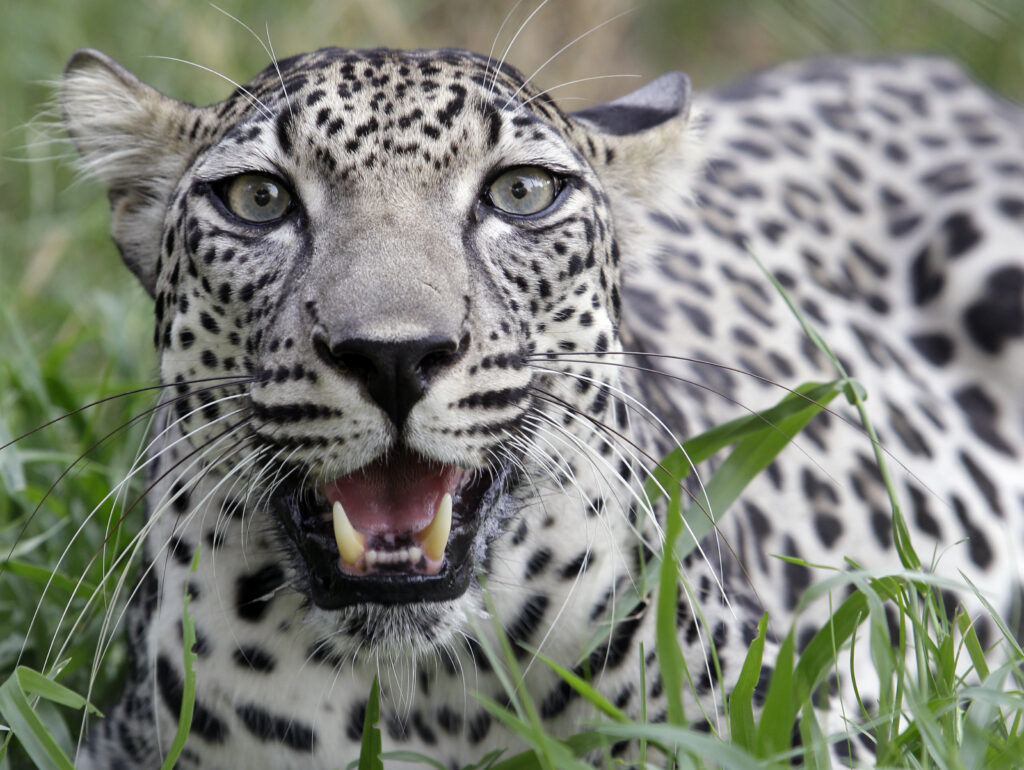
Saudi Arabia’s government is bringing one of the world’s rarest big cats to Washington — and writing the largest check in the Smithsonian National Zoo’s history to do it.
The $51.6 million gift from the Royal Commission for AlUla, a Saudi agency charged with developing one of the Arabian Peninsula’s oldest inhabited regions, will fund a new exhibit at the National Zoo featuring a breeding pair of critically endangered Arabian leopards. The donation buys more than an animal exhibit: It gives the Saudis a soft-power foothold in America’s capital — a chance to deepen ties with Washington power brokers, burnish an image marred by human rights abuses and, according to some Middle East experts, attempt to attract wealthy tourists to a country trying to diversify its economy beyond oil production.
“The ultimate goal is to increase the profile of AlUla on the international horizon,” said Natalie Koch, a professor of geography at Syracuse University who studies the Arabian Peninsula. “This is a place that they are trying to introduce to the world.”
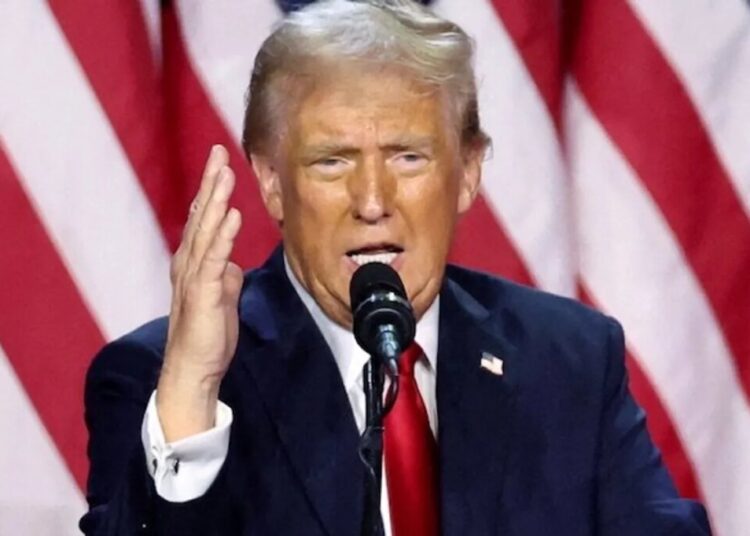
Still, the unprecedented donation is raising eyebrows, given the fraught relationship between the United States and Saudi Arabia — and President Donald Trump’s growing interest in influencing the Smithsonian.
The exhibit, which is expected to break ground in late summer and open to the public in 2029, will come before the National Capital Planning Commission this week, where the panel is expected to vote on whether to approve preliminary site and building plans for a roughly three-quarter-acre habitat along the zoo’s historic Olmsted Walk, featuring arched mesh enclosures designed to evoke the rocky terrain of the Arabian Peninsula. The commission’s executive director has recommended commissioners grant approval, the latest step in a process that has unfolded alongside an intensifying economic and political partnership between the U.S. and Saudi Arabia.
Early on in his second term, Trump placed the kingdom at the center of some of his most ambitious foreign policy goals, including efforts tied to facilitating negotiations for a ceasefire in Ukraine. In a high-profile honor last fall, he hosted Saudi Crown Prince Mohammed bin Salman at the White House to finalize agreements to deepen their economic and defense partnership. The meeting drew criticism of Trump, who has long expressed admiration for the prince, even after the CIA said the Saudi leader ordered the assassination of journalist and Washington Post contributing columnist Jamal Khashoggi in 2018. At the Oval Office meeting, Trump defended Mohammed, saying, “Things happen.”
“I can tell you from my experience at the Smithsonian that a gift like this would have been very, very carefully thought through at the highest levels of both the National Zoo and the Smithsonian Institution itself,” said Nikolaos Apostolides, former associate director of the Smithsonian’s National Portrait Gallery. “It’s about really weighing your soul as an institution. I don’t think that’s too heavy a word.”
Apostolides, who is now a lecturer in Museum Studies at Johns Hopkins University, said he would personally “be very hesitant and very skeptical” of accepting such a gift — but admits its easy to say that from the outside. “I would also be very mindful of the political scrutiny that the institution is under,” pointing to Trump’s attempt to fire NPG director Kim Sajet, who ended up stepping down.
“You could take the moral high ground,” and potentially risk being pushed out, he said. “Then, the gift will be accepted in your place by an interim director. So what have you really accomplished?”
For the officials tasked with promoting AlUla on the world stage, landing the Smithsonian is also proof of success closer to home. Koch said Gulf states prize Washington partnerships above all others — not just because of the American audience they reach but also the signal they send to in-country superiors.
“An easy way to show that you are waving the Saudi flag in an appropriate way and in a way that supports the country and its investments and its interests is by doing that in D.C. in particular,” Koch said. “If you randomly chose Boise, the officials in Riyadh would be like, ‘What is wrong with you?’”
The White House announced the zoo’s agreement with the royal commission while Trump was in Saudi Arabia during a four-day trip to the Middle East. National Zoo spokeswoman Annalisa Meyer said the zoo had been talking with the commission about Arabian leopard conservation since September 2024.
Saudi money has been flowing into American institutions for years as part of a soft-power diplomacy on several fronts, including sports, business, conservation and the fine arts. Since 2017, the kingdom’s sovereign wealth fund has invested around $170 billion in American companies. The leopard exhibit reflects a parallel push into cultural and scientific institutions, a strategy Koch describes as nature diplomacy, using conservation partnerships to build international and domestic legitimacy.
Native to the Arabian Peninsula, the Arabian leopard has been classified as critically endangered by the International Union for Conservation of Nature, with fewer than 120 estimated to remain in the wild. Saudi Arabia has positioned the leopard as a symbol of national heritage and made its conservation a centerpiece of the Saudi Green Initiative, a sweeping government program launched in 2021, Koch said. The royal commission’s breeding facility in Taif has more than doubled its leopard population since 2020, announcing the arrival of seven cubs in 2023 and five in 2024, the National Zoo said last year in a news release.
The Smithsonian aims to build on that effort. The Arabian leopard exhibit, designed with indoor and outdoor viewing areas and a tunnel beneath the habitat, is intended to mirror the zoo’s panda program in ambition — a long-term breeding and conservation partnership rather than a simple loan agreement.
“As custodians of the Arabian leopard, our responsibility is not only to prevent extinction, but to build the scientific foundation needed for long-term recovery,” said Naif Al Malik, the royal commission’s vice president for wildlife and natural heritage.
A global leader in conservation science, the National Zoo has spent decades pulling species back from the brink — giant pandas, black-footed ferrets, scimitar-horned oryx. The Arabian leopard partnership will follow that model, zoo officials say. Viewers around the world will be able to watch them via a live webcam. Any cubs born at the zoo will be transferred to Saudi Arabia to support reintroduction efforts.
Like China’s long-standing panda loan agreements with the Smithsonian, the leopard deal carries both diplomatic and conservation symbolism. But the financial terms differ sharply. China charges an annual loan fee, typically around $1 million per pair. The royal commission is transferring the leopards at no loan fee — and making a multimillion dollar donation on top of it.
Lukas Rieppel, a historian of science, capitalism, and museums at Brown University, said for a government or other entity seeking to “brandish its reputation, it’s a good idea to invest in projects that are very far removed from politics.”
“Animals are a great way to do that because people just love animals, right?” he said. “They seem about as far removed from politics as you can get.”
Conservation biology and protecting endangered leopards is “really important work” he added, noting that “the Smithsonian should be praised” for those efforts. “But the flip side of that is that it’s precisely what makes these kinds of projects such lucrative investments. … There’s so much goodwill associated with them.”
The National Zoo depends on major private gifts alongside federal appropriations funds to support new animal habitats, research and educational programs. Until now, billionaire philanthropist David Rubenstein has been its most prominent patron, donating more than $22 million to the zoo’s giant panda program since 2011, as well as another $2 million in 2013 to support Asian elephant research.
The Saudi gift surpasses his total contributions in a single transaction.
Countries in the Gulf and their sovereign wealth funds have learned that institutional hesitation tends to fade when dollar amounts are high enough, which is one reason they will makes offers that are triple or quadruple market rates.
“Among Gulf people with money, in general, people will straight up [say], ‘We don’t care what you really think of us. We can buy you and sell you,’” Koch said.
The National Zoo expects the royal commission’s gift to cover the cost of the exhibit and the 15-year agreement to house the leopards, including exhibit construction, animal transport, conservation research and dedicated scientific staff, Meyer said.
The exhibit will replace the former American bison habitat, an animal whose near-extinction in the 19th century inspired the zoo’s founding. The bison were transferred out in 2020 as part of a breeding program, and the exhibit has been vacant ever since, Meyer said. Across town on the National Mall, a pair of bronze statues were recently installed at the foot of the Natural History Museum, honoring the animal’s significance to America as the country celebrates its semiquincentennial.
But bison will not return to the zoo, Meyer said.
In their place: a pair of leopards from the Arabian Peninsula, arriving in 2028, in an exhibit designed to evoke the rocky outcrops and desert terrain of a region most Americans will never see — but that Saudi Arabia very much wants them to consider visiting.
Kelsey Ables contributed to this report.
The post Saudi Arabia’s record donation to the National Zoo buys more than an exhibit appeared first on Washington Post.