
For the first time in history, social media companies have been found guilty of harming the mental health of a young person.
Last week, jurors in Los Angeles concluded that both Meta and Google knowingly added features to Instagram and YouTube to make these platforms addictive to children. The plaintiff in the case, a 20-year-old woman, claimed that her addiction to the two platforms contributed to her depression, anxiety and body-image problems.
As the mother of a tween girl, I have experienced firsthand the power social media and video-streaming apps wield on young children — and how these technologies place parents into what feels like an inescapable trap. In my new book, “Dopamine Kids,” I explain how I released my family from this trap and, in the process, added more pleasure and joy into our home (and how you can, too).

With my daughter, Rosy, we allowed her about one to two hours of screen time each night, starting at age 7. But over time, we struggled harder and harder to pull her off video-streaming apps.
When the timer went off, an entirely different child emerged. She reverted back to a toddler — screaming, crying, and running around the house shrieking.
One night, she curled up into the fetal position and hid under her desk for fifteen minutes, softly whimpering.
I interpreted all these intense behaviors around screens — the begging beforehand, the insane focus during, the tantrums afterward — in one way: that Rosy loved, loved, loved what she was watching. They filled her with extreme pleasure.
This thinking placed me in a no-win situation.

On the one hand, I was fed up with the daily battle around YouTube and Netflix, which exhausted us all. On the other hand, I felt guilty taking the screen away from her. Because what kind of mom strips away from her only daughter the very activities that she loves?
But what if I was interpreting Rosy’s behavior completely wrong? Turns out, Rosy’s tantrums weren’t because she felt extreme love for these apps but rather because these apps triggered another emotion in her: extreme desire.
In the landmark trial last week, the plaintiff’s attorney accused Instagram and YouTube of designing “digital casinos” to hook kids on their apps. And indeed, scientists have accumulated vast amounts of evidence supporting this claim.
Video-based slot machines use a whole bag of tricks to hold people’s attention on these apps — and gamble — for 24, 36, even 72 hours. Slowly, over the past 15 years, the tech industry has been taking its recipe for addiction and applying it to the games and apps that they were building for kids.
In particular, modern slot apps give people the feeling that they’re drawing closer and closer to winning the big jackpot— that they’re making progress and learning the game. This perception triggers one thought repeatedly in many players’ minds: If I play only five minutes, I’ll finally hit it big. So they gamble until they run out of money.
Social media and video-streaming apps work in similar fashion, says neuroscientist Jonathan Morrow at the University of Michigan. First, the app tracks your child’s behavior on the platform and figures out what your child wants from the app. Are they seeking a sense of belonging with friends? A sense of adventure or exploration? Or are they simply looking to boost their mood?
But then — here’s the trick — the app never actually gives the child what they desire. Using AI, combined with data taken from billions of other users, the app selects the next video, comment or post to recommend that’s almost what the child wants, but not exactly, Morrow explains: “Then, maybe a few clicks, the child will see something a little closer.”

As with the slot machines, this withholding of the reward repeatedly triggers intense desire in a child’s mind. The same thought repeats endlessly: If I scroll five minutes, then finally I’ll get what I’m looking for. Over time, these apps rob children of joy and happiness because they coerce kids toward a reward that never arrives.
After talking with Morrow and other neuroscientists, I realized that I had completely misinterpreted my daughter’s behavior around screentime. These apps didn’t fill her with endless pleasure, but rather, they filled her with intense wanting and craving. They tricked her into endless loops of wanting.
They left her feeling woefully unsatisfied and frustrated.
This new understanding released me from the trap I felt. For the first time in Rosy’s life, I finally had the strength and motivation to set strong boundaries with these apps — even eliminate the most addictive ones. Because I could see how these limits wouldn’t deprive her, but surprisingly bring her more pleasure.
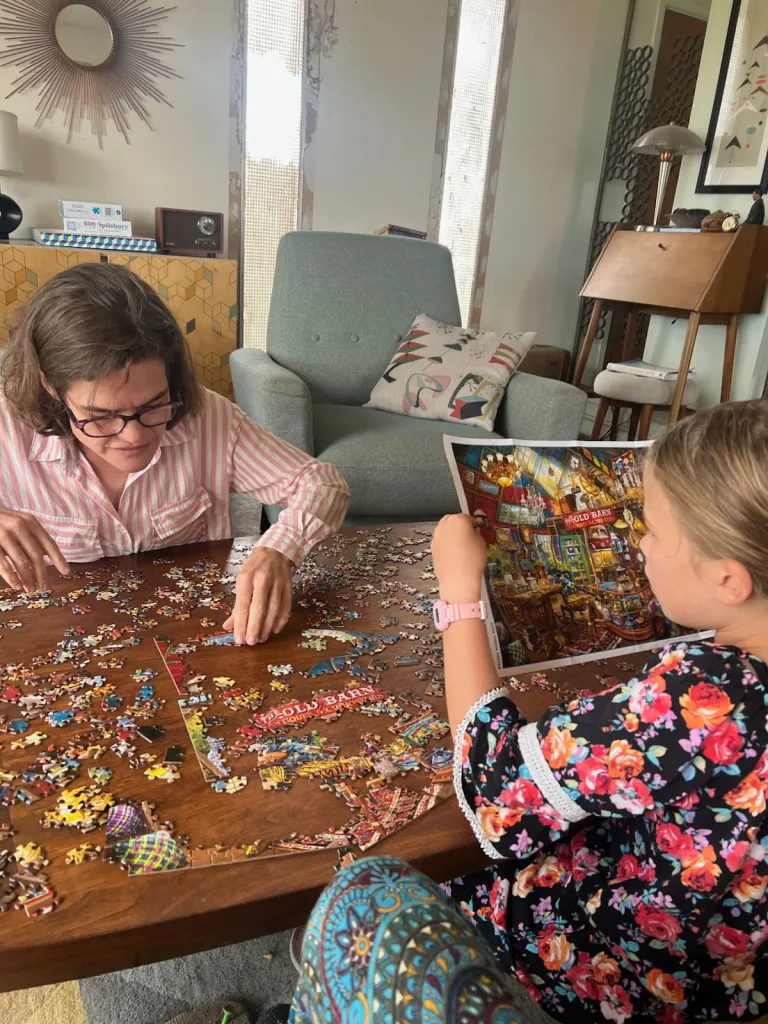
So I dug deep into the science of habit formation, and I developed a five-step protocol that allows parents to gently wean children off screens, with minimal conflict and struggle.
How? Instead of simply taking away an online activity from a child, you first help them cultivate and fall in love with a replacement activity offline, which is just as fun and engaging. And as a family, you celebrate this new activity as an exciting, joyful adventure, instead of portraying it as punishment.
For example, my daughter always wanted to learn to ride her bike — alone — to the corner market. So I began to encourage Rosy to bike in her free time. Then one evening, when I felt brave, I put the kibosh on after-dinner screentime. I hid all of our devices in our dryer, and when she begged for videos, I told Rosy that I would finally teach her to bike to market.
After about a week of biking together, she began to forget about videos after dinner.
As we continued to help her cultivate more offline activities–baking, journaling, crocheting — something extraordinary happened in our home: We released ourselves from the grip of screens, and our home filled up with more joy, happiness and peacefulness.

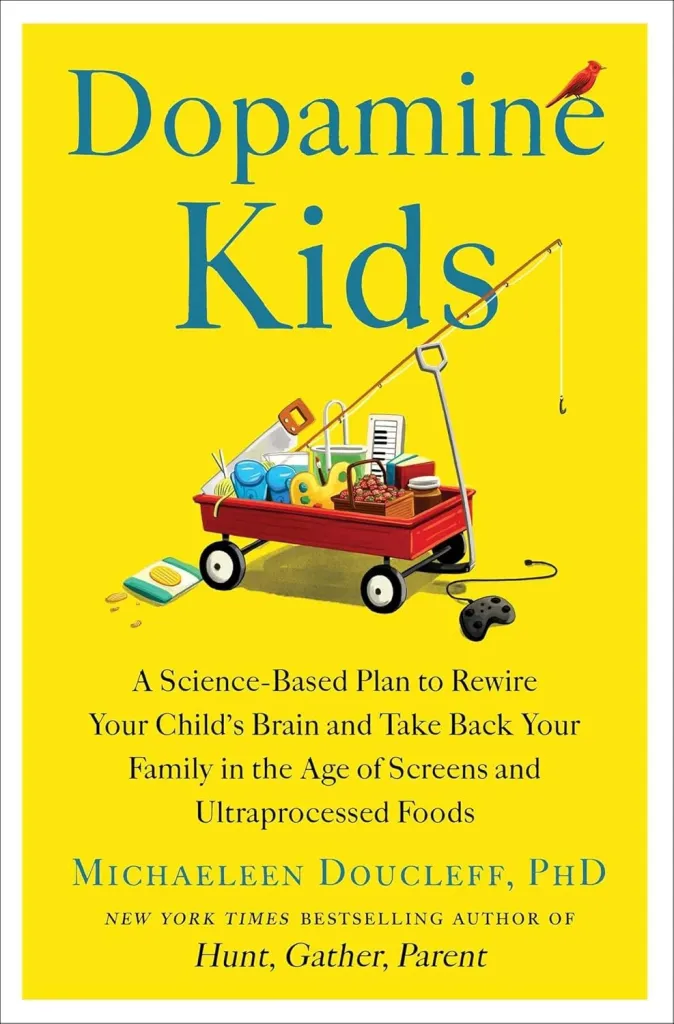
Dr. Michaeleen Doucleff is the bestselling author of “Hunt, Gather, Parent.” Her new book, “Dopamine Kids,” offers a five-step guide — packed with practical, science-backed strategies — that shows you how to raise confident, happy kids while breaking the cycle of overdependence on screens and ultraprocessed foods.
Her research culminates in a four-week plan to create screen-free sanctuaries that protect conversations, focus, sleep and adventure. The Anxious Generation alerted you to the danger of screens, but the demands of the 21st century require that you use them anyway. “Dopamine Kids” offers a handbook for solving that fundamental problem of our times — and for teaching your kids to have a healthy relationship with technology and food.
The post My tween was sucked in by the addictive power of screen time — but this solution has brought her true joy and our family closer than ever appeared first on New York Post.