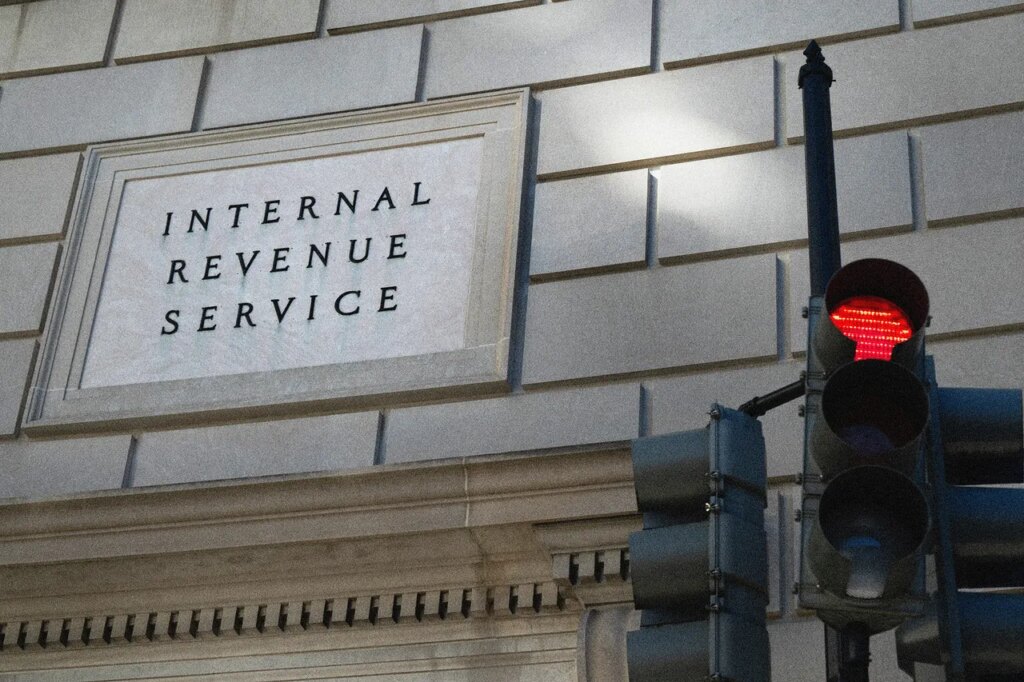
The Internal Revenue Service paid Palantir $1.8 million last year to improve a custom tool designed to help the tax agency identify the “highest-value” cases for audits, collection of unpaid taxes, and potential criminal investigations, according to documents WIRED obtained via public record request.
When the contract was signed, the IRS said it was using “more than 100 business systems and 700 methods,” built over the course of “decades” to select cases in which people may have incorrectly reported their taxes or owe the IRS money. As identifying potential tax discrepancies became more complex, the agency said its systems grew increasingly inefficient, and it needed to find a solution.
“This fragmented landscape can lead to a number of undesirable outcomes including but not limited to duplication of effort and cost, poor understanding of gaps in the coverage, and suboptimal case selection,” the IRS wrote in a document obtained by WIRED outlining the scope of the contract.
WIRED has made this article free for all to read because it is primarily based on reporting from Freedom of Information Act requests. Please consider subscribing to support our journalism.
The custom tool that Palantir built to address the problem, dubbed the “Selection and Analytic Platform,” or SNAP, is designed to help the IRS streamline how it identifies potential fraud cases. For now, the software is only being used as part of a pilot program, according to the documents. Palantir and the IRS did not respond to requests for comment.
It’s unclear how long Palantir has been working on SNAP, but the IRS has bought technology made by the company since 2014, government contracting records show. In total, Palantir has been awarded more than $200 million in contracts and obligated payments with the IRS. The documents show the agency is now interested in deepening its relationship with Palantir.
It’s not clear exactly how SNAP might fit into existing technology systems at the IRS. Like other Palantir tools, it would likely sit on top of the IRS’s highly splintered databases, and help human auditors in identifying red flags in tax filings they might have otherwise missed. The contract indicates that the IRS is interested in modernizing its software and is turning to Palantir for help. According to one of the documents, Palantir’s SNAP pilot is designed to surface “key information about contracts, vehicles and vendors” from “unstructured data from supporting documents.”
The IRS asked Palantir to craft three “case selection methods” related to parts of the existing tax code. The options included disaster zone claims, a form of tax relief for natural disaster victims, Residential Clean Energy Credits, a tax credit program that offset the cost of installing things like solar panels or wind turbines, and Form 709 Gift Tax Returns, which people may have to fill out when they give away valuable things like like artwork, stocks, or corporate entities.
Mitchell Gans, a professor at Hofstra University focused on gift and estate taxes, says that if SNAP is analyzing unstructured data from supporting documents, it may be examining forms providing “adequate disclosure” of property being gifted to another person. The IRS stipulates that these disclosures must include “a detailed description” of how the property’s value was determined, and the relationship between the giver and recipient.
Gans says that if, for instance, a person gives someone else a private business, the disclosure would need supporting information about how it was appraised, such as “balance sheets and statements of net earnings, operating results, and dividends.”
Erica Neuman, an accounting and finance professor at Youngstown State University, adds that public logs from money transfer apps like Venmo, as well as public storefronts on websites like Etsy and Depop, could also contain unstructured data of interest to the IRS.
If Palantir’s SNAP tool were to factor in data from Venmo or Depop when selecting audit cases, the IRS would have to already possess it. The contract documents state that the agency only wants Palantir to use “existing data in SNAP today.”
For decades, the primary way the IRS decided which cases to audit was by calculating what is known as a Discriminant Information Function (DIF) score for each taxpayer. According to the IRS, “the higher the score, the greater the audit potential.” Neuman says that the way the scores are calculated is a black box. But researchers generally agree that the agency looks for similarities between current tax filings and past ones that eventually led to audits.
Neuman has studied other methods the IRS has experimented with to improve its case selection process, including contracting with companies like Coinbase to analyze information about crypto transactions, and mining public social media posts for clues that an individual or business may be underreporting their income.
The IRS has also tried updating its own technology several times, but Neuman says it has been plagued by technical difficulties. The agency “basically never had a full successful modernization since the 1960s,” she explains.
Other parts of the federal government have also struggled to modernize. When government workers apply for retirement, for instance, they have to go through a process that still partially involves paper documents stored in a limestone mine in rural Pennsylvania.
But Neuman says there’s one thing that has made it especially difficult for the IRS to upgrade its technology: The agency is incredibly unpopular with the public, making it a convenient punching bag for politicians looking to score points with voters. As a result, Neuman says, there’s often “a lack of political will to die on the hill of the IRS.”
Under the Trump administration, that dynamic has translated into shrinking resources and staffing cuts at the IRS. In February 2025, about 103,000 people worked for the agency. By July 2025, more than 25,000 people resigned or accepted deferred resignation and early retirement offers.
Leaders at the IRS also tend not to stay in the job for very long, which means it can be difficult for big, multiyear projects to stay on track or get finished. “The commissioner turnover is incredibly quick—and that, of course, has accelerated in the most recent years,” Neuman says. “But it’s just hard to get things done when there’s not enough resources, and no one is really pushing that hard for it.”
The post The IRS Wants Smarter Audits. Palantir Could Help Decide Who Gets Flagged appeared first on Wired.