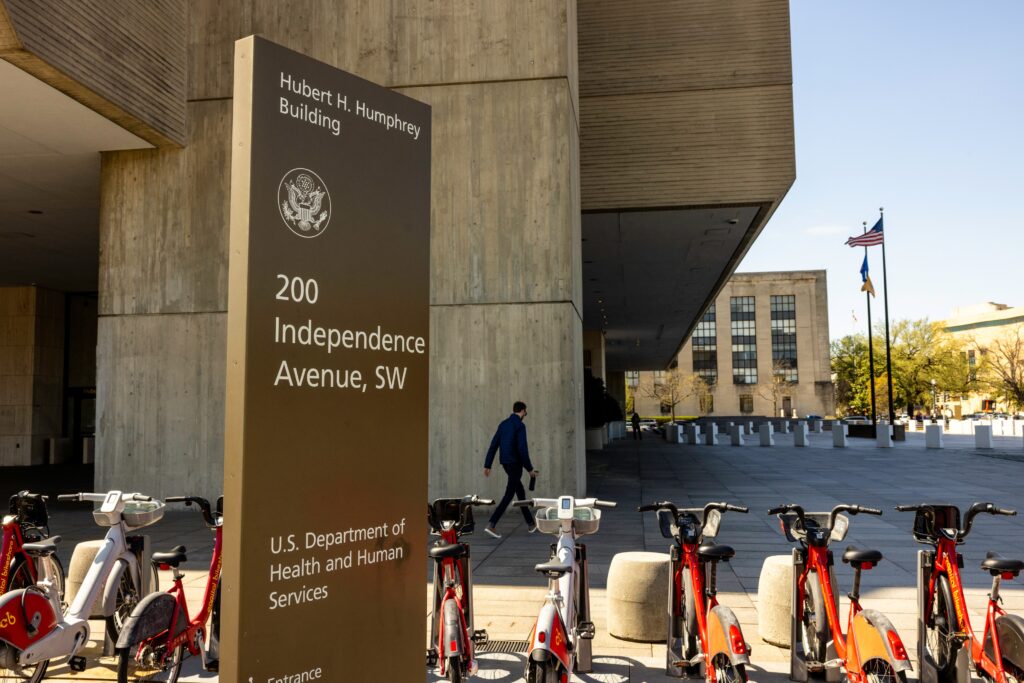
The Trump administration has ruthlessly targeted diversity, equity and inclusion (DEI) programs that classify Americans based on a progressive racial hierarchy. But the federal bureaucracy is vast, and the White House apparently didn’t catch them all. Hence a new lawsuit challenging a medical scholarship administered by the Department of Health and Human Services that bars applicants who don’t have Native Hawaiian ancestry.
The lawsuit, filed Monday by the medical group “Do No Harm” and first reported here, argues that this racial requirement for a federal government benefit is unconstitutional. It’s close to a legal no-brainer. The Native Hawaiian Health Scholarship Program pays tuition and other expenses for students studying to work in the medical field, including as doctors, dentists, nurses or social workers. After their studies, recipients of the scholarship agree to work in underserved parts of Hawaii. Some members of Do No Harm want to participate in the program, but are excluded because of their race.
To be considered for the scholarship, students need to document their Native Hawaiian identity. The applicant’s birth certificate suffices, but an ancestor’s — no matter how distant — will also do. “If Member A had just one family member of Hawaiian descent hundreds of years ago,” Do No Harm’s lawsuit says, “she would have the requisite blood-quantum to be the ‘right’ race and she would be eligible.”
The authority for this racial criterion comes from 1992 legislation directing HHS to offer health scholarships for Native Hawaiians. But the Constitution doesn’t allow the government to foreclose benefits to certain racial groups. The Supreme Court ruled in 2000 that a voting restriction for non-Native Hawaiians was an unconstitutional racial policy, and in 2023 it barred racial preferences in higher education.
The only rationale for this scholarship’s racial preference would be that Native Hawaiians are better suited to providing medical care to other Native Hawaiians. But the idea that government should disfavor people of different races being one another’s doctors or patients echoes segregation.
It also doesn’t make sense in the context of the scholarship. After all, the program excludes those who are “not Native Hawaiian but spent their entire life living in Hawaii,” while potentially including “someone who is 1/200th Native Hawaiian but never even visited the island,” as the complaint puts it.
The government can still encourage young clinicians to work in underserved parts of Hawaii without a racial litmus test. The fact that this program is apparently still up and running after the Trump administration’s assault on DEI shows how widespread the practice has become. Colorblindness won’t enforce itself.
The post The government’s DEI complex lives on appeared first on Washington Post.