Donna Lemm is chief strategy officer for the trucking and intermodal company IMC Logistics, based in Collierville, Tennessee.
If you opened The Post in early March, you didn’t have to read far to understand the growing threat facing the U.S. supply chain today.
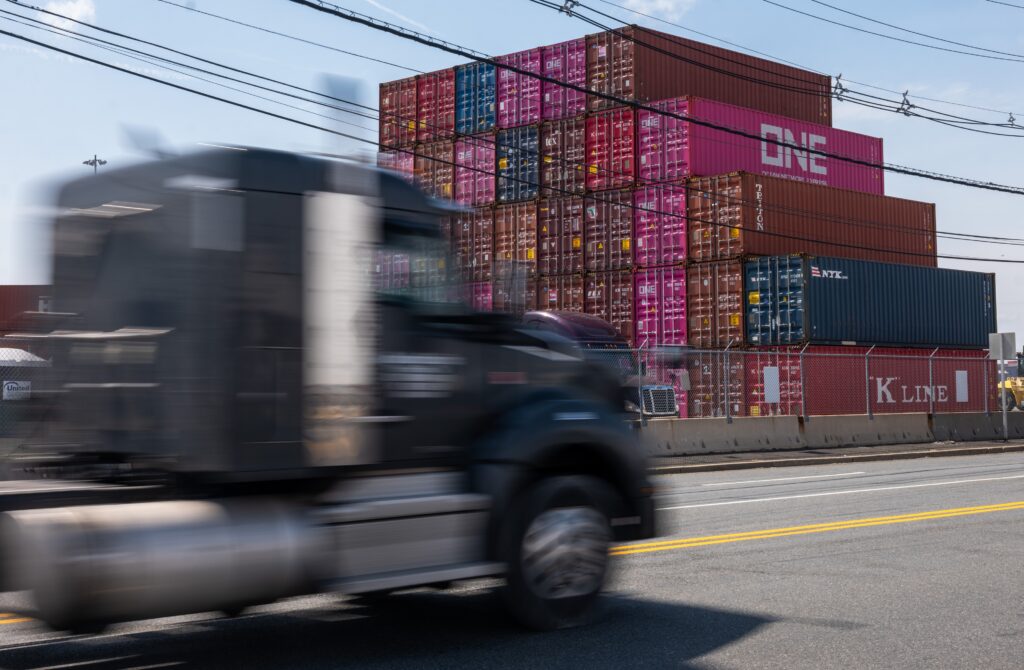
A Business story recounted how, in the span of just 14 minutes, a thief drove into a darkened warehouse lot in Reno, Nevada, hitched a 53-foot trailer to his truck cab and vanished into the night, making off with more than $15 million in electronics. By the time authorities recovered the empty trailer hundreds of miles away, the cargo was long gone.
For the trucking industry, this is becoming an all-too-familiar scenario — and one that Congress must act to prevent.
In November 2024, 24,000 bottles of the tequila brand founded by Food Network star Guy Fieri and rocker Sammy Hagar stood no chance against thieves. Then there was the $400,000 Costco lobster heist last December. And most recently, someone hijacked a truck carrying 378,000 tins of conservative commentator Tucker Carlson’s nicotine pouches. Even household names aren’t immune.
Last year, I testified before Congress on the growing cargo theft crisis and the ways organized criminals are targeting the American supply chain. After nearly four decades of working in logistics, I can say with certainty: The scale and sophistication of today’s cargo theft is unlike anything our industry has faced before.
Thieves have evolved from stealing the occasional trailer to something far more dangerous — highly organized criminal networks that exploit technology, impersonate legitimate companies and drivers, and operate across state lines with stunning speed and sophistication.
Criminal groups now conduct careful research on their targets. They impersonate legitimate freight brokers or customers using spoofed email domains that appear identical to the real thing. They steal corporate identities, create fraudulent shipping documents and dispatch drivers with counterfeit credentials to pick up loads they were never authorized to haul.
By the time the theft is discovered, the freight has often vanished into a black market that stretches far beyond state or even national borders.
The items being stolen are often everyday essentials: food, household goods, electronics and consumer products that Americans rely on. When these shipments disappear, the consequences ripple through the economy: Businesses lose inventory, manufacturers lose components, and retailers lose products meant for store shelves. And ultimately, consumers pay the price through higher costs and disrupted supply chains. In total, cargo theft now costs the U.S. trucking industry a staggering $18 million every day.
But we are fighting back. Companies like mine have invested heavily in security technologies such as advanced GPS tracking, surveillance systems, controlled-access facilities and employee training designed to detect fraud.
Still, the private sector cannot solve this problem alone.
The organized criminal networks responsible for today’s cargo theft operate across jurisdictions, exploiting gaps between local, state and federal law enforcement. A theft reported in one state may be part of a larger criminal operation spanning multiple regions. But without coordinated data sharing and investigative resources, those connections can be difficult to identify.
That’s why Congress should pass the Combating Organized Retail Crime Act.
This bipartisan legislation would create a national coordination center to bring federal, state and local law enforcement together with the private sector to share intelligence, track organized theft networks and coordinate investigations.
In other words, it would help law enforcement connect the dots.
For those of us working in logistics and trucking, this legislation isn’t about protecting corporate profits. It’s about protecting our drivers and logistics professionals, who take enormous pride in the role they play in keeping the economy running. When organized criminal groups target shipments, they threaten more than just freight. They threaten the reliability of the supply chain Americans depend on every day.
Congress has a clear opportunity to strengthen the fight against these criminal syndicates by passing this law — and securing the movement of goods across our country.
The post From lobster to laptops, organized crime is targeting U.S. freight appeared first on Washington Post.