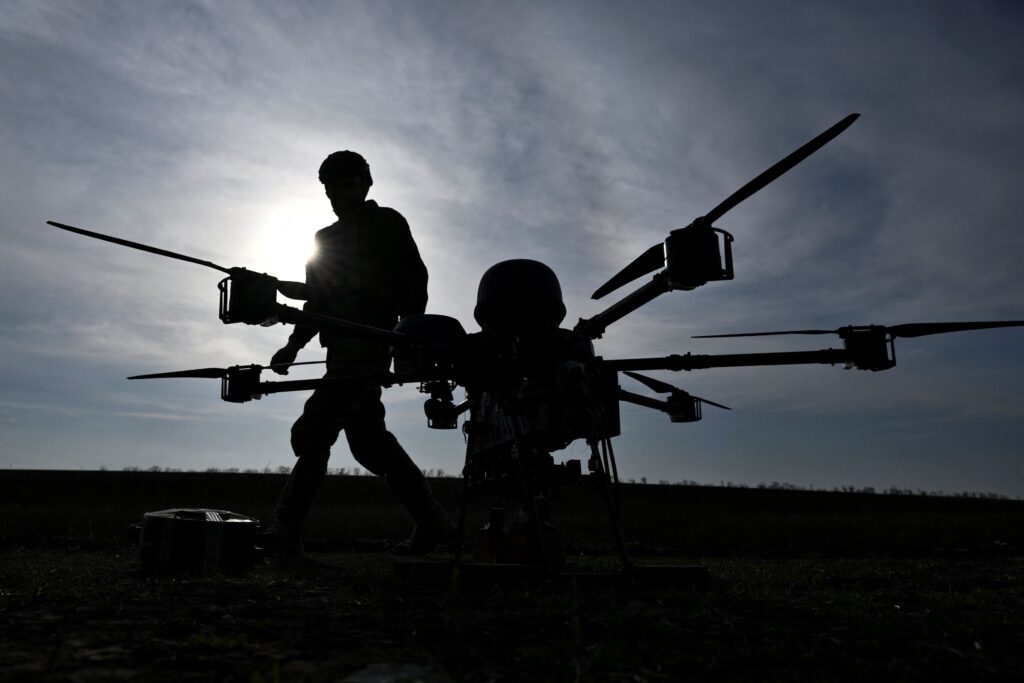
Americans are accustomed to feeling removed from the horrors of war, but troubling incidents in Louisiana this month show how emerging drone technology can dry up the moats.
Over the course of a week, multiple waves of sophisticated drones penetrated the airspace over Barksdale Air Force Base near Shreveport — a critical hub of America’s nuclear bomber fleet and the headquarters of Air Force Global Strike Command.
These drones were likely custom built, requiring advanced signals expertise far beyond any hobbyist. The disruptions apparently succeeded in delaying bombers taking off to strike targets in Iran, according to ABC News.
Vast oceans to the east and west, plus mostly friendly neighbors to the north and south, can make fighting feel distant to those who don’t have loved ones in uniform. That isolation has been punctured by occasional sneak attacks, such as Dec. 7, 1941 and Sept. 11, 2001. But the ongoing revolution in military affairs means that no strategic target in the homeland can be considered safe.
Similar incursions around a British airbase hosting U.S. bombers were reported in 2024.
Last year, the Russians experienced a devastating attack on their fleet of strategic bombers by Ukrainian drones trucked close to a base.
While it’s unclear who is behind the Louisiana incursion, it’s impossible to ignore that a new era of drone warfare has begun — and that the U.S. is not ready. During a NATO exercise in Estonia last year, 10 Ukrainian drone operators role-playing as the enemy mock-destroyed 17 armored vehicles and disabled two allied battalions in a day. NATO forces couldn’t even locate the operators.
These vulnerabilities are no longer theoretical. Iran originally supplied Russia with its Shahed drone designs for use against Ukraine. Now Russia is sending upgraded versions back — with improved engines, better navigation and enhanced resistance to electronic jamming. Moscow is also sharing satellite imagery and targeting data to help Iran strike American bases and personnel.
Several of the 13 American bases in the Middle East are reportedly all but uninhabitable after Iranian drone and missile strikes damaged radar systems, communications infrastructure and troop housing — forcing U.S. personnel to relocate to hotels.
The good news is that no military in the world learns on the job faster than America’s. The Army’s Center for Lessons Learnedat Fort Leavenworth in Kansas exists for exactly this purpose — pulling what works from the battlefield and pushing it back across the force. Institutions such as these helped the U.S. military in Iraq adapt to a battlefield shaped by roadside bombs, fielding thousands of mine-resistant vehicles in under three years.
The Barksdale incident is a wake-up call that it’s time to take drone defense far more seriously. Staying a step ahead of America’s enemies requires constant experimentation and innovation.
The post The drone swarm in Louisiana is a warning about the future of war appeared first on Washington Post.