One common point of reference for the 2026 U.S. war in Iran is the 2003 U.S. war in Iraq. But it’s worth considering a darker analogy: Russia’s 2022 war in Ukraine.
No, not in moral terms. Iran’s wicked regime is nothing like Ukraine’s government. And America’s constitutional system, unlike Russia’s, rests on consent of the governed.
But from a purely “realist” perspective, there are similarities. In both cases, a strong power attacked a weaker power. In both cases, a major casus belli was the fear that the weaker power might, at some point in the future, harbor weapons that could threaten the stronger power. In both cases, regime change was a goal of the attacker, at least at the start. The United States might yet swiftly achieve its objectives. But Russia hasn’t — the ruinous war is in its fifth year — and some of the reasons are instructive.
Military expert Aaron MacLean compares Iran’s asymmetric strategy in the Persian Gulf to Ukraine’s in the Black Sea. Iran has managed to throttle shipping in the Strait of Hormuz despite its lack of a functional navy or air force as the threat of missile, drone, mine and unmanned-boat attacks keeps the U.S. Navy at bay (for now). Ukraine, though wildly overmatched by Russia’s Black Sea Fleet, has managed to nullify Moscow’s naval advantage using many of the same tactics.
The through line: It’s a heavier lift for a great power to exert control over a waterway than it is for a smaller power to simply put the waterway at risk (see also: the Houthi attacks on Red Sea shipping last year). Keeping waterways open is a core purpose of the U.S. military. But one of President Donald Trump’s insights is, or was, that “peace through strength” is cheaper than war — that deterring America’s rivals from doing something harmful is easier than deploying the military to reverse what they have already done.
The U.S. chose this war with Iran anyway, prompting the mortally threatened regime to shutter the strait for the first time. Now the U.S. might need to reopen it by force. That is presumably possible, but the costs, despite Iran’s inferior capabilities, might be more significant than anticipated.
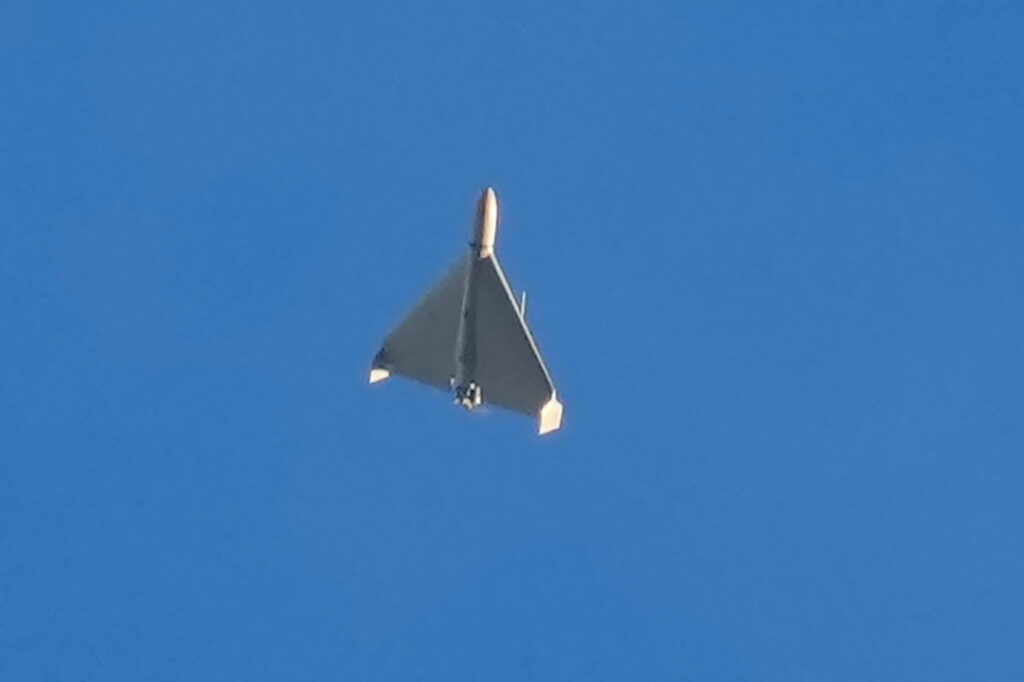
Russia’s war in Ukraine has become a proxy war with the West. The U.S. and Europe have sent tens of billions of dollars in weapons to keep Ukraine in the fight and Russia tied down, as China economically props up Russia’s war machine. America’s adversaries surely see the Iran war as a reciprocal opportunity to bleed the U.S., with Russia already supplying Iran targeting information and advanced drones.
The Post reported on Friday that the U.S. has used more than 850 Tomahawk missiles in the fight against Iran. That’s more than four times the quantity (190) expected to be delivered to the U.S. military this year, according to the Center for Strategic and International Studies. All that U.S. firepower has degraded Iran’s offensive abilities, but it will take a lot of bombs to take them out entirely — especially if fresh supplies arrive from Russia across the Caspian Sea. Reuters reported on Friday that the Pentagon can confirm the destruction of only a third of Iran’s missiles so far, with another third “likely damaged, destroyed or buried.”
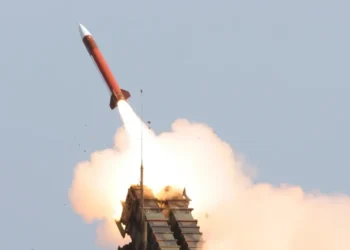
The pressure on U.S. air defenses is more acute. A report published by the Royal United Services Institute, a British think tank, estimates the U.S. spent nearly 40 percent of its Terminal High Altitude Area Defense (THAAD) interceptor stockpile in 16 days of war with Iran. Beijing and Moscow have every interest in helping the country draw down America’s reserves of military power.
Advocates of the war in Iran argued, especially early on, that it would give the U.S. an advantage in great-power competition with Russia and China, since the regime in Tehran is aligned with both. Russia might have similarly thought its attack on Ukraine would shatter the Western alliance; in fact, the short-term consequence was to reinvigorate NATO and damage Russia’s reputation in key capitals. The diplomatic effects of America’s war in Iran remain unclear, but it can’t help U.S. strategy in Asia that countries such as the Philippines and Vietnam are facing energy emergencies triggered by an American war. That might lead to more collaboration with Beijing.
In my experience, arguments about the Iran war tend to have a circular quality. Supporters point triumphantly to how quickly the U.S. overpowered the regime by conventional military measures. That’s undeniable, but to me, America’s manifest military superiority on display in this war shows why deterring Iran’s regime, rather than trying to annihilate it, was eminently feasible. Iran was a regional problem with a freshly damaged nuclear program, not a fundamental threat to the U.S. worth this level of expenditure — in weapons, reputation and risk — to preemptively maul.
Compare that with Ukraine’s importance to Russia. Zbigniew Brzezinski famously wrote, “Without Ukraine, Russia ceases to be a Eurasian empire.” The United States has endured as a superpower despite Iran’s nearly half-century of hostility. In that sense, Vladimir Putin’s evil war is at least easier to understand. May it nonetheless fail, and may America’s succeed.
The post A dark analogy for the war in Iran appeared first on Washington Post.