YouTube is now the leading way Americans watch video. Its audience is young; an astonishing 90 percent of American teenagers are on the platform. YouTube TV is bigger than many cable operators. (Since last year, the main way YouTube has been consumed in the United States is actually on connected television.) YouTube has changed not only what we watch — think of content creators like Jimmy Donaldson, better known as MrBeast, and podcasters like Joe Rogan — but also how we watch it, with interactive features part of the platform’s allure.
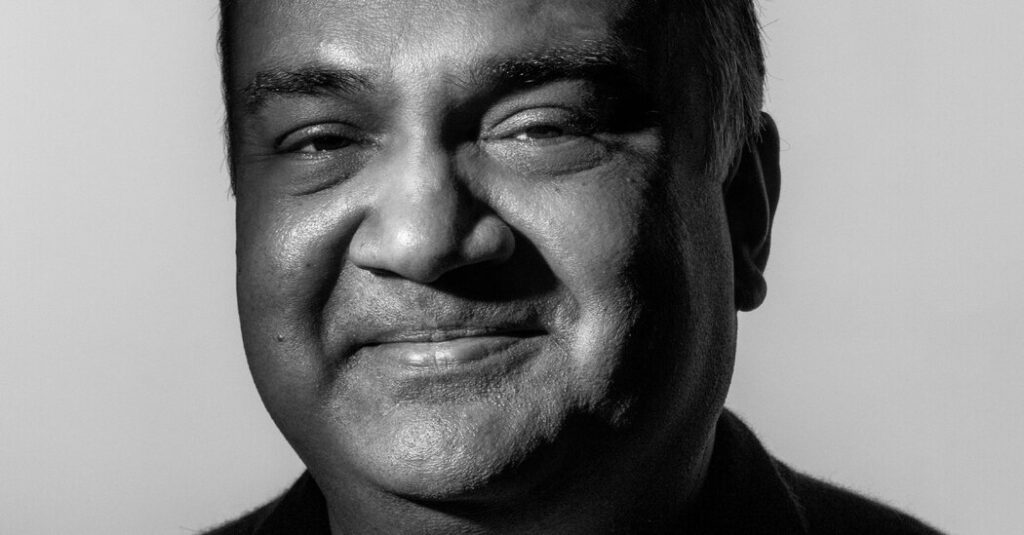
And, as the saying goes, with great power comes great responsibility. Which is why I wanted to sit down with YouTube’s chief executive, Neal Mohan, who has led the company since 2023 and overseen its rapid growth. The platform’s rise hasn’t come without controversy. Just this week, a jury in California found YouTube, alongside Meta, negligent for harming a teenager’s mental health through its addictive features. That verdict, which YouTube said it would appeal, came down after Mohan and I talked, but our lengthy conversation did cover YouTube’s impact on children — and on us all. You can read that conversation here, or you can watch a longer version, of course, on YouTube.
Subscribe: Apple Podcasts | Spotify | YouTube | Amazon | iHeart
I want to start with a statistic. MrBeast, the biggest content creator on YouTube, said that humanity now spends 2 percent of its waking hours on YouTube. Is the goal to make it 3 percent? I know Jimmy very well. He and I have not done that math together. [Laughs] We measure ourselves by this concept of whether viewers, all of us, the two billion people that come to YouTube every single day, are satisfied by their experience. And we have grown. We’re the No. 1 streamer. We’re an incredibly large podcast platform. I will watch this conversation on YouTube.
Yes, what used to be an audio podcast is now a video podcast. This is the way to gain new audiences, because everyone seems to be on the platform now. What is it that you think makes shows grow? I mean, how do I make this a hit, other than grabbing a chair and bashing you over the head with it? [Laughs] It’s very, very simple. The people that are watching you on a television screen or on their mobile phones, the one thing they can suss out really quickly is if it’s truly authentic. That’s what comes through for the successful creators.
You recently have had several major podcasters leave YouTube for Netflix — shows like “The Breakfast Club,” “My Favorite Murder.” Meta just announced that they are interested in luring some of your creators away. Apple is now talking about getting into the video podcast business more aggressively. They’re taking the things that you built and saying, Come over here, the water’s warm. I’d say a couple of things about that. First, it is flattering that they see us as the center of culture. But when I speak to our creators — and I speak to them several times a week — what they always tell me is that no matter what they look to do, they understand that YouTube is their home. There would be no “Beast Games” if there wasn’t MrBeast on YouTube. Jimmy knows that. I have not come across YouTubers that have completely yanked their content off YouTube. I can’t imagine why they would do that. And frankly, they’re in a position where they can say no to that, right? Because the nice thing about what they’ve built is that there are other places that are so desperate to work with them that they’ll acquiesce to what our YouTubers ultimately know is the right decision for them in the long term, which is to never leave their home.
At the beginning of 2026, you wrote, “YouTube is the new TV because creators are the new prime time.” I think one of the things that has Hollywood nervous is the question of quality. Prestige TV is something that’s hard and costly to make. YouTube is mostly not that. I was looking at all these guides on how to get your videos to do well on YouTube, how to get the algorithm to like you and amplify you. Are you adopting any of them?
Not yet! But it’s all about tapping into a lizard brain, and not about elevating things that have a narrative arc, that have character development, that have complex moral decision-making. Are we losing something with the dominance of the kind of creator economy that YouTube specializes in? This is a conversation that the industry likes to have, and it’s often the industry just talking to itself, to be honest. I think it’s presumptuous for us to tell people what is high quality or low quality or prestige or not. At the end of the day, two billion people come to YouTube and they find what they love. And there’s every type of creator and every type of genre, because it is a reflection of humanity. We have incredible creators that are producing amazing scripted content in Hollywood, like Alan Chikin Chow or Kinigra Deon, who have built soundstages. I would put that up against any quote-unquote prestige content out there. I would put Ms. Rachel or Mark Rober or Cleo Abram against any quote-unquote traditional produced content. And the great thing about it is that when the next Ms. Rachel or the next Mark Rober comes along, who’s even more creative in a different way, they get a shot at it as well. As opposed to someone in traditional media saying, “No, I don’t think your idea is a good one” or “It’s low quality.” Who are we to say that?
So content creators are king, but you are moving into the traditional purview of the networks. You secured broadcasting rights for the Oscars starting in 2029 and currently some N.F.L. games. I’ve seen predictions that this is going to be the death knell for cable and broadcast television because these are such big tentpole events. What is the strategy here? Is it to pick off the biggest events from traditional broadcast television? Is the Super Bowl next? If you think about it from a viewer standpoint, especially a younger viewer, their expectation is that when they turn on the TV, all of what they want to watch and engage with is in the same experience. That’s everything from a 15-second short — by the way, lots of people watch shorts on televisions — to a 15-minute classic YouTube V.O.D., to a three-hour podcast or a three-hour N.F.L. game or a 15-hour livestream, because we have lots of streamers on our platform. And the expectation is that all of that is a seamless experience that they can get through their recommendations on YouTube. I have an 18-year-old son. He’s a sports nut. He watches lots of live sports, but his sports highlights are his YouTube feed. And the N.F.L. understood that. And so that led to the partnership. And the Oscars was a similar type of conversation with the Academy.
Since you mentioned the Oscars, did you see Conan O’Brien’s skit this year, where he poked fun at YouTube? He had two YouTube jokes, actually.
What did you think? I think Conan is very funny. And he’s actually a YouTuber. He’s been on YouTube for a very long time. His Team Coco channel does really well on YouTube.
I understand that you are a big reader. There are studies showing that our video consumption has ushered in this age of post-literacy. Gen Z now overwhelmingly prefers to consume visual content on YouTube as opposed to traditional media, and that has tracked with a drop in reading levels, attention spans. What do you think about YouTube’s role in changing the way that we think and our brains? Presumably, you’re talking about young people?
My brain, too, but yeah. I have three kids of my own, so as a parent, I think about their development every single day. I encourage my kids to run around and touch grass. I encourage them to read as much as they possibly can. On YouTube, there’s content, as we’ve described, that young people find entertaining and they learn new things on a regular basis.
This isn’t a gotcha. I’m genuinely curious: Do you think it matters that they are learning things through video and that it’s changing the way they absorb information? I think that video, just like reading, is an important way for people to learn. And when you say the term “video,” it’s like learning visually. Back in the day, we learned in the classroom visually from our teachers. I do see a lot of that learning happening on YouTube. And actually, teachers tell me that all the time, too.
My daughter is dyslexic, and YouTube is a huge part of her life. She learns visually, and it’s been a godsend for her for all sorts of different reasons. So this isn’t to say that this is necessarily a bad thing, but it is a thing. I think about it more in the analogy of a library. It’s a visual library, but it’s a library that has lots and lots and lots of books in it. And the way that information or knowledge is communicated or new ways of thinking is communicated is audiovisual, and I do think that is an effective way for people to learn. Do I think it’s the only way? Of course not.
I want to ask you about a lawsuit that’s happening where you’re currently, along with Meta, being sued by a young woman who says YouTube is addictive and harmful. This is considered a landmark case here in California. Do you feel a responsibility to remedy the harm if your site is addictive to people? [After Mohan and I spoke, the jury in this case found YouTube and Meta negligent. A YouTube spokesman told us that YouTube disagreed with the verdict and planned to appeal.] I shouldn’t comment on that specific trial, as you can understand. What I will say is that YouTube is this platform where people go for many different reasons — to blow off steam, to listen to their favorite artists, to connect with community and to learn. So we should be thinking about protecting young people in the digital world as opposed to protecting them from the digital world. The best analogy I can think about is teaching my daughter to ride a bike. It starts with training wheels, and you take off the training wheels, and then eventually she can ride her bike and be on her own.
It’s impossible to put guardrails on kids with devices. It’s so hard. That’s what I was trying to say, that principle of making sure that we’re protecting young people in the digital world as opposed to shutting them off from it. Because I also think it’s wrong, frankly, to eliminate that knowledge, that library of content. So then how do you approach it? The way I think you approach it is to make it so that parental controls, as you described, are truly practical and easy to use, and can actually be enforceable. That’s what we can do.
As a parent, which I know you are, it can feel like you’re fighting against Silicon Valley. Like you are trying to put some guardrails and some order in the household and you are fighting against these giant corporations, of which you are one. It feels for many parents like they just lose the battle. I think about how young people are growing up today. There are amazing things that happened — that access to information, to knowledge — because of platforms like YouTube. I also understand the challenges that you’re describing. And so it’s not to trivialize them in any sense, because I experienced them and it is something that I personally care deeply about. It’s personal to me. Our approach to it is, How can we bring all of those awesome experiences, but do it in a way where parents are in control? That’s what we work toward. A couple of months ago, we announced the ability for parents to actually have a timer on short-form video feeds, to set it to zero. That’s industry-leading. That has not been done before.
I do want to talk about content moderation, because as YouTube has become bigger and bigger, the responsibility becomes, I think, greater. Do you feel that responsibility in terms of how things have shifted and just having a lot more time spent on the site? Every single day. It is my top priority in many ways. I often say that YouTube is a reflection of what’s happening in the world, but what happens on YouTube also impacts the world. That is the motivation behind the responsibility. We are a platform that prides itself on being open, without a gatekeeper. We stand for freedom of speech, freedom of expression, but we’ve had community guidelines on our platform since the day YouTube started. And living up to that responsibility is a big part of what happens around here.
Starting in 2020, YouTube deplatformed a number of accounts for spreading lies. You’ve replatformed many of them, most notably Donald Trump. After Jan. 6, 2021, you had suspended Trump’s account. YouTube wasn’t alone in that. Many other platforms did the same. Trump then sued, accusing you of censorship, and you reinstated his account in 2023. Then Google, your parent company, agreed to pay nearly $25 million to settle the case last year without admitting liability. Were you wrong to ban him in the first place? I’m trying to think back to the policies that were in place back then. Many of those are not in place today. We have a long track record of working with administrations, really on both sides of the aisle. We make our decisions based on what we believe at the moment to be right for the creator ecosystem that we spent the bulk of the time talking about here. We strive to write our community guidelines in the best way we possibly can. We strive to be as much of an open platform as we can.
But was it the wrong decision, at the time, to ban a former president? It’s hard to look at these decisions out of context. You think back to 2020, we were embarking on this pandemic that was going to shut down the world, science was being created every single day. Did we reverse those policies? Yeah, we changed a lot of those policies because while the principles of freedom of expression, free speech, remain immovable, we also want to be flexible in terms of the context around policies. Back to your question around the president’s channel and Jan. 6 — I can’t remember the very specific policy that was in place then, but that was during that particular time period. Fast forward. A lot of those policies, even independent of the lawsuit, were deprecated policies. And so when I took over as C.E.O., one of the first decisions was to bring that channel back.
That was your decision? That was ultimately my decision, yes.
The money, we should say, is being used to remodel the White House and pay for Trump’s ballroom. Do you worry about the optics of that? You know, again, we’re very focused on our creators.
There’s a lot of discussion, as you know, about how powerful entities in corporate America are dealing with this administration. I’m sure that you’re more focused on your creators, but I think this is a fair question. I don’t know the specifics of the ballroom or how it’s being built. It is going toward a preservation trust, so I do think it’s something that is going to be for the country. But honestly, the way I think about it is sort of the way you framed it in the question, which is I think it is a way for us to settle on old policies — most of them are not even in place today — and focus on the future.
Something I’m hearing from you, and I think it’s very true, is that the culture has changed. And you have changed your policies along with that. There’s a lot of reporting around what those changes at YouTube are, and I’m wondering how something now gets taken down. What exactly are the community guidelines that get breached? Is it about the amount of time someone’s saying something or the impact of what they’re saying? It really breaks down into a few things. The first is, as I said, clarity around the principles. And the core principle here, which again goes back to the very early days of YouTube, is that we are an open platform and we stand for free speech. That’s a stance that we’ve taken, and we have gotten criticized on both sides of the aisle, constantly.
We’ve seen free speech absolutists like Elon Musk and what X has become. That’s a version of free speech, but I’m trying to understand what your definition is. I guess what I’m saying is it starts with the principles. We try to hold true to this tenet of free speech. So then the question is, How do you write a set of community guidelines that reflect it to the best of our ability? And I always say that’s the hard work, that’s the job, and the best we can do there is to write them and to be transparent about them and do our best to live up to what we actually published. We are going to get criticized on either side because not everyone is going to be happy about where that line is drawn.
But I’m trying to understand where the line is drawn. Let’s take an example: Candace Owens. She has five million followers on your platform and growing, and right now she has a multipart series on conspiracy theories around Erika Kirk, the widow of Charlie Kirk. She’s also talked frequently about Brigitte Macron, the first lady of France, being a man. There has been antisemitic content in the past. So explain to me how she’s not violating YouTube’s community guidelines. I’d have to look at a very specific video there. It’s hard to answer that question in a generalized sense. The decisions we make are video by video, and we’re able to do that at scale because of our investment in our systems and the people that we have. What I will say is that we do have guidelines around hate speech or harassment. We have guidelines around making sure that kids are protected on the platform, around consumer fraud. In general we try to allow for the broadest spectrum of speech as possible. Sometimes it might be speech that people disagree with. You’re describing one example. There are probably millions and millions of videos on YouTube that I disagree with, that you might disagree with, but don’t have grounds for us to take down.
I don’t know if it’s disagreement. It’s just a question of what are facts, what is truth, what is fair, and what is the responsibility of a platform like YouTube to elevate those things and not things that are unfair, untrue and possibly damaging. Each one of the channels on our platform, the New York Times channel, the Interview channel, you have the editorial standards that you live by and they are certainly different across the various channels. And our job is to have a set of rules and guidelines. Every channel will draw a different line in terms of what they think is appropriate.
I want to talk about what’s coming. You’ve declared war on A.I. slop. But you are also handing creators tools to use A.I. How do you distinguish between a creative A.I. video and slop? I don’t think that this is a solved question by any means. And frankly, the rate at which A.I. is impacting all of our lives, the ground beneath that question is changing on a weekly basis, if not faster. But I have this very firm conviction that it will never replace human creativity. People want to see an artist onstage because they know something about her life story and they have some background in terms of why she wrote the lyrics that way and why she’s performing it that way. Because of this notion of human stories on YouTube, I absolutely cannot have it be overrun with A.I. slop. A.I. can be a tool to produce amazing content or further democratize content creation, but it can also allow for the creation of lots of low-quality content. There are aspects of it that are not new. The part that’s new is the scale, but the notion of low-quality content, clickbaity content — we’ve been able to deal with that on YouTube. I also think that we have to have a bit of a delicate hand on this. And I would tell you that every day we’re trying to really strike that balance, but we’re very, very focused on making sure that when you open up the YouTube app, it’s not a feed of A.I. slop.
Right now you have a little stamp when A.I. has been used on something. Is that enough? It’s a place to start. The other really big thing that I hear from creators, public figures, journalists, etc., is being able to manage their likeness in this A.I. world. That is profoundly important, in my view. And not just the classic deepfakes, but also impersonation to trick a user or to steal someone’s creative idea. Those things will not get solved with an A.I. label. The big picture question around, well, if a video can review a technology product and can create an A.I.-generated reviewer to do that, then who needs me? I really believe, and I could be naïve on this, that what shines through on YouTube is that human connection, what that person stands for. Just like in your case, people understand what The Interview means, they know how Lulu’s going to approach it, and I just don’t think that is going to get swapped by A.I.
Can you promise me that there’s not going to be a Lulu bot doing my job in two years? I’m not naïve to the point of saying that there isn’t going to be disruption. But to your core question of the replacement of that human creativity element and what people connect with on a service like YouTube, I just don’t see A.I. generation replacing the humans.
This interview has been edited and condensed from two conversations. Listen to and follow “The Interview” on Apple Podcasts, Spotify, YouTube, iHeartRadio or Amazon Music. Follow us on Instagram and TikTok.
Director of photography (video): Aaron Katter
Lulu Garcia-Navarro is a writer and co-host of The Interview, a series focused on interviewing the world’s most fascinating people.
The post What Is YouTube’s Dominance Doing to Us? We Asked Its C.E.O. appeared first on New York Times.