Minnesota public universities can continue to offer in-state tuition and scholarships to some immigrants in the country without legal status, a federal judge ruled Friday, dismissing a lawsuit filed by the U.S. Justice Department last summer that attempted to halt the programs.
The decision follows a series of clashes between the federal government and Minnesota officials over immigration enforcement.
U.S. District Judge Katherine Menendez said in her decision that the federal government failed to prove that programs offering in-state tuition for immigrants without legal status discriminated against U.S. citizens.
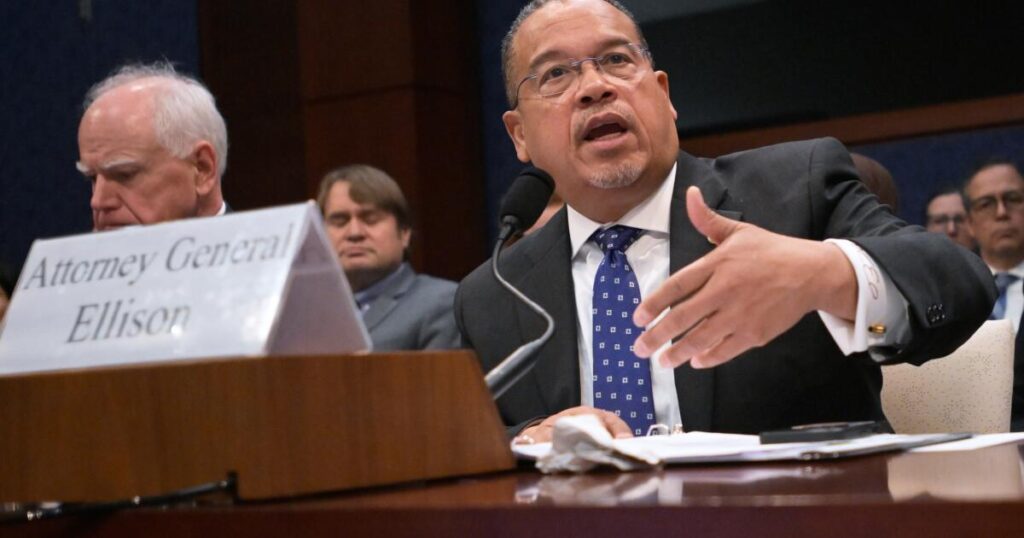
The federal lawsuit named Democratic Gov. Tim Walz and Democratic state Atty. Gen. Keith Ellison as defendants, along with the state’s Office of Higher Education. It said Minnesota law discriminates against U.S. citizens because it provides in-state tuition and scholarships to students living in the U.S. illegally if they attended a Minnesota high school for three years, and U.S. citizens who attended schools outside of the state cannot receive the same benefits. States generally set higher tuition rates for out-of-state students.
The federal government said those state statutes “flagrantly” violate a federal law that prevents states from providing preferential benefits to immigrants in the U.S. illegally regardless of whether or not they meet residency requirements.
“No state can be allowed to treat Americans like second-class citizens in their own country by offering financial benefits to illegal aliens,” U.S. Atty. Gen. Pam Bondi said in a statement after the lawsuit was filed last year.
Menendez said the Justice Department misinterpreted the law, enacted during the Clinton administration, because anyone who attended a Minnesota high school for at least three years are granted the same public benefits, regardless of their U.S. residency or immigration status.
She also said the federal government didn’t have standing to sue the state attorney general or governor since neither has the power to change the state laws that determine tuition eligibility.
Ellison celebrated the decision in a statement Friday.
“Today, we defeated another one of Donald Trump’s efforts to misconstrue federal law to force Minnesota to abandon duly passed state laws and become a colder, less caring state,” he wrote.
The funding for immigrants without legal status represents an “investment for our state to do everything we can to encourage a more educated workforce,” Ellison wrote.
The U.S. Justice Department didn’t respond to an email request for comment Friday.
The department has filed similar lawsuits this month against policies in Kentucky and Texas. Last week, a federal judge in Texas blocked that state’s law giving a tuition break to students living in the U.S. illegally after the state’s Republican attorney general, Ken Paxton, said he supported the legal challenge.
In discussing the Texas case last year, Bondi suggested more lawsuits might be coming.
Florida ended in-state tuition eligibility for immigrants living in the U.S. illegally. At least 22 states and the District of Columbia have laws or policies granting the in-state benefit, according to the National Immigration Law Center. Those states include Democratic-led California and New York, but also Republican states including Kansas and Nebraska.
According to the center, at least 13 states in addition to Minnesota allow immigrant students without legal status to receive financial aid and scholarships on top of in-state tuition.
Riddle writes for the Associated Press.
The post Judge dismisses federal lawsuit over Minnesota in-state tuition for students without legal status appeared first on Los Angeles Times.