An Audi with Maryland tags and 891 tickets in D.C. amounting to $259,214 in unpaid fines remains on the streets, with 18 speeding violations in the nation’s capital just this month. A Hyundai registered in Virginia racked up 689 tickets in the city.
Even as the District’s traffic cameras have multiplied and inspired copycats in other cities, city officials have struggled to get repeat offenders who were caught by that system off the street, particularly those whose vehicles are registered outside the nation’s capital. That may change, though, after high-level conversations among local officials prompted legislation in Virginia and Maryland that would allow cross-border cooperation on the issue.
A data analysis by The Washington Post shows what’s at stake — millions of dollars and the increased public safety that comes with an ability to punish drivers going over 100 mph on residential streets.
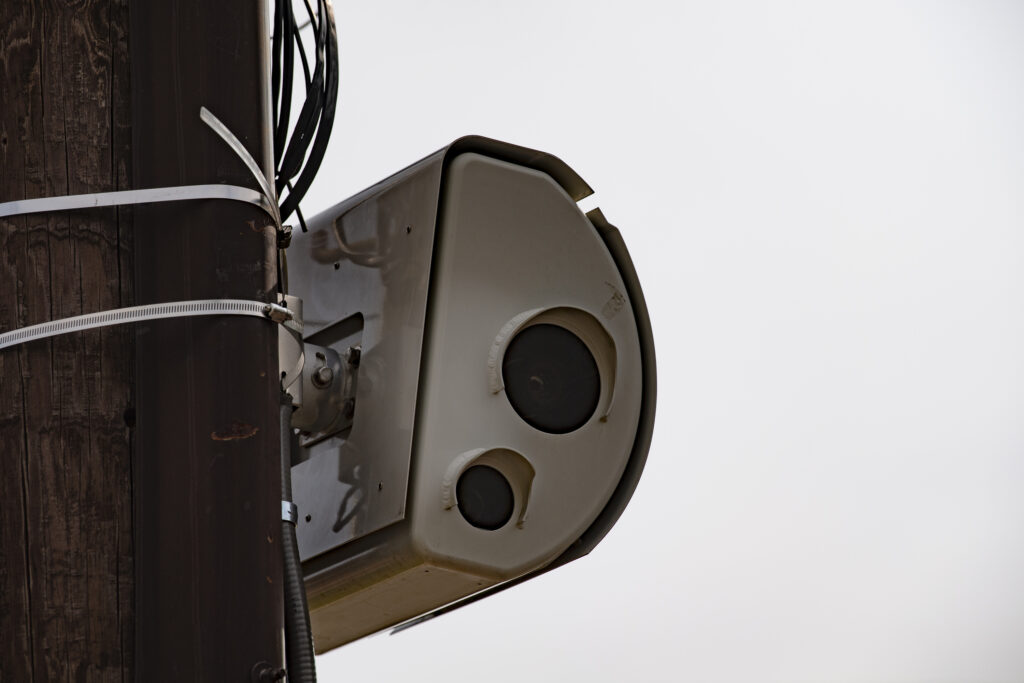
Most people who get a speeding ticket in the District never get one again, officials say, and speeds go down in areas where cameras have been placed. But city records show hundreds of people speed again and again in the same locations with little consequence, with the camera installed to prevent such behavior documenting each new violation.
One vehicle with a Maryland license plate got 182 tickets in a single year on an eight-block stretch of Alabama Avenue in Southeast Washington. In the northeastern part of the city, another vehicle with Maryland tags was issued 109 tickets in a year, just where a camera was located at 1400 Bladensburg Rd. A car with Virginia plates got 556 tickets in 12 months, more than any other vehicle in that time frame; it was towed when the fines owed reached $292,780 late last year.
Data analyzed by The Post shows that from 2018 through 2025, more than 80 percent of tickets were issued to people who exceeded the posted speed limit by 11 to 15 mph. The worst offenders — those who exceed the speed limit by at least 30 mph — make up less than 1 percent.
But the more excessive speeders contributed to about 30 percent of all fatal crashes since 2019, D.C. data shows.
The biggest obstacle to better enforcement in the city is that most violators live in Maryland or Virginia. Of the 103 vehicles with the most tickets in fiscal 2025, 67 have Virginia plates, 25 have Maryland plates, and 3 have D.C. plates. Of the 100 top speeds registered by cameras in the past two years, 37 of the vehicles involved had Virginia plates, 35 carried Maryland plates, and 13 featured D.C. plates.
Neither of those states penalize their residents for citations issued by cameras in another jurisdiction. That could change soon. D.C. Mayor Muriel E. Bowser (D) spoke recently to the governors of Maryland and Virginia about enforcement across state lines. Both states’ legislatures are working on bills to make it possible.
It’s a “new step forward,” a spokesman for Bowser said.
The District has also begun suing drivers from across the border over unpaid tickets, a power that Attorney General Brian Schwalb (D) got last year from legislation written by D.C. Council member Charles Allen (D-Ward 6). Schwalb’s office has won judgments or settlements against 15 drivers from Maryland and Virginia that total $608,292, though the vast majority of that money has yet to be claimed.
One of the lawsuits is against the owner of a Honda CRV caught going 151 mph off Interstate 695 onto South Capitol Street on Feb. 16, 2024, according to city data. The vehicle’s owner, Kylie Ann Sullivan of Fredericksburg, Virginia, has failed to pay 197 citations, according to Schwalb’s office. She said in a letter to the court that her ex-boyfriend was “the one behind the wheel for more than 98 percent of these offenses” and that she has not driven since he totaled the SUV three months after that high-speed drive. “I would also like to stress that no one was ever injured or harmed as a result of any of these incidents,” she added. Her case is pending.
Four of the 100 vehicles that accrued the most D.C. speeding tickets in the 2024 fiscal year belong to people sued by the city over unpaid fines. All of the owners either declined to comment or could not be reached. One owner, Chanel Laguna of Falls Church, Virginia, accrued 168 tickets that year through one of the six license plates the city identified as being registered to her; altogether she has been issued 345 citations. Laguna wrote in a court filing that she was not responsible for all of the tickets because she shared two vehicles with other people, including an Uber driver. She said both those vehicles have since been taken to an impound lot.
Clark Mercer, who was chief of staff to former Virginia governor Ralph Northam, said he was alerted to the problem of cross-border ticket enforcement only when leaving that office in 2022.
“I said, ‘We can’t effectuate anything; we’re literally packing up. I wish I had known about this earlier,’” Mercer recalled. He is now in charge of the Metropolitan Washington Council of Governments, a regional planning group, and has been pushing for action.
Mercer said he learned that one way drivers evaded responsibility for camera tickets was by getting tags from Virginia, which allows non residents to register vehicles there: About 14,000 D.C. drivers have Virginia tags. More than half of the drivers being sued by Schwalb’s office have a collection of both Maryland and Virginia license plates.
Out-of-state tags also are an issue in Baltimore. An analysis found that six of the 10 vehicles with the most tickets for speeding in school zones had Virginia tags. About 100,000 Maryland drivers have Virginia tags, data reviewed by The Post shows. Along with ticket enforcement legislation, Maryland lawmakers are working to make it easier to flag and penalize residents with out-of-state tags.
Both Maryland and Virginia have an incentive to cooperate with D.C. as they expand their own camera enforcement programs.
“The stars are starting to align to get this done,” Mercer said. “We’re moving in a very positive direction.”
Cars can also be stolen or the tags forged. Tanyeka Brown of Temple Hills, Maryland, said her Nissan Maxima was caught repeatedly on traffic cameras on Bladensburg Road. The vehicle was stolen from outside her house in December, she said, and after that “I was getting tickets every day, at least 10 of them.” Brown said her car was found in a tow lot last March, “damaged to the point that I couldn’t even drive it.”
The District now has a law automatically dismissing tickets when someone reports a vehicle as stolen so that they don’t have to challenge each ticket in court, but it applies only to D.C. residents. Non-D. C. residents must still contest those violations before a judge.
For now, D.C. can seize out-of-state vehicles only if they are parked on the street in the city. That doesn’t always happen. The Maryland Audi got a parking ticket in February in Northeast Washington but wasn’t towed.
The Department of Public Works has said that 2,000 vehicles were impounded last year, including 556 vehicles with more than $2,000 owed, but that to tow more requires more staff and equipment. Advocates say the real problem is a lack of urgency.
“A 4,000-pound machine driven repeatedly at reckless speed by someone who has shown that they will not stop is absolutely no different from someone with an AK-47,” Karthik Balasubramanian of the group D.C. Families for Safe Streets said at a recent public hearing. “If there was such a person who was roaming the District with an AK-47 randomly shooting … we would mobilize all available resources to separate that person from their weapon and let them get the help that they need. Why are we not doing the same with the dangerous drivers who are abusing their own weapons?”
The District still has by far the most automated enforcement in the region: About 3.3 million camera tickets were issued in 2025, according to city data.
The number of tickets issued each year has steadily climbed, after dropping at the start of the covid pandemic. Starting in 2022, more than $66 million in speeding tickets have been issued each year, with 2024 hitting more than $99 million, the most since before the pandemic.
Studies have found that traffic cameras can reduce crashes significantly. But “the cameras only go so far for the most egregious drivers,” said Sharon Kershbaum, director of the D.C. Department of Transportation Director. “And those are the same ones who are going to be causing the fatal crash.”
After rising for years, traffic fatalities fell dramatically last year, from 52 in 2024 to 25, according to data from D.C. police. But they remain about as high as they were a decade ago, when Bowser made a commitment to end traffic deaths by 2025. There have been 12 deaths on city roads so far this year.
Meanwhile, some House Republicans have threatened to eliminate D.C.’s speed-camera program, arguing it is unfair to drivers. The White House has indicated it might support such a GOP proposal.
The post D.C.’s speed cameras are catching super violators. Most have Va. and Md. tags. appeared first on Washington Post.