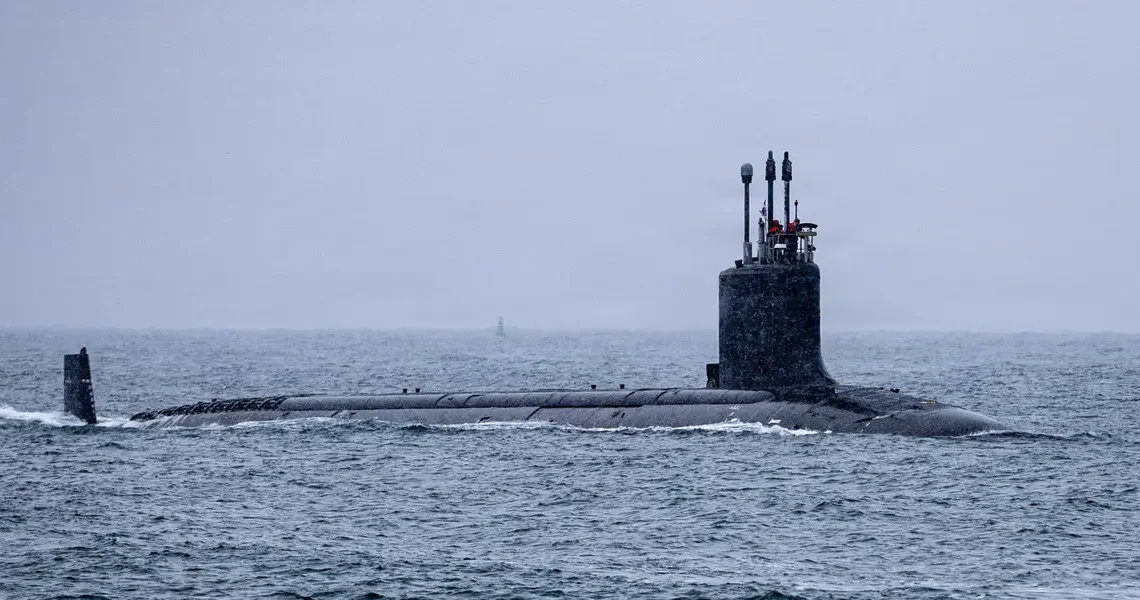
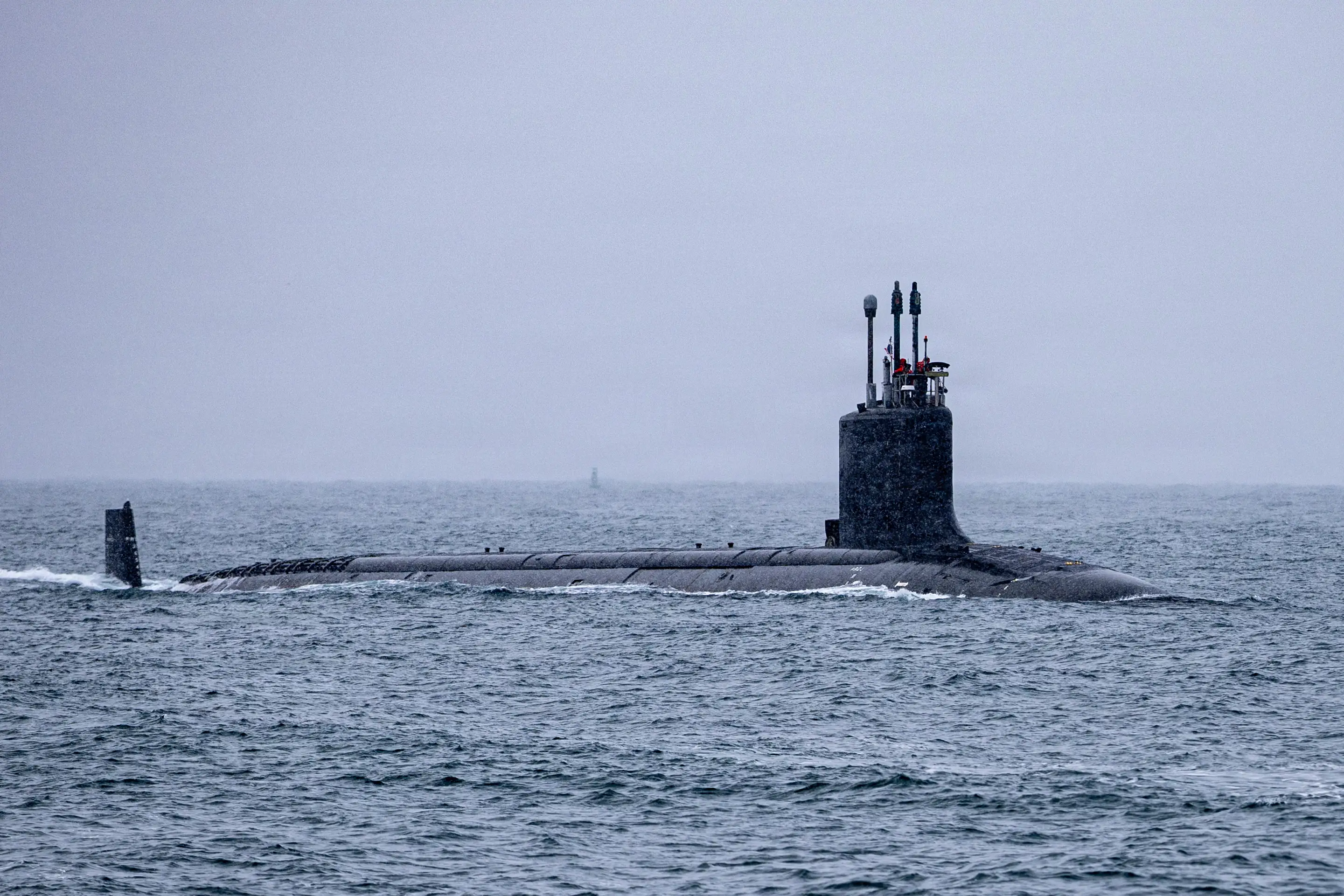
The US Navy is investing $900 million in automated factories to build parts for its top nuclear submarines.
The sea service and congressional analysts have said that the submarine industrial base needs thousands of additional workers to meet its production goals, with shortages across shipyards and suppliers slowing output. Facing worker shortages, delivery delays, and cost overruns on programs like the Columbia-class submarine, Navy leaders are turning to automation to speed production.
The first highly automated facility, Factory 4, opened last week in Alabama. It was built by Hadrian, an advanced manufacturing company. This new factory will produce parts and systems for the Columbia- and Virginia-class submarines.
“This is not just another factory,” Navy Secretary John Phelan said at the ribbon-cutting ceremony. “This is a different model.”
“Hadrian does not just machine parts,” he said. “They build integrated production systems: raw material in, test-ready hardware out. A single system doing what used to require dozens of suppliers. Their platform allows these facilities to run continuously.”
Hadrian says its factories use AI-driven automation to boost productivity and speed worker training. The company says it can train technicians in 30 days or less.
Two more facilities are planned. Having facilities focused on making these parts frees up submarine shipyards to focus on submarine production, the Navy said.
“We call this distributed shipbuilding, and it’s a key tenet of our plan to achieve required shipbuilding production rates,” said Jason Potter, who is performing the duties of Assistant Secretary of the Navy for research, development, and acquisition.
“These factories of the future might be several states away from the yards where the ships are ultimately built, but by taking on this work, they reduce bottlenecks, having a profound effect on the speed of delivery,” he said.
It’ll take around 18 to 24 months for Factory 4 to reach full-rate production, including standing up the automated production facilities, qualifying components, and ensuring compliance with qualifications like the submarine safety program.
Increased automation in Navy shipbuilding has been a priority of the service’s leadership under the second Trump administration. Several initiatives are driving AI and advanced manufacturing across shipbuilding efforts to accelerate production work, address workforce issues, and modernize yards.
Last December, for instance, the Navy launched its new Shipbuilding Operating System, or Ship OS, a half-billion-dollar investment that the service said will accelerate the adoption of AI and autonomy across the industrial base. Ship OS is powered by Palantir’s Foundry and Artificial Intelligence Platform.
In early use, Ship OS cut submarine schedule planning from 160 manual hours to under 10 minutes at General Dynamics Electric Boat in Connecticut. And at Portsmouth Naval Shipyard in Maine, material review times for submarines went from taking weeks to under an hour.
Ship OS will be expanded across two major shipbuilders, three public yards, and 100 suppliers.
“By enabling industry to adopt AI and autonomy tools at scale, we’re helping the shipbuilding industry improve schedules, increase capacity, and reduce costs,” Phelan said in a statement. “This is about doing business smarter and building the industrial capability our Navy and nation require.”
Read the original article on Business Insider
The post The US Navy is pouring almost $1 billion into automating submarine production amid skilled worker shortages appeared first on Business Insider.