A Spanish woman who fought and won a legal battle with her father for the right to end her life, saying she was in constant physical and psychological pain, died on Thursday, lawyers representing her father said.
Noelia Castillo Ramos, 25, had been seeking a medically assisted death, which is legal in Spain, since 2024, but her father sued to prevent it. The case went to the European Court of Human Rights, which this month upheld a Spanish court’s ruling in Ms. Castillo’s favor.
“Finally, I’ve achieved it,” Ms. Castillo said in a television interview that aired on Wednesday. “And hopefully now I can finally rest.”
Ms. Castillo had lived with psychiatric illness for many years and had been in physical pain since 2022, when a suicide attempt after a sexual assault left her paraplegic, according to court documents and Ms. Castillo’s account in the television interview.
In 2024, a committee granted her request to end her life. But her father, Gerónimo Castillo, began a legal challenge that wound through Spain’s courts before ending in the European court this month.
The case divided Spain, which made euthanasia and physician-assisted death legal in 2021, as well as Ms. Castillo’s family. Over the last five years, nine countries have legalized assisted dying, and others are considering doing so. But fierce opposition to the practice remains, in Spain and other places where it is legal.
Under Spanish law, each request for a medically assisted death must be reviewed by a panel of experts. The one that oversaw Ms. Castillo’s case said her suffering was “constant, chronic and disabling, with no possibility of improvement,” according to court documents.
Ms. Castillo — who had been diagnosed with obsessive-compulsive disorder and borderline personality disorder, according to court documents — said in the television interview that she had tried to take her life several times. A suicide attempt in 2022, after she was sexually assaulted by several men, left her with severe injuries and chronic pain, forcing her to use a wheelchair.
“Before asking for euthanasia, I saw my world as very dark,” she said in the interview. “I saw everything as very dark. I had no goals or objectives. And I still don’t have any.”
Ms. Castillo’s father enlisted lawyers from a Catholic legal advocacy organization that opposes Spain’s assisted dying laws, Abogados Cristianos, or Christian Lawyers. He has stayed out of the public eye, letting the lawyers speak for him. They argued that Ms. Castillo needed more psychological and psychiatric intervention.
“She was not protected,” the group said on social media after her death. “And now it is too late. But we are still in time to prevent the next one.”
In the interview, Ms. Castillo said she understood her father: “He’s a father and he doesn’t want to lose a daughter, but he doesn’t listen to me.” Her mother and a grandmother, who appeared in the interview with Ms. Castillo, said they had come to support her decision, though they disagreed with it.
She died at Sant Camil hospital north of Barcelona, the city where she had been living.
As of 2024, 1,123 people were allowed to end their lives with medical assistance under Spain’s laws, the country’s health ministry said last year. That was fewer than half, or 46 percent, of the people who applied. In 2024, approval was granted in 426 cases, three-quarters of which involved people over 60.
People over 80 were the most frequent applicants, according to the ministry. Across all age groups, most of the applicants had been diagnosed with neurological diseases or cancer, the ministry said.
For many years, Switzerland was the only country where assisted dying was legal, but about a dozen countries have since made it legal or partly legal, including Austria, Portugal and New Zealand in recent years. In the United States, assisted dying is legal in about a dozen states and in Washington.
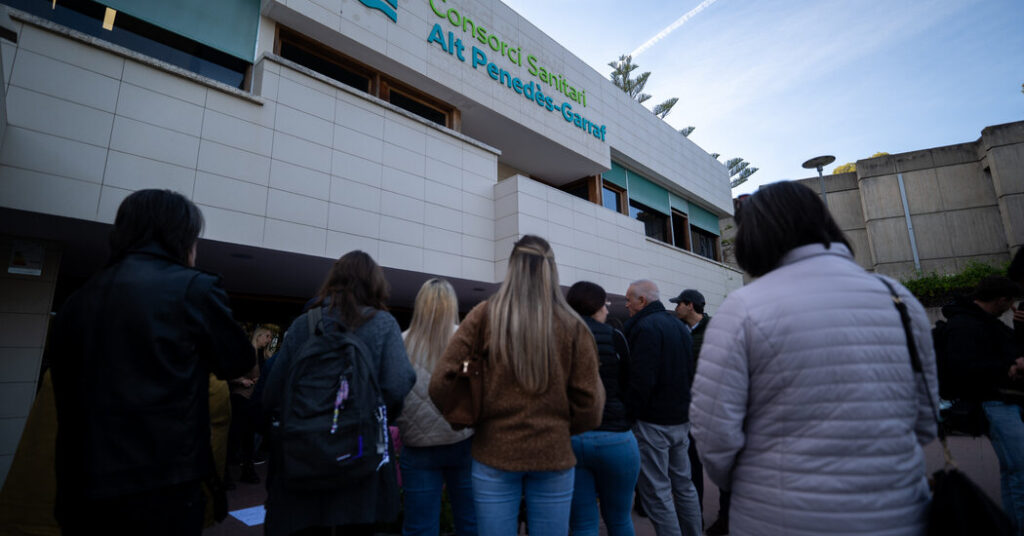
Outside Sant Camil hospital, Abogados Cristianos began holding a vigil with its supporters on the night before Ms. Castillo’s death. Some people left flowers. The firm said it would begin a campaign to overturn Spain’s assisted dying laws.
Politicians also weighed in. Members of the governing Socialist Party said her decision should be respected, while politicians in the main opposition People’s Party said the state had failed her.
In the interview, Ms. Castillo was resolute about being in control of her own death, adding that she wanted to “die looking beautiful.”
“I’ll wear the nicest dress I have and put on some makeup,” she said.
If you are having thoughts of suicide, call or text 988 to reach the National Suicide Prevention Lifeline, or go to SpeakingOfSuicide.com/resources for a list of additional resources.
Lynsey Chutel is a Times reporter based in London who covers breaking news in Africa, the Middle East and Europe.
The post Spanish Woman Dies After Winning Legal Battle for Right to End Her Life appeared first on New York Times.