Early one drizzly morning in Paris, a handful of city officials make their way up a steep, narrow street in the historic neighborhood of Montmartre, with a reporter in tow and the domed Sacré-Coeur basilica looming above. The group stops at an apartment building that looks like any other on the block. It is only when they step inside the entrance hall that anything seems unusual. Signs pasted to the walls declare that loud noise and nighttime gatherings are forbidden. And many of the front doors have metal lockboxes bolted to them, with apartment keys inside. Both are telltale signs that the city workers have found what they’re looking for: illegal Airbnbs.
During the next half-hour, as we climb stairs and knock on doors, a few sleepy residents emerge to complain—not about us, but to us. They describe how their building has begun to feel like a travelers’ crash pad, with rolling suitcases clattering on the pavestones at all hours, and the outdoor courtyard becoming a rowdy tavern on warm evenings. “A living hell,” one calls it.
These modest Montmartre homes are just one flash point in Europe’s growing Airbnb backlash. Even as short-term home rentals have become a global travel norm, more cities worldwide have blamed Airbnb and its competitors for their housing squeeze and affordability crises. In Europe, and in Paris in particular, the growing opposition has gathered real momentum. Paris’s restrictions are among the most rigid, sharply limiting the number of nights that any property can be made available for short-term rentals. The owners of those Montmartre apartments could face fines of well over €100,000 if it’s proved they have violated the law.
“People are buying up properties, becoming a kind of hotelier, developing these businesses that are taking apartments out of the local market,” outgoing Paris Mayor Anne Hidalgo fumes over lunch in City Hall’s ornate dining room. Hidalgo, whose term expired in March, describes how she, together with the mayors of Barcelona and Rome, spent years pushing the 27-country European Union to crack down on Airbnb. Beginning this May, a new EU law will require hosts to register properties on a Europe-wide database, aimed at allowing cities to quickly check listings they suspect flout local laws. “The problem is not just Paris,” Hidalgo adds. “It is all of Europe.”
Airbnb has assumed the role of villain in this saga, since it dominates the market, with about 44% of the short-term rental industry in 2024, according to travel data firm Skift Research. There are about 9 million Airbnb listings globally, and Paris estimates about 75,000 short-term tourist rentals in its metro area.
75,000
Tourist rentals in the Paris area
44%
Airbnb’s share of global short-term rental industry, 2024
~50 million
Number of tourists who visited Paris in 2025 Sources: Apur, Skift Research, City of Paris Tourism Office
When three twenty-something friends launched Airbnb in 2008, villainy was hardly the fate they foresaw. They had cast their startup as a relaxed way for strangers to connect: Their idea was hatched when they plopped air mattresses on the floor of their San Francisco apartment and charged people to sleep on them. “Back then, 100% of people were more than skeptical,” cofounder and chief strategy officer Nathan Blecharczyk tells me. “They almost violently rejected the idea, saying, ‘How can you trust a stranger in your home?’”
The world got used to the idea, of course, and now Airbnb is a Fortune 500 business with a valuation of nearly $80 billion and listings in more than 200 countries. Last year it booked 121.9 million stays, earning $12.2 billion in revenue, up from $11 billion the year before. Dictionaries define “to Airbnb” as the verb for short-term renting—a catchphrase for the entire business it invented.
Even so, Airbnb’s share price is about 10% below where it was when it went public in 2020—and investors believe that local pushback is a real obstacle to its growth. The company strongly rejects the idea that it’s to blame for any housing shortages: Airbnb “just doesn’t move the needle in terms of impacting housing prices,” Blecharczyk says. Still, for its execs and investors, the question now is how much they will need to change their strategy going forward—or whether the model that built the company into a travel giant can endure.
Today many Airbnb listings are operated as full-time rental businesses, rather than by people allowing strangers to stay in their homes. That fact has only stoked the sense in some cities that the soaring number of short-term rentals has robbed them of badly needed housing stock, even as affordability becomes a pivotal political issue. As Motley Fool stock analyst Lawrence Nga wrote last September, “Airbnb’s most significant long-term risk isn’t competition. It’s regulation.”
The call to rein in Airbnb is strongest in Europe’s centuries-old tourist-magnet cities. Across Europe, the number of tourist rental nights booked nearly doubled between 2018 and 2025, to 398 million, according to EU statistics. Locals accuse Airbnb of pricing them out of their neighborhoods and turning their communities into tourist hubs disconnected from their cultural environment. Across Europe, walls are spray-painted with graffiti reading “Airbnb out!” In Barcelona, one person has painted, “Your Airbnb was my home.”
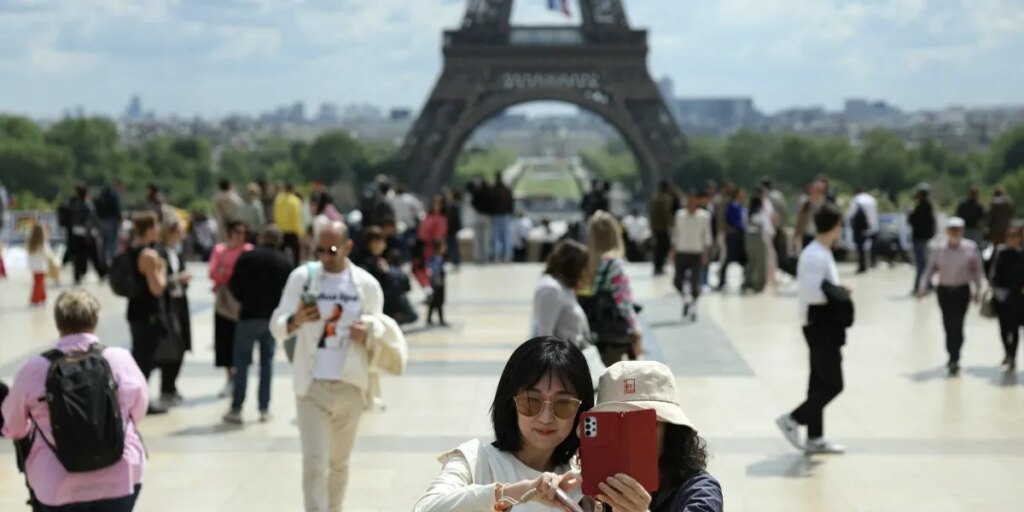
Few cities have captured the sense of grievance as keenly as Paris—the world’s most visited city, by some measures. The city drew nearly 50 million tourists last year, with the single biggest group being Americans. There are more than 1 million short-term rental listings in France—the industry’s biggest market outside the U.S.—with Paris as the country’s biggest hub. “Airbnb bears real responsibility in France’s housing crisis,” editors of French paper Le Monde wrote in November, when it published a damning six-part series on the company.
But the push by mayors like Hidalgo for a crackdown has borne fruit. In October 2024, Paris and several other French cities, including Mediterranean sun-traps like Nice and Marseille, restricted short-term rentals to people listing their own homes, and then for only 90 days a year—a marked change from the 180-day rule it replaced. Second homes, meanwhile, can be rented only to students or visiting businesspeople, and doing so involves extensive paperwork and higher property taxes.
In January, France’s supreme court ruled that Airbnb and other platforms were legally responsible for listings that flout the new laws. And in February, two Paris property owners who failed to register their Airbnb listings were fined €80,000 ($93,000) and €150,000 ($174,500) respectively. “It’s the end for impunity,” one official said at the time. “No more illegal Airbnbs.”
Paris officials admit that the regulation’s real value is to slow Airbnb’s investment property market to a crawl. “We won’t be able to sue everyone,” says Emmeline de Kerret, who heads Paris’s city authority overseeing tourist rentals. “[But] we want to show that from now on, it is not a great investment.”
In Paris, that is already clear, says Anne-Hélène Gutierres Requenne, a business consultant who put her one-bedroom apartment near Montmartre on sale in March, after two years of listing it on Airbnb. “The legal framework is more and more cumbersome,” she says. Her final Airbnb customer was a professor from Cornell University spending a semester in Paris.
As the rules have tightened, and as other markets threaten similar actions, Airbnb has raced to adapt and expand. The company’s growth markets—measured by nights booked—are no longer in Europe: They are middle-income countries like Brazil and India, where apartments rent for less. Last May it relaunched its “experiences” vertical after a two-year pause, and added “services”—such as massages, guided tours, even cooking classes—in addition to rentals. Now, when you book an Airbnb in Paris, you can add an Airbnb pickup from the airport, and Airbnb daily itineraries with Airbnb tour guides, and have Airbnb shop and deliver food to your rental.
The goal, cofounder and CEO Brian Chesky told investors in February, was to make Airbnb’s app a hub for a vast array of options, much as Amazon became an app for anything that could be shipped in a cardboard box. “The unifying idea for me is the trip,” he said. And the offerings create new revenue streams for Airbnb without requiring the company to add new home listings or risk violating regulations. Indeed, Parisians themselves are beginning to reserve Paris features, without booking a place to stay.
Increasingly, the company is negotiating with cities hosting major events like the FIFA World Cup, which takes place across the U.S., Canada, and Mexico in June and July. The model for Airbnb was the 2024 Paris Olympics, when the city suspended its rental regulations to accommodate millions of visitors; 700,000 of them stayed in Airbnbs, says chief business officer Dave Stephenson. At crucial moments when cities need extra lodging, Chesky told investors in February, the company goes from “a problem cities have to deal with, to a solution to the problem … Hotels cannot accommodate everyone.”
Stephenson argues that Airbnb guests tend to boost the local economy, perhaps more than traditional hotel guests. “The money stays with the host, in the community,” he says. “It gets spent in the coffee shops, in stores down the street.” In its charm offensive, the company has donated to the restoration of old churches and other buildings in France. (It has also eased conditions for guests worldwide, instituting more flexible cancellation policies and eliminating annoyances like cleaning fees and lists of checkout chores.)
As for rising rents and housing shortages, Airbnb execs argue that the bigger problems are high inflation and people’s increasing desire to live in thriving urban centers. They point to New York, Amsterdam, and Barcelona as cities where, they say, rents have surged even as new regulations there slashed the number of Airbnb listings.
That argument is not likely to shield the owners of the short-term rentals in Montmartre that we detected in February. Over espressos a few weeks later, Paris’s deputy mayor for housing, Jacques Baudrier, tells me officials are still investigating who owns the apartments that have key boxes affixed to the doors. “Eventually we will take back 20,000 apartments,” he says. “With the new laws, the illegal Airbnbs will be zero.”
This article appears in the April/May 2026 issue of Fortune with the headline “Airbnb faces a European backlash—with Paris as ground zero.”
The post Paris is ground zero for Europe’s backlash against illegal Airbnbs appeared first on Fortune.