Iran’s Parliament is moving to formalize fees for ships passing through the Strait of Hormuz, the portal to the Persian Gulf that is among the world’s most vital waterways, even as it has slowed traffic there nearly to a standstill.
Legislation before the Parliament would require vessels transiting the strait to pay tolls under a framework Iranian lawmakers described as asserting Tehran’s “sovereignty, control and oversight” over the passage, according to reports by Fars and Tasnim, two semiofficial news agencies affiliated with Iran’s security forces. Since the U.S.-Israeli attack on Feb. 28, some fees had been charged on an ad hoc basis under what appears to be an informal and selectively applied system.
The U.S. secretary of state, Marco Rubio, on Friday called the toll plan “illegal.”
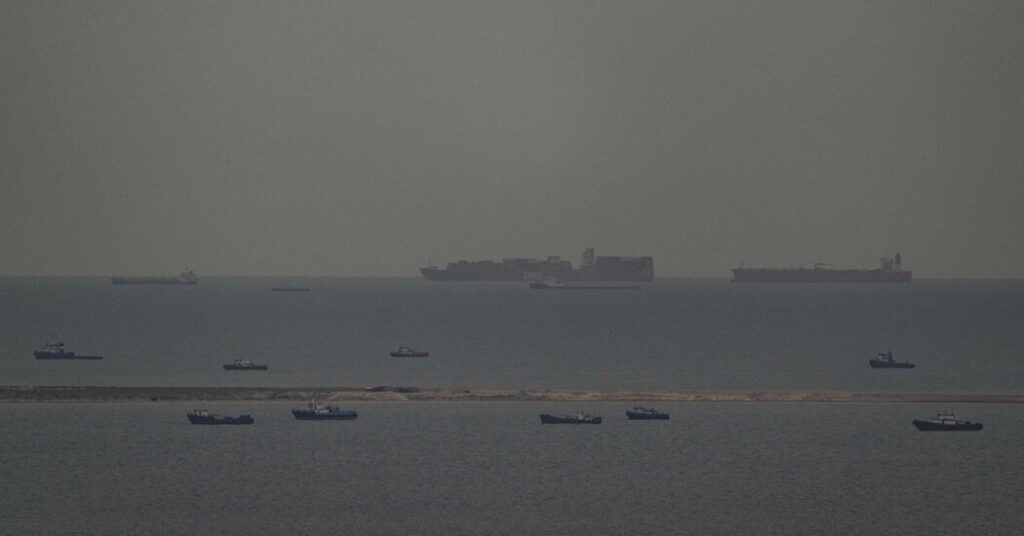
Since Israel and the United States began bombing Iran almost four weeks ago, Iran has effectively closed off the strait with a handful of attacks on ships and warnings that only those with its permission can pass. About one-fifth of the world’s oil and natural gas normally pass through the strait, so Iran’s threats and attacks on energy facilities around the Gulf have sent global fuel prices soaring, giving Tehran leverage in the conflict.
President Trump has threatened to strike Iran’s power plants if Tehran does not fully reopen the strait, and he has pressured other countries — so far unsuccessfully — to send warships to escort commercial vessels through the passage.
A report this week by Lloyd’s List Intelligence described what it called a “toll booth” already in effect, with vessels required to seek Iranian clearance to transit. The legislation is expected to be debated in the coming days, the Iranian news agencies said Thursday.
In a letter to the United Nations’ maritime organization, Iran said that “nonhostile” ships may pass safely through the strait. Esmail Baghaei, a spokesman for Iran’s foreign ministry, added on Thursday that fees would be collected for safe passage, according to remarks published by Mehr, another semiofficial Iranian news agency.
The legal status of the strait is complex. At its narrowest point, less than 30 miles wide, it lies within the territorial waters of Iran and Oman, but under international law it is treated as an international waterway where ships are generally guaranteed passage.
Iran has signed but not ratified that framework and has disputed the extent of those rights.
Ship traffic through the strait remains at historically low levels amid the de facto blockade. It is estimated that nearly 3,000 vessels are waiting nearby to pass through the strait, according to S&P Global Market Intelligence. Typically, roughly 120 ships pass through it each day.
The Islamic Revolutionary Guards Corps said Friday that it had turned back three container ships trying to enter what it described as a designated corridor, declaring that “the Strait of Hormuz is closed” and warning that any unauthorized traffic would face “severe action,” according to a statement carried by Fars.
The warning appeared to underscore the gap between Iran’s position and U.S. demands on ending the Middle East conflict, which will soon enter its fifth week. A day earlier, Mr. Trump again extended his deadline for Iran to fully reopen the strait.
Mr. Trump made the announcement minutes after the U.S. stock market ended one of its worst days this year. Oil prices rose and stocks fell on Friday morning, despite his decision to back away from the deadline to begin attacking Iran’s power grid.
Leily Nikounazar, Joe Rennison and Peter Eavis contributed reporting.
Euan Ward is a Times reporter covering Lebanon and Syria. He is based in Beirut.
The post Iran Moves to Formalize Toll Plan in Strait of Hormuz appeared first on New York Times.