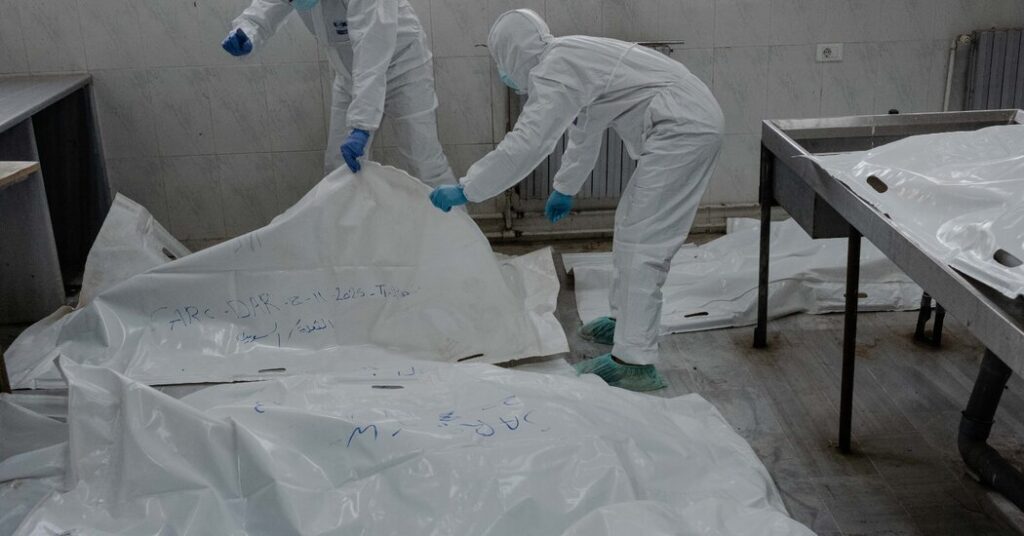
More than 1,700 people were killed during an outbreak of sectarian violence in Syria in July 2025, according to a United Nations report released on Friday, underscoring the deep-rooted tensions threatening efforts to rebuild the country after the collapse of the 14-year dictatorship of Bashar al-Assad.
The mass killings, torture and sexual violence involving Syrian government forces, tribal groups and members of the Druse minority have gone largely unpunished, according to the 86-page report from investigators with the United Nations Independent International Commission of Inquiry.
At least 1,707 were killed in Sweida Province, and most were from the Druse minority, the report says. The clashes were the second major eruption of violence in Syria in 2025, after an assault by forces associated with President Ahmed al-Sharaa on Mr. al-Assad’s Alawite sect in March that year in which about 1,400 people, mostly civilians, were killed, according to the United Nations.
Nearly nine months after the violence in Sweida, most of the province remains outside the control of the government, and 155,000 people driven from their homes by the conflict remain displaced, the U.N. commission reported.
The commission credited the Syrian government with taking tentative steps to investigate the violence, noting that the panel had been allowed to visit Syria for the first time since the group was established in 2011 and that Mr. al-Shara’s government had established a national inquiry into the episode.
But the U.N. investigators said it was reasonable to conclude that government forces and tribal fighters operating with them had carried out the extrajudicial killings and torture of Druse civilian forces and that the government had done little or nothing to hold them to account.
“There is currently no indication that the S.N.G.has recognized or investigated violations and abuses committed by its forces during recent events,” the report said, referring to Syrian National Government.
The Syrian government did not immediately respond to the report.
U.N. investigators based their findings on 409 interviews with victims and witnesses of the violence and government officials during a three-week visit to Syria.
The commission said the overall scale of the violations were far greater than what the investigators reported, which reflected only what they could corroborate and what met a reasonable standard of proof.
The July violence unfolded in three waves, after armed clashes broke out between Druse and Bedouin, the report says. The largest number of documented killings took place in the first wave, as government forces and tribal fighters raided civilian homes. They often separated men and boys from their families before shooting them, often multiple times, the U.N. investigators found.
“In some cases, the males and females were not separated and were killed in the same location together.” they reported. “In one documented case, a group of women and girls was forced to strip before they were shot and killed.”
The second wave of violence came in indiscriminate attacks by Druse armed groups on Bedouin communities in which “many attacks appeared to be directed at civilian areas” and civilian residents, including older people and children who were shot as they attempted to flee, the report said.
In the third wave, tens of thousands of tribal fighters moved into Sweida, ostensibly to aid Bedouin communities, leading to intense clashes with Druse armed groups, the killings and abductions of villagers, and the widespread looting and burning of property, the report said.
Airstrikes last year by Israel, which claimed to be a “protector” of the Druse community, added another layer of complexity to the crisis, as it hit military targets but also killed and injured civilians and caused widespread damage, the U.N. report said.
Israel Defense Forces had repeatedly raided villages, destroying civilian homes and damaging public infrastructure, it added.
Israel did not immediately respond to the U.N. report.
The post Eruption of Sectarian Violence in Syria Killed More Than 1,700, U.N. Report Says appeared first on New York Times.