You’re reading The Checkup With Dr. Wen, a newsletter on how to navigate medical and public health challenges. Click here to get the full newsletter in your inbox, including answers to reader questions and a summary of new scientific research.
When doctors speak to patients about exercise goals, they often reference the familiar benchmark of doing 150 minutesof moderate to vigorous aerobic activity each week. That’s grounded in decades of research linking movement like brisk walking, cycling or swimming to better heart health and longer life, which is reflected in recommendations from the Centers for Disease Control and Prevention and the World Health Organization.
But evidence increasingly suggests that the total amount of movement is only part of the picture; muscle strength itself also seems to play an important role. A recent study in JAMA Network Open concluded that two simple measures of strength are significantly associated with mortality risk.
Researchers followed more than 5,400 older women at an average age of about 78. Participants first completed two straightforward strength assessments. One measured upper body strength using a handheld device that participants squeezed as hard as they could to gauge grip strength. The other assessed lower body strength by timing how long it took to stand up and sit down from a chair five times in a row without using their arms for support. The researchers then tracked outcomes for about eight and a half years.
During that period, nearly 2,000 women died. Lower mortality was strongly associated with both strength measures, including after accounting for chronic conditions, socioeconomic factors and lifestyle habits.
Notably, the link between strength and survival remained even when researchers adjusted for whether participants met recommended levels of physical activity. Among women reporting very little activity (less than 10 minutes per week), measured strength still correlated with subsequent lower mortality.
This study builds on prior research showing that muscle strength is an independent predictor of better health outcomes. In other words, aerobic activity alone is not enough to optimize health; strength training should also be part of the overall fitness routine. This is why CDC guidance already recommends at least two strength-focused sessions per week.
What counts as strength training, and how can someone who isn’t doing any begin? My advice for those who belong to a gym is to schedule a session with a certified trainer. They can assess your strength and recommend exercises that are appropriate and safe, while helping you build a routine you can stick with. For those who feel self-conscious, going to the gym during off-hours when it is less crowded can make it more comfortable to get started. You can also ask for guidance on exercises to do at home, using simple equipment such as hand weights.
Those who have injuries or chronic pain might want to start by visiting a physical therapist. They can identify which muscle groups need to be strengthened and provide clear guidance on how to exercise safely, including limits on how much to lift or which movements to avoid.
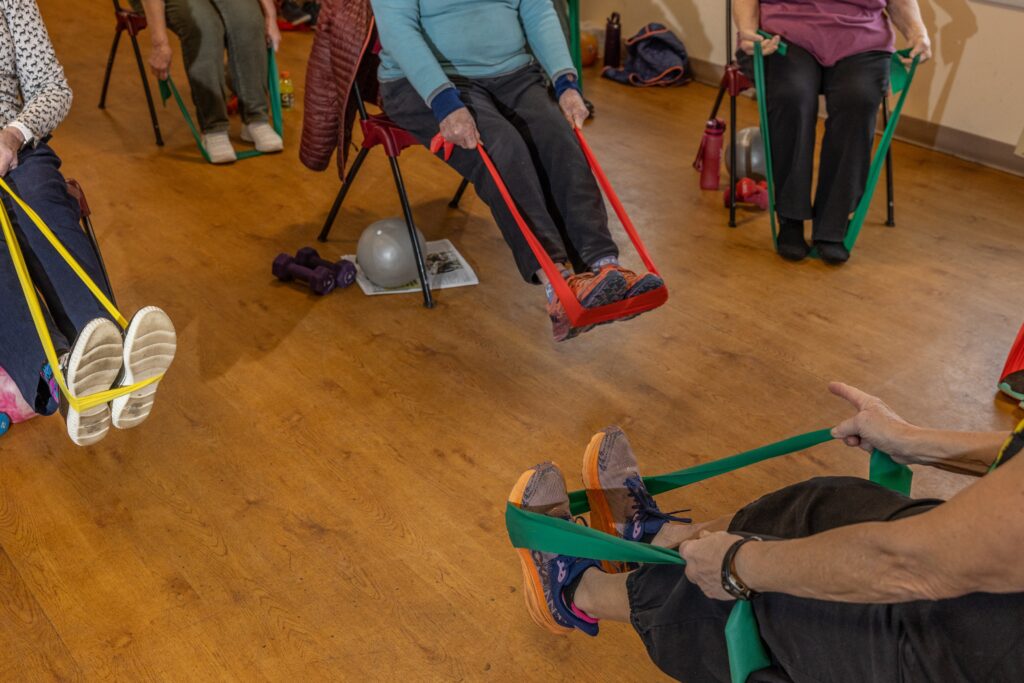
Don’t discount exercises you can do with equipment you already have. Simple movements like sitting down and standing up from a chair repeatedly, wall push-ups or holding onto a counter for balance while doing gentle squats can build strength. Resistance bands are inexpensive and easy to use while watching TV. Everyday activities such as carrying groceries and climbing stairs can also contribute to maintaining muscle.
These sessions don’t have to be long to be effective. Even 10 to 15 minutes of focused strength work can be beneficial, especially for those just starting out. The key is consistency. Try to build it into your routine and set aside time to do it at least twice a week.
It’s also worth remembering why this matters. In addition to potentially extending lifespan, better muscle strength makes people less likely to fall and more likely to maintain their independence and manage everyday tasks. The goal is not just to live longer, but to live better, and building strength is one way to help make that possible.
The post Want to live longer? Do this important exercise. appeared first on Washington Post.