Facing a multibillion-dollar deficit he is legally obligated to close, Mayor Zohran Mamdani vowed to cancel New York City’s contracts with McKinsey and other private companies; audit sprawling public health insurance plans; and kill one department’s subscription to Slack.
The proposed cuts are part of Mr. Mamdani’s previous commitment to slash $1.7 billion from city expenses as he grapples with a $5.4 billion hole he must fill by the time the spending plan takes effect July 1.
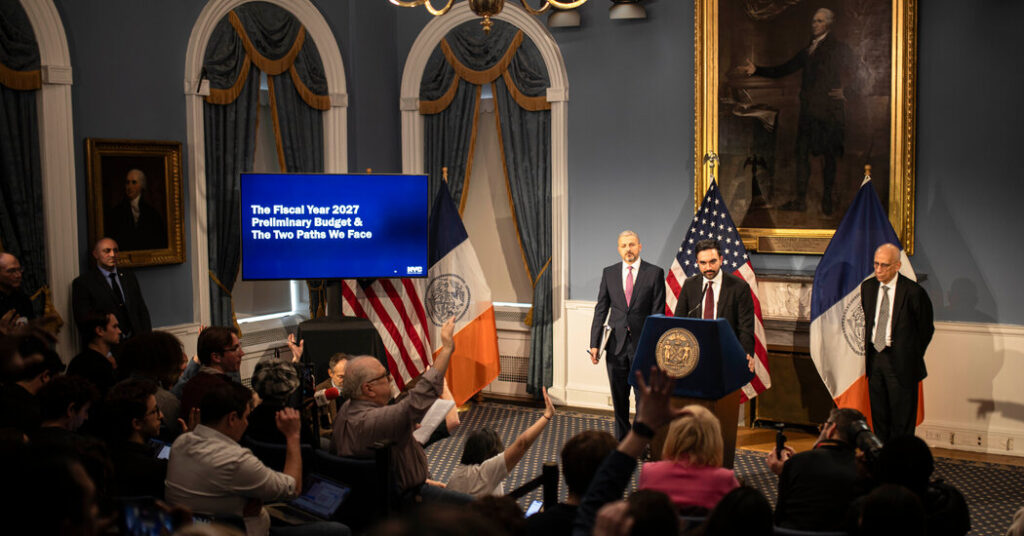
His budget director, Sherif Soliman, detailed the savings during a five-hour-plus City Council hearing on Wednesday.
But even as Council leaders grilled Mr. Soliman over the city’s fiscal outlook, the Mamdani administration has quietly identified another $1.3 billion in potential savings from scaling back programs Mr. Mamdani had endorsed on the campaign trail.
The new savings, which have not been made public, would help move the city closer to a balanced budget, as Mr. Mamdani continues to push Gov. Kathy Hochul to raise income taxes on the wealthy and increase aid to the city.
The $1.3 billion would come from delaying a state mandate to force the city to reduce class sizes in its public schools, and from lowered costs of a rental assistance program that is the subject of a legal dispute with the City Council, according to three people with knowledge of the plan.
When asked about the additional savings, a City Hall spokeswoman, Olivia Lapeyrolerie, would not confirm the $1.3 billion amount, saying, “We have outlined key opportunities for substantive future savings that would require action from Albany and are working on long-term solutions to rebalance our fiscal relationship with the state.”
“We are leaving no stone unturned,” Ms. Lapeyrolerie added.
On Tuesday, Mr. Mamdani’s administration filed an appeal of a state Appellate Court ruling mandating continued growth in the rental assistance program, known as CityFHEPS. One of the largest rental assistance programs in the nation, it works similarly to the Section 8 housing voucher program.
Mr. Mamdani had expressed support for the CityFHEPS program and for reducing class sizes on the campaign trail last year, but is now confronting the grim realities of a significant budget deficit that he blamed on his predecessor, Eric Adams. Both cuts would require outside assistance: The courts would need to side with the city in the CityFHEPS case and the State Legislature would need to pass legislation holding off on the class-size mandate.
Julie Menin, the City Council speaker, urged the mayor to drop the CityFHEPS appeal during the hearing Wednesday, saying the administration should “reach a settlement that really works to protect vulnerable New Yorkers and that also is fiscally responsible.”
Mr. Soliman said the administration is in “good faith” talks about how to manage the CityFHEPS program, the costs of which soared to more than $1 billion in 2025 after a locally mandated expansion and an affordable housing shortage.
Ms. Hochul, who holds enormous sway over the city budget, continues to resist Mr. Mamdani’s entreaties to raise taxes on New Yorkers earning at least $1 million per year, as well as corporations. She has been adamant in recent weeks that city officials must reduce spending by more than $1.7 billion, a number Mr. Mamdani floated during his initial budget presentation last month, before she would consider giving him more cash.
“The governor has been clear that she is willing to continue helping the city address its budget gap, but expects the city to first identify real, substantial savings,” said Kara Cumoletti, Ms. Hochul’s press secretary.
“We are reviewing the mayor’s latest savings plan and hope the City Council will put forward additional savings when it releases its budget response,” Ms. Cumoletti added.
When asked by the City Council’s Republican minority leader, David Carr, whether he anticipates further spending reductions, Mr. Soliman said, “The $1.7 billion is definitely something that’s in the preliminary budget, and our goal long-term is to continue to find savings beyond that.”
He added that $1.7 billion “is what we have now. We can go beyond that, but you’re really going to start talking about cutting services at this point.”
In advance of testimony before the City Council from Mr. Soliman on Wednesday, Mr. Mamdani released a list of about $250 million in savings that his aides have already approved.
The cuts range in size and scope, according to a release from Mr. Mamdani’s press office. They include $20,000 from the Taxi and Limousine Commission from canceling its subscription to the messaging application Slack, and the termination of private technology and consulting contracts across city agencies. Another $1.15 million would be saved from the Department of Health and Mental Hygiene renegotiating its contract for naloxon, an anti-overdose drug.
Mr. Mamdani’s largest proposed savings, $100 million, is expected to come from removing ineligible dependents receiving city-funded health benefits.
Even with another $1.3 billion in cuts, the city will still need more to close the $5.4 billion deficit that spans the remainder of this fiscal year and the next one. After running a campaign centered on raising taxes on the wealthy to fund his ambitious agenda of expanding child care and making buses free, Mr. Mamdani now says increased levies are necessary just to solve this budgetary hole. He also has said he expects more help from the state.
The mayor played down the decision by multiple rating agencies to downgrade the city’s fiscal outlook.
“I think that outlooks are premature at this time given that we are still in the process of state budget negotiations,” the mayor said on Wednesday. “I’m encouraged by the manner of those negotiations.”
Ratings agencies have been issuing warnings about the city’s budget, in part because of Mr. Mamdani’s decision to drain reserves. The city comptroller, Mark Levine, issued his own note of caution in response, saying, “The ratings agencies have made clear that we need to put forward a suitable financial plan for the years ahead — one that addresses our structural imbalance without relying on rainy-day reserves to close the budget gaps.”
If Ms. Hochul does not enact income tax increases, Mr. Mamdani threatened last month to raise property taxes on New Yorkers. The city’s property tax is one of the few levies the mayor controls.
The proposal angered many lawmakers and Ms. Hochul, who thought Mr. Mamdani’s presentation amounted to grandstanding, The Times reported earlier this week. After committing $1.7 billion in state funds to help realize Mr. Mamdani’s desired expansion of child care, Ms. Hochul also agreed to give the city $1.5 billion in aid for a host of municipal services.
Mr. Mamdani reiterated Wednesday that a property tax increase would be a “prospect of last resort” to close the budget deficit.
“What we’ve said to everyone, whether publicly or privately, is we want to pursue a path that doesn’t put this fiscal deficit on the backs of working-class New Yorkers who had nothing to do with generating this,” Mr. Mamdani said.
Jeffery C. Mays contributed to this report.
Benjamin Oreskes is a reporter covering New York State politics and government for The Times.
The post Mamdani Now Plans $1.3 Billion in Cuts in Programs That He Favored appeared first on New York Times.