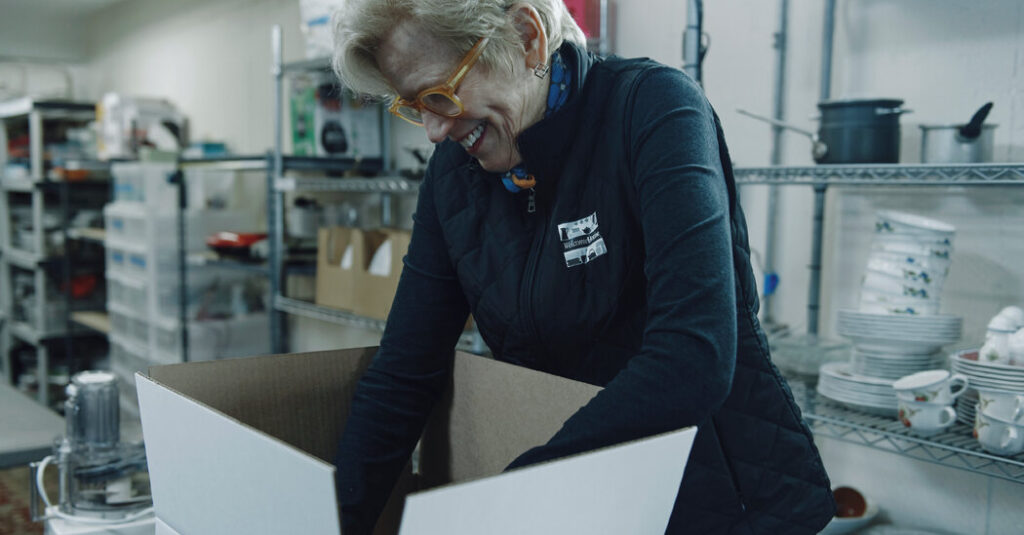
Nan Niland, 72, worked as a dentist for 40 years. “It really was my self-definition,” she said. “Probably too much.”
When she retired in 2020, she settled into a routine of exercising, reading, sewing and spending time in nature. But after awhile, she began to crave a little more structure and purpose.
Then she read about the Newton, Mass., charity Welcome Home in a local newsletter. The organization serves as a home goods pantry, collecting and redistributing household items to families in need.
Today, Ms. Niland volunteers there about 15 hours a week. “I needed to feel like I was doing something other than pleasing myself,” she said.
Much has been written about how physical behaviors, like exercise, diet and sleep, contribute to a long and healthy life. But research suggests that, as you age, a positive mind-set — including optimism and a sense of purpose — can benefit your health and longevity, too.
Mattering matters.
Feeling that you are valued and have something to contribute to others, often called mattering, can help drive you toward positive health behaviors that influence longevity. “If you feel like you matter, you’re more likely to stay socially connected, to take care of yourself, to show up for others, to keep investing in life,” said Jennifer B. Wallace, the author of a new book, “Mattering.”
When Dr. Linda Fried worked as a geriatrician at Johns Hopkins Medicine early in her career, she realized that many of her patients were “legitimately feeling sick,” but the cause of their sickness stemmed from “not having a reason to get up in the morning.”
Dr. Fried, now a professor of epidemiology and medicine at Columbia University, started recommending that her patients volunteer at an organization that they care about. Not long after, she started her own volunteer program to study the potential benefits on older adults.
Dr. Fried found that people who volunteered increased their activity levels and felt physically stronger after several months of service. They also modestly improved their scores on tests of cognition and scored higher on a questionnaire assessing their feelings on legacy and making a difference in their community.
Volunteering isn’t the only path to mattering. Becoming a regular at a coffee shop, dog park or other third place can also help you feel more connected. “Finding environments where you feel like you matter, it’s protective against the loneliness and the lack of mattering that can creep in in retirement,” Ms. Wallace said.
Optimism is powerful, too.
Maintaining a positive outlook on life, and about aging in particular, also appears to benefit people in their later years.
A 2022 study found that women over 50 who scored highest on a measure of optimism lived, on average, 5 percent longer and had a greater chance of making it to age 90 than those who scored lowest. And a study published this month reported that adults 50 and up who had a positive attitude about getting older — saying they felt as useful or as happy as they did when they were younger — were more likely to maintain, or even slightly improve, on tests of physical and cognitive ability when tracked over 12 years.
Like with mattering, feeling positive about one’s future seems to affect a person’s health by influencing their behaviors, said Becca Levy, a professor of public health and psychology at Yale University who led the recent study. When someone feels they have something to look forward to, they’re more likely to follow medical advice, get more physical activity and maintain social connections. Dr. Levy’s research has shown that having a positive outlook on aging can even protect against stress, resulting in lower levels of cortisol and markers of inflammation.
Of course, getting older isn’t easy. Losing a loved one, having to navigate an illness or becoming a caretaker can all affect one’s sense of identity and perspective. Remaining optimistic in these types of situations isn’t about being in denial about the hard parts of life, said Deepika Chopra, a health psychologist and author of “The Power of Real Optimism.”
“It’s much more related, I think, to resiliency than it is to positivity,” Dr. Chopra said. People who are optimistic “see these setbacks as something that are temporary and that they have the ability to overcome.”
To help engender a sense of optimism, Dr. Chopra recommends being intentional about looking forward to something every day. That could be a walk outside, a conversation with a friend, even what you’re going to have for dinner.
“When people repeatedly imagine the future as limited or declining, which a lot of people aging do, the brain begins to kind of reinforce those expectations,” Dr. Chopra said. “But if we can consciously direct attention toward even something small, a small positive future moment every day,” she said, it trains the brain to anticipate that good things are still on the horizon.
Dr. Chopra’s grandfather, Madan Syal, embodies this attitude. He said he feels positive about getting older and enjoys playing cards with his wife every day. But what he’s really looking forward to is turning 100 this July.
Dana G. Smith is a Times reporter covering personal health, particularly aging and brain health.
The post How a Healthy Mind-Set Influences Longevity appeared first on New York Times.