Pakistan has been working the phones.
Its leaders, who are close to both President Trump and President Masoud Pezeshkian of Iran, have been passing messages between the two countries, according to a post on X by Pakistan’s foreign minister, Ishaq Dar.
And they have made many, many calls.
Field Marshal Syed Asim Munir, the country’s army chief, has been focusing on President Trump. And Pakistan’s top two civilian leaders have spoken with at least 20 world leaders over the past week, Tahir Andrabi, the foreign ministry’s spokesman, told reporters on Thursday.
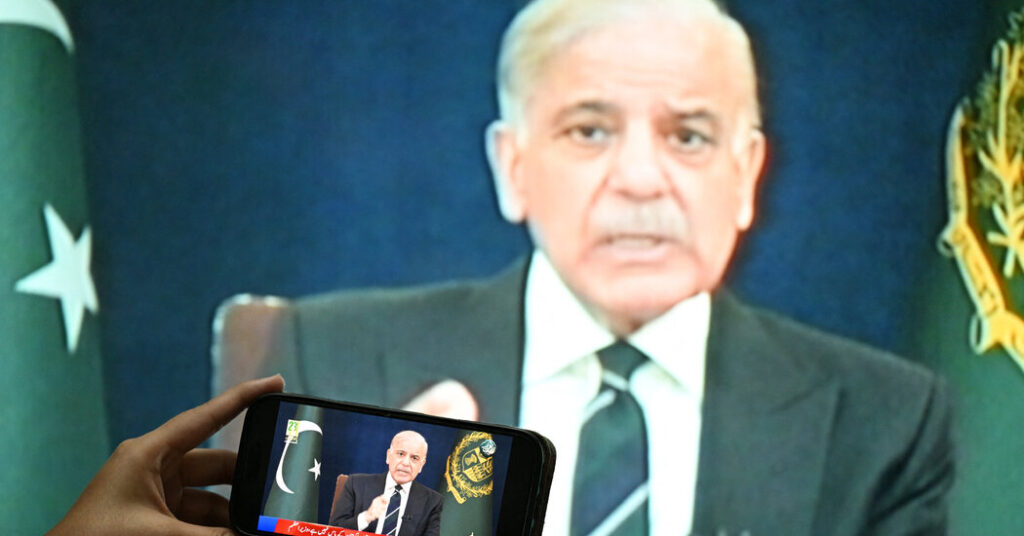
Prime Minister Shehbaz Sharif of Pakistan has had calls with the leaders of Iran (Mr. Pezeshkian), Saudi Arabia (Crown Prince Mohammed bin Salman), Egypt (Abdel Fattah el-Sisi) and Turkey (Recep Tayyip Erdogan), as well as the leaders of Azerbaijan, Bahrain, Bangladesh, Indonesia, Jordan, Kuwait, Lebanon, Malaysia and Uzbekistan.
And Mr. Dar has spoken with the top diplomats of Iran (Abbas Araghchi), the United Arab Emirates (Abdullah bin Zayed Al Nahyan), Iraq (Fuad Hussein) and the European Union (Kaja Kallas).
Those are the calls that have been made public.
On March 9, a day after the nomination of Mojtaba Khamenei as Iran’s new supreme leader, Mr. Sharif also had a “detailed conversation” that lasted several hours with Mr. Pezeshkian, according to a senior Pakistani official briefed on the call. On March 11, Tasnim, a semiofficial Iranian news agency, acknowledged a call from Mr. Sharif.
Still, even after so much telephone diplomacy and days of speculation that Pakistan might actually play host to Iran and the United States in Islamabad, Pakistani officials on Thursday appeared to downplay the prospect of imminent formal talks between the United States and Iran.
“As regards the timing, the venue, the itinerary, these details we will reveal in due course,” Mr. Andrabi said. “Our endeavor is a process, not an event.”
Pakistani officials have acknowledged that other countries are playing important roles as well.
The senior Pakistani official, who spoke on condition of anonymity to describe the ongoing mediation efforts, said either Pakistan, Turkey or Egypt could host peace talks — three countries not directly involved in the conflict, but with the most to gain from talks and the most to lose from a continuing conflict, he said.
“Efforts to coax and cajole Iran continue,” said Imran Ali, a former Pakistani diplomat who served as ambassador to Oman.
Elian Peltier is The Times’s bureau chief for Pakistan and Afghanistan, based in Islamabad.
The post Hello? It’s Pakistan Calling. appeared first on New York Times.