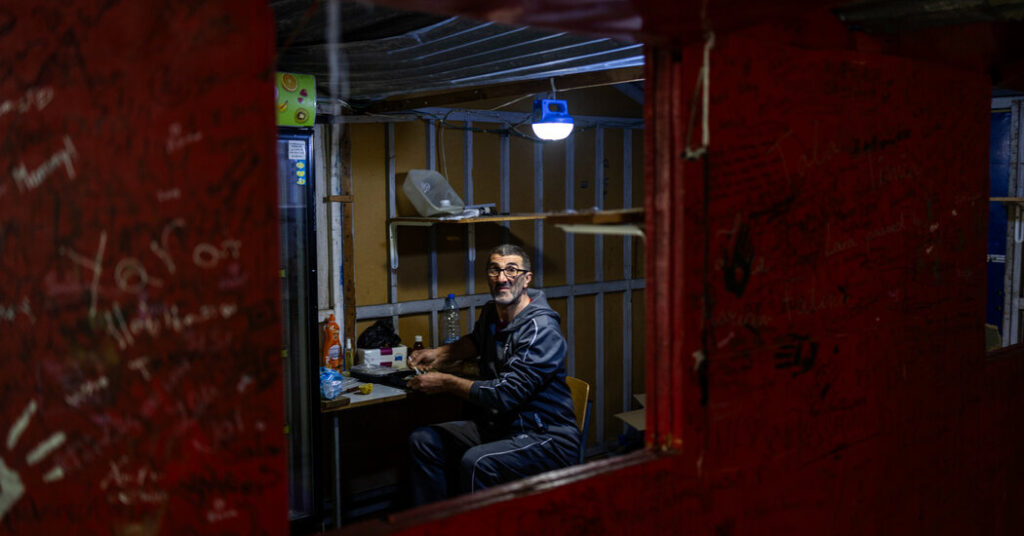
Sitting in a dimly lit room in a school turned shelter in Beirut, Zouheir Chahine reflected on how his life had changed.
Mr. Chahine, 50, arrived in Lebanon’s capital a week ago after leaving his home in the southern part of the country. He is among more than one million people who have been displaced in Lebanon in the more than three weeks since the start of Israel’s war with Hezbollah. Over 100,000 people, including Mr. Chahine, have been forced to rely on temporary shelters set up in schools and other public buildings; others are staying with relatives or sleeping in cars and on street sidewalks.
“I didn’t want to leave, but as the situation escalated, getting food became a challenge,” Mr. Chahine said.
Elsewhere in the school, Salam Mansour, 30, washed a pile of clothes with several other women. She, her husband and their three children fled their home just north of the Litani River in southern Lebanon after missiles struck their town. On Wednesday, the Israeli defense minister, Israel Katz, said that the Israeli military would expand its occupation of southern Lebanon and retain control of the land south of the Litani River.
Ms. Mansour remained defiant. “Even if it means sitting on rocks, we will return,” she said.
The influx of internally displaced people into Beirut has turned the capital into a city of dizzying contrasts. Along the promenade at the Mediterranean Sea, makeshift tent communities of the displaced sit not far from where the wealthy live in upscale apartments.
Some in the city have turned their focus to preparing meals for the displaced. One of them is Martin Sarkis, who spends most of his day working at a food distribution site.
“I’m not here only for the work. I’m here because I know what I do helps someone in need,” he said. “It’s frustrating to go through this war again, but we do what we have to do.”
Anushka Patil is a Times reporter covering breaking and developing news around the world.
The post Displaced by War, Many Seek Shelter in Beirut appeared first on New York Times.