The White House has delayed nominating a new director of the Centers for Disease Control and Prevention and is continuing a search, according to officials, as the Trump administration navigates mounting political and operational risks that have already complicated other high-profile health appointments.
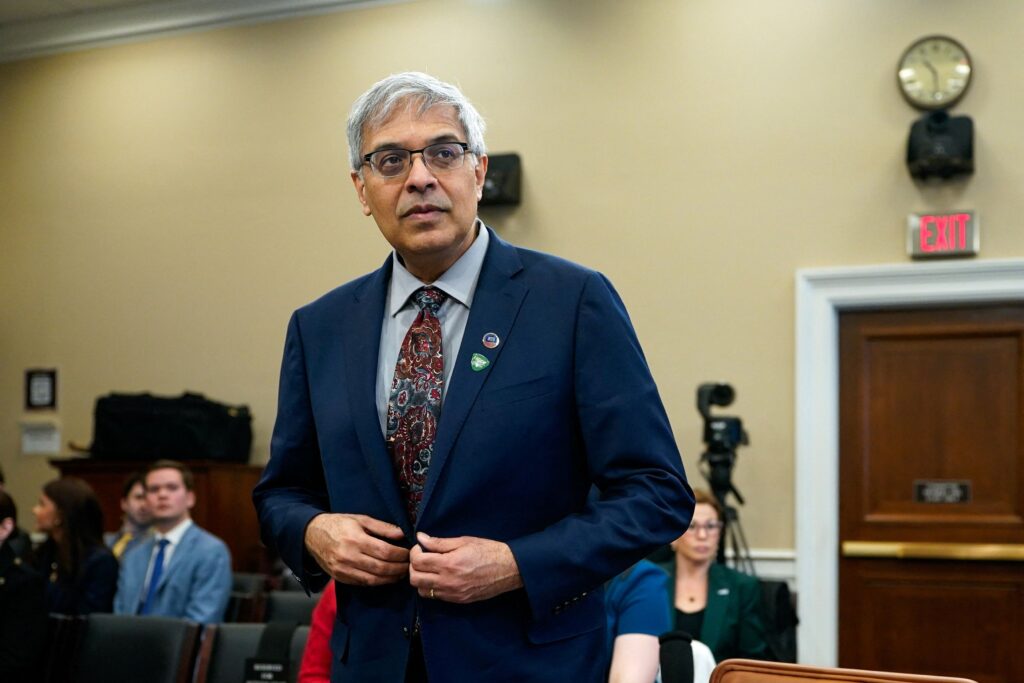
The responsibilities of leading the agency will remain with Jay Bhattacharya, the head of the National Institutes of Health, who has been serving as acting CDC director since last month. However, because of rules around temporary positions, he will no longer officially hold the title of acting director because his position as acting director expires at the end of Wednesday.
“Dr. Bhattacharya will continue to oversee the CDC by performing the delegable duties of the CDC director,” said Andrew Nixon, a spokesman for the Department of Health and Human Services, which oversees CDC.
The CDC — which is the nation’s leading public health agency, responsible for tracking outbreaks, guiding vaccination policy and coordinating responses to everything from the seasonal flu to emerging pandemics — has only had a permanent leader for less than a month since President Donald Trump was sworn into office for a second term.
The White House last month installed Chris Klomp, a health care businessman turned government official, as the operational leader of HHS, in part to quell controversies across the health agencies. Klomp has been assessing staffing across the health department and has played a key role in the process to select a CDC director.
“Secretary Kennedy and Chris Klomp are working with the White House on the CDC director search by evaluating candidates that can further the Trump administration’s objective of restoring the CDC to its original mission of fighting infectious disease,” Nixon said.
Among the candidates who have been under consideration are former Kentucky governor Ernie Fletcher, Mississippi health director Daniel Edney and Johns Hopkins cardiologist Joseph Marine, according to several administration officials and others familiar with the discussions who spoke on the condition of anonymity because of the sensitivity of the matter.
About half a dozen individuals are being seriously considered, according to two people familiar with the discussions. Administration officials had been working toward a goal of selecting a nominee before Bhattacharya’s appointment as acting director expired.
The administration is taking the necessary time to find the person it believes is the right fit, according to three officials, who spoke on the condition of anonymity because of the sensitivity of the matter.
White House officials grew frustrated last year after there were a wave of controversies within the administration’s health agencies, including sudden shifts on vaccine policy.
Ahead of November’s midterm elections, Trump officials are cautious about further unsettling voters already uneasy over how Health and Human Services Secretary Robert F. Kennedy Jr., founder of a prominent anti-vaccine group, has disrupted the childhood immunization schedule and reshaped federal vaccine policy. At the same time, they are reluctant to alienate Kennedy’s Make America Healthy Again base, whose supporters are sharply critical of the CDC but wield meaningful political influence.
The Atlanta-based CDC, a $9 billion agency, has been grappling with a growing measles outbreak, an increase in cases of other vaccine-preventable diseases and an extended leadership vacuum. But officials have grown increasingly cautious about advancing a permanent nominee, wary of triggering a contentious confirmation fight or internal clashes that could further destabilize the agency, according to three people familiar with the discussions, who spoke on the condition of anonymity to describe private deliberations.
The White House withdrew its nomination of former congressman Dave Weldon last year. Then the White House dismissed CDC Director Susan Monarez after she clashed with Kennedy over vaccine policy.
The CDC has been without a permanent director since late August. Monarez, a scientist with many years of federal government service, served in an acting capacity from January to March 2025, and then as permanent director for less than a month, from July to August.
Whoever leads the CDC will need the approval of Kennedy, who has upended long-standing norms that once insulated the CDC’s scientific work from political pressure. He fired the agency’s influential vaccine advisory panel and replaced its members with handpicked appointees, some of whom have strongly criticized vaccines. He bypassed the traditional vaccine recommendation process to unilaterally overhaul the childhood vaccine schedule, dropping several routinely recommended vaccines, including for flu, rotavirus and meningococcal disease.
Last week, a federal judge put a temporary hold on the changes to the vaccine schedule, Kennedy’s reconstitution of the advisory panel and all decisions made by that committee. The judge said Kennedy probably violated federal procedures, a ruling that thrust the future of the CDC’s vaccine advisory committee into uncertain, and unprecedented, territory.
Starting last year, selection of the CDC director requires Senate approval, no longer leaving that power to the president alone. But the change has not brought stability to the agency, which has only had a Senate-confirmed director for a brief period.
Cuts to the agency, leadership turnover and disputes over policy direction have shaken confidence in the CDC’s scientific independence and intensified concerns that politics is encroaching on decisions once driven by data and consensus, according to former leaders and public health and medical experts. Morale has plunged as hundreds of employees have left through buyouts, retirements and layoffs. A diminished workforce is forced to respond to controversial decisions and navigate political pressures, leaving little time for the agency’s core mission, according to current and former staff members.
The post White House holds off on CDC pick as search for permanent chief continues appeared first on Washington Post.