The United States voted against a United Nations resolution this week to formally recognize the trans-Atlantic slave trade as the “gravest crime against humanity.”
The resolution, which was led by Ghana, urged U.N. member states to apologize for the slave trade and to contribute to a reparations fund.
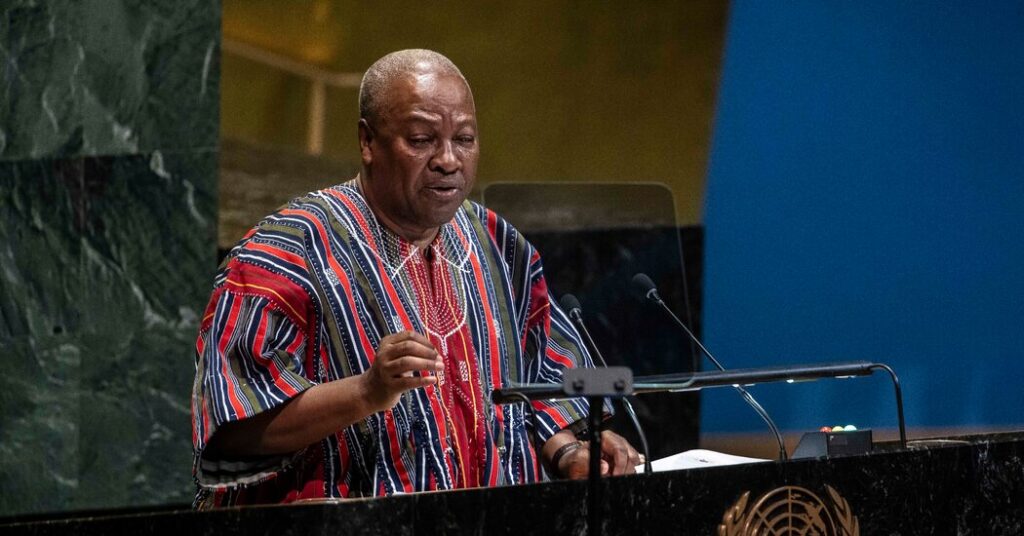
On Tuesday, before the vote, John Mahama, the president of Ghana, said that American schools were being discouraged from teaching about slavery and racism. He called the resolution “a safeguard against forgetting.”
Policy groups, human rights organizations and academics have accused President Trump of minimizing Black history in the United States. He has accused the Smithsonian Institution of focusing too much on “how bad slavery was” and not enough on the “brightness.” He has signed executive orders on education that called for the end of “radical indoctrination in K-12 schooling” and criticized the teaching of subjects such as “white privilege.”
The African Union has declared 2026 to 2035 the Decade of Action on Reparations, and Ghana, which has among the most slave forts and castles in the world, is leading the charge.
Many slave ships departed from the Ghanaian coast during the trans-Atlantic slave trade. Ghana has encouraged people with African ancestry to seek citizenship in the country. A 2019 initiative invited those of African descent to live and work in Ghana as part of a right to return campaign meant to connect people in the African diaspora to their ancestral roots.
“The trafficking of enslaved Africans and the centuries of racialized chattel enslavement that followed have not been resolved,” Ghana’s foreign minister, Samuel Okudzeto Ablakwa, wrote before the vote. He has said that reparations should be given to “all people of African descent” and that the descendants of slaves should be given money to set up businesses and funds for education.
Dan Negrea, a U.S. representative to the U.N.’s Economic and Social Council, called the U.N. resolution “highly problematic” on Wednesday and objected to its “attempt to rank crimes against humanity in any type of hierarchy.”
Mr. Negrea also accused the sponsors of questioning President Trump’s support for Black voters in the United States. “President Trump has done more for Black Americans than any other president,” he said. “He’s working tirelessly to deliver for them.”
The United States, Israel and Argentina were the only nations to vote against the resolution, which was adopted.
Ruth Maclean is the West Africa bureau chief for The Times, covering 25 countries including Nigeria, Congo, the countries in the Sahel region as well as Central Africa.
The post U.S. Rejects Vote to Recognize Slavery as a ‘Crime Against Humanity’ appeared first on New York Times.