Two states are suing a company that stores newborn stem cells, claiming that it has misled parents about the medical value of its expensive services.
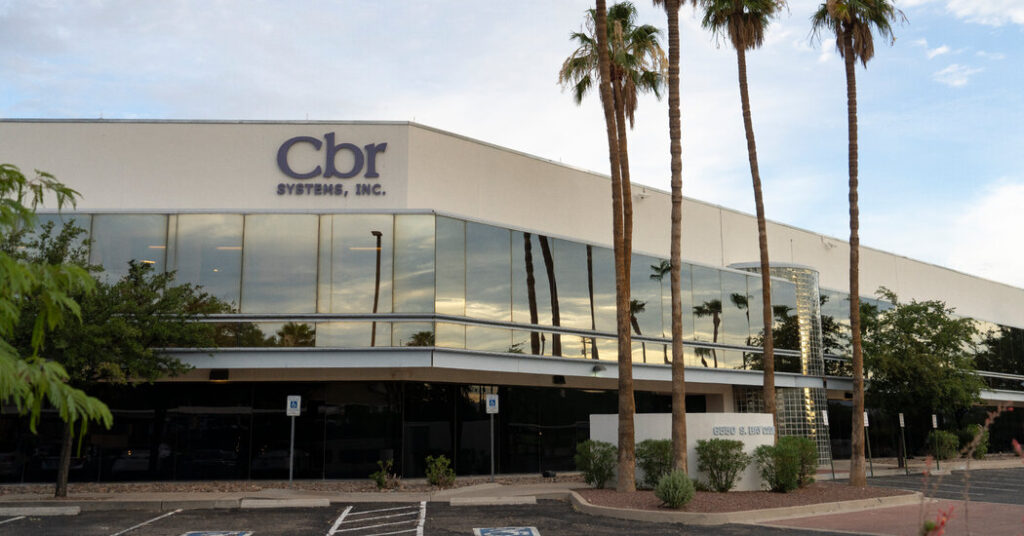
The company, Cord Blood Registry, houses more than a million samples of umbilical cords in Tucson, Ariz., charging families thousands of dollars in fees. CBR claims on its website that keeping those cells on ice is a “once-in-a-lifetime opportunity” because they have the “potential to treat 80+ conditions.”
That claim and others are false, according to a lawsuit filed by the attorney general of Texas last month and a similar one out of Arizona last year. Modern medicine has little use for privately banked cord blood, the lawsuits noted, citing a New York Times investigation into the industry’s deceptive marketing.
Texas and Arizona officials are asking CBR to take down its deceptive advertisements and pay families who were misled by their claims.
“We know that so many families were deceived by this company at a time when they are in their most vulnerable moment,” Kris Mayes, Arizona’s attorney general, said in an interview.
Ms. Mayes counts herself among those who were duped: Thirteen years ago, she banked her daughter’s cord blood with CBR.
“I had somebody telling me that there is the possibility of using cord blood to save your baby’s life in the future,” she said.
CBR petitioned to have the Arizona case thrown out, arguing that the company’s client contract included disclaimers about the risks and utility of newborn cell collection. (“There is no guarantee or assurance regarding success,” it reads.) In November, a judge denied the company’s request.
CBR has not yet responded in court to the Texas suit, and did not respond to a request for comment from The Times.
More than two million cord blood samples sit in suburban warehouses across the country. About half of them are stored in CBR’s Tucson facility.
It’s a lucrative business: The companies charge families several thousand dollars upfront for collection of a baby’s umbilical cord, plus hundreds each year after for storage fees. The industry has grown rapidly over the last decade, bolstered by investment from major medical device companies and endorsements from celebrities.
But cord blood stem cells have little medical value, the Times investigation found. Doctors rarely use cord blood anymore, thanks to advances that have made it easier to transplant adult stem cells. The Times investigation found that just 19 stem cell transplants using a child’s own cord blood had been reported since 2010.
What’s more the few parents who do try to withdraw cord blood samples from the banks often find that they are unusable — either because their volume is too low or they have been contaminated with microbes. Federal inspectors had documented signs of bacterial growth at CBR’s warehouse.
But the company’s marketing advertises “the highest quality care and protection” for each sample. Arizona’s lawsuit said that CBR “conceals serious contamination concerns and risks from consumers in order to continue reaping storage fees.”
The company has tapped celebrities like Drew Barrymore and Chrissy Teigen for its advertising campaigns on television and social media. (CBR took down a webpage about its partnership with Ms. Teigen, who did not respond to a request for comment.)
After the Times investigation published in July 2024, California’s attorney general, Rob Bonta, issued a public warning about cord blood banking.
“As medical advances continue to improve, too many families and doctors continue to be misled about the potential of privately stored cord blood,” he warned at the time.
Ms. Mayes, the Arizona attorney general, said she had one final payment to make on her daughter’s cord blood storage fees before she could cancel the contract.
“You feel like a bad mom if you don’t do it,” she said. But “what they are doing is illegal,” she added. “Who knew I’d end up in a position to do something about that.”
Sarah Kliff is an investigative health care reporter for The Times.
The post Two States Sue Cord Blood Bank Over False Advertisements appeared first on New York Times.